
ZODIAC
Just because you can’t prove something doesn’t mean it’s not true


Spoilers for Zodiac (2007)
Like much of David Fincher’s filmography, Zodiac took time to find its audience. A serial killer noir with no conclusive ending, due to the real-life unsolved case it was based on, which focused less on gory kill sequences and more on the casework and paranoia of those involved, it was out of step with the rest of the films released in that era: not quite bloody or scary enough to be the slasher it looked like, and marketed too much like a horror film to tackle other notable thrillers in 2007 like No Country for Old Men.
But it’s arguably Fincher’s best work. Over two hours and forty minutes it remains razor sharp, building tension to unbearable levels during some sequences, but also taking time to highlight the very real impact it had on those investigating some of the most infamous murders in American history.
There are a couple of clear scenes that warrant further analysis. The Zodiac assaulting Bryan Hartnell (Patrick Scott Lewis) and murdering Cecelia Shepard (Pell James) at the lake highlights how Fincher wasn’t going to glorify the violence. It’s an uncomfortable scene, wherein the audience is grimly aware of the outcome, even as the victims try to talk their way out of the situation. There’s the talk show scene, where the Zodiac – or a disturbed hoaxer – calls the famous lawyer Melvin Belli (Brian Cox) to explain his actions, fanning the public panic over the killings.
Perhaps the most iconic scene in the film is when Robert Graysmith (Jake Gyllenhaal) visits Bob Vaughn (Charles Fleischer). Graysmith hopes that Vaughn will help to incriminate an acquaintance, instead, circumstantial evidence leads to Vaughn matching the profile of the Zodiac and the tension racks up as Graysmith is led into the basement.
“Not many people have basements in California...”
We could even take some time to focus on Fincher’s attention to detail. Three different actors (Richmond Arquette, Bob Stephenson and John Lacy) portrayed the Zodiac, as well as the various actors who portrayed the suspects. They were either clad in the now infamous mask or shot in darkness to hide their identities and Fincher used each actor to portray the killer as he was described in witness testimonials. It’s a dedication to realism that sets Zodiac apart from many other thrillers.
For me though, it’s a scene near the end of the film that stands out. Not because of any particularly exciting piece, instead, it’s a sedate moment between Graysmith, who has been continuing the hunt for the Zodiac at the expense of his career and his family, and Inspector David Toschi (Mark Ruffalo) whose failure to catch the Zodiac has all but ruined his reputation in the police force – Toschi was the inspiration for both Clint Eastwood’s Dirty Harry and Steve McQueen’s Frank Bullitt.
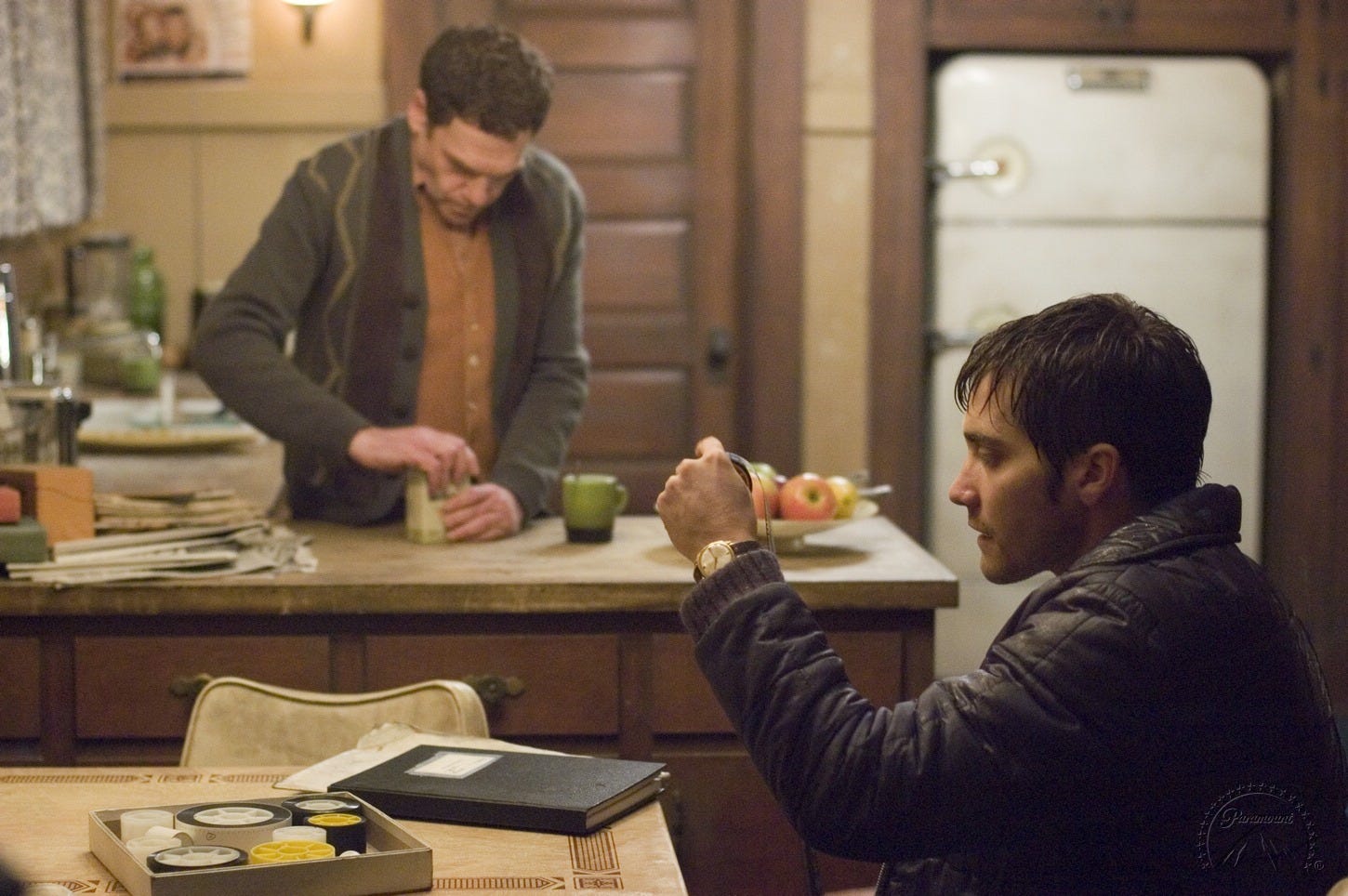
Having found further evidence to suggest that a previous suspect, Arthur Leigh Allen (John Carroll Lynch), is the Zodiac killer, Graysmith goes to Toschi’s house and convinces him to listen to what he’s found. They head out to a nearby diner, where Graysmith lays out how Allen’s movements coincided with the Zodiac letters written to the press and how he moved counties just 48 hours after the police questioned him.
It's a culmination of all that has been said in the two-and-a-half hours previously. In fact, very little new information is given in this short scene. The audience already knows that there are questions about the handwriting analysis; we understand that there are a few too many coincidences around Allen for him not to be seriously considered a suspect. Toschi even says that he believed Allen is the killer after the first interview.
I picked this scene not because it acts as a sting in the tail or offers a particularly exciting incident. No other scene highlights the depressing reality of working homicide like this one. Prior to 1966, two years before the start of the Zodiac killings, police forces across the United States claimed a 90% clearance rate with homicides. This changed in 1966 following Miranda v. Arizona, which saw the introduction of Miranda rights and greater protection of suspects during interrogations.
Within a couple of years, this clearance rate had dropped by 20% in many areas. In 2022, the clearance rate was just over 50%, an all-time low for American law enforcement. This indicates two equally miserable facts. Firstly, regardless of whether the person was guilty or not, before 1966, a large proportion of people were convicted of homicides without sufficient evidence. Secondly, as the American public was coming to terms with the end of innocence, due to various scandals and the Vietnam War, they also had to accept that the police force was powerless to bring every criminal to justice.
In real life, the Zodiac Killer was an awful representation of this. Arguably, this is why he has remained lodged in the public consciousness more than 50 years after the killings began. His taunting of the police force and the national press highlighted just how powerless they were to stop the killings.
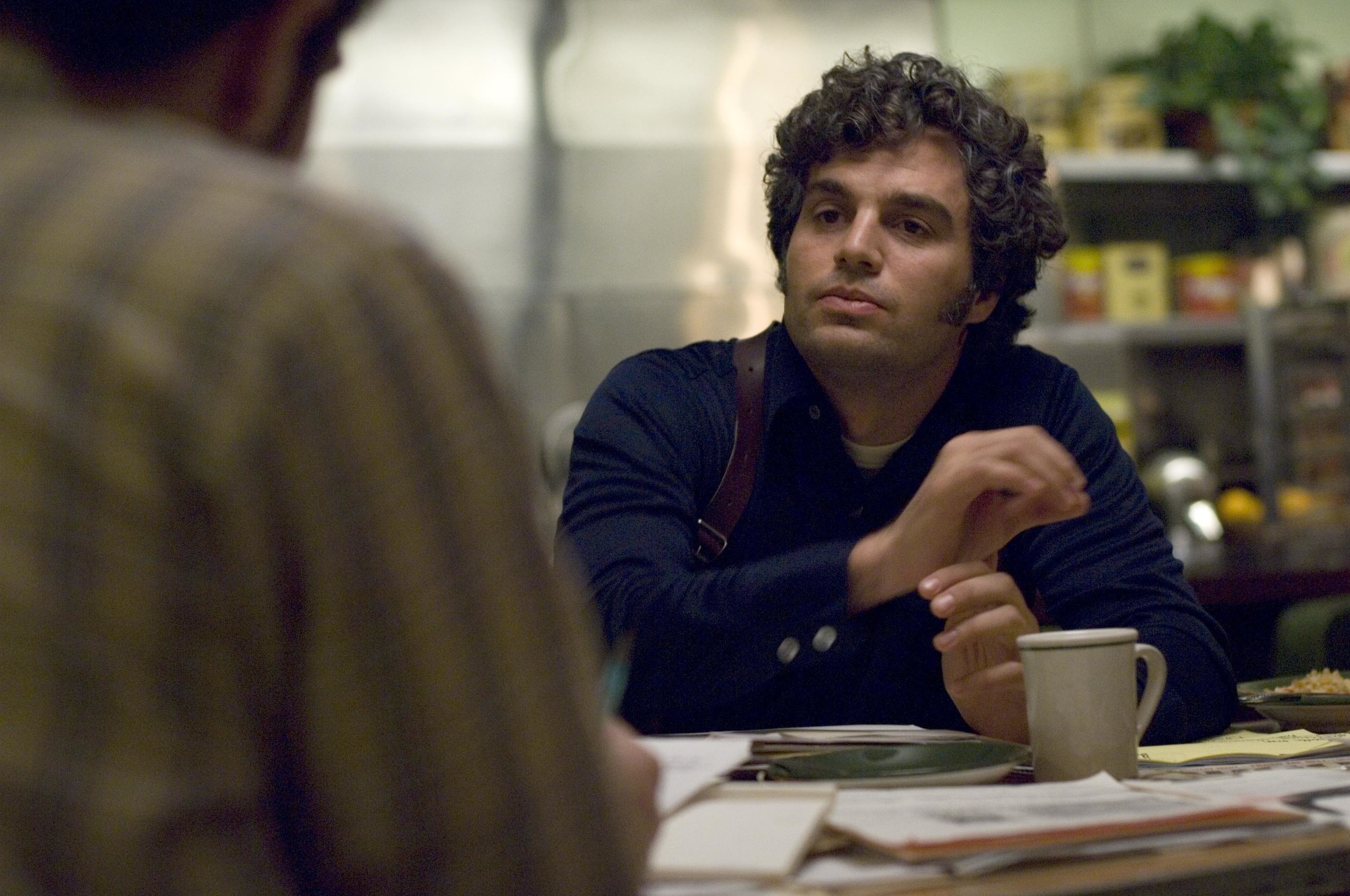
Another point is that sometimes it isn’t about knowing who did the crime, it’s about being able to prove it. Graysmith’s excellent books Zodiac and Zodiac Unmasked, on which Fincher’s film was based, alleged that there were clear links between Allen and the Zodiac, and the film follows this logic to the end. When Toschi sees the evidence that Graysmith has collected he points out that they can’t prove any of it. Graysmith responds quickly:
“Just because you can’t prove something doesn’t mean it’s not true.”
However, in hindsight, this scene also brings to the fore an issue with Fincher’s film – in that it focuses too much on Graysmith’s work. Graysmith was closely connected to the case for over 20 years, and his research and investigation did a lot to keep the killer in the public’s mind. Yet recent evidence suggests that he was wrong. Allen, who passed away in 1992, was almost entirely exonerated of the crimes in 2002 through DNA sampling and handwriting analysis – five years before the film was released.
In 2021, the focus turned to Gary Francis Poste, who died in 2018. This interest has reportedly continued up until May this year when some outlets claimed that DNA had identified Poste as the killer.
Within the context of the film and taking into account the various suspects and evidence surrounding the case, that final meeting between Graysmith and Toschi highlights the sad reality of detective work. Sometimes, the killer is always going to be just out of your grasp.
Director: David Fincher
Writer: James Vanderbilt. Based on the books Zodiac and Zodiac Unmasked by Robert Graysmith
Starring: Jake Gyllenhaal, Mark Ruffalo, Robert Downey Jr
 | A guest post by
|