

YOU'RE NEXT
Manipulation in the slasher mould



Spoilers for You’re Next (2011). Trigger warnings for discussions of gaslighting.
Adam Wingard’s deliriously fun slasher You’re Next hits many of the right notes for genre fans, gleefully playing with tropes and injecting just the right amount of humour. However, when it gets to the final confrontation, it ties together various references to the patriarchy and the abuse of power. On reflection, it shares DNA with the 2019 film Ready or Not (Dir: Matt Bettinelli-Olpin and Tyler Gillett), although the latter deals more with classism and the abuses that come from that.
The injustice is hinted at right from the opening scene, in which a middle-aged man (Larry Fessenden) is shown having sex with a younger woman (Kate Lyn Sheil) before both of them are dispatched in true slasher style. Not only is the woman unsatisfied by the sexual prowess of the man but it is suggested in a later conversation between two characters that she may be a subordinate of his.
This theme continues when we meet the ‘final girl’ Erin (Sharni Vinson) and her partner Crispian (A. J. Bowen). They are on their way to the holiday home of Crispian’s family, where his parents (Rob Moran and genre legend Barbara Crampton), older brother and wife (Joe Swanberg and Sarah Myers), younger brother and partner (Nicolas Tucci and Wendy Glenn) and younger sister and partner (Amy Seimetz and Ti West) will all be present.
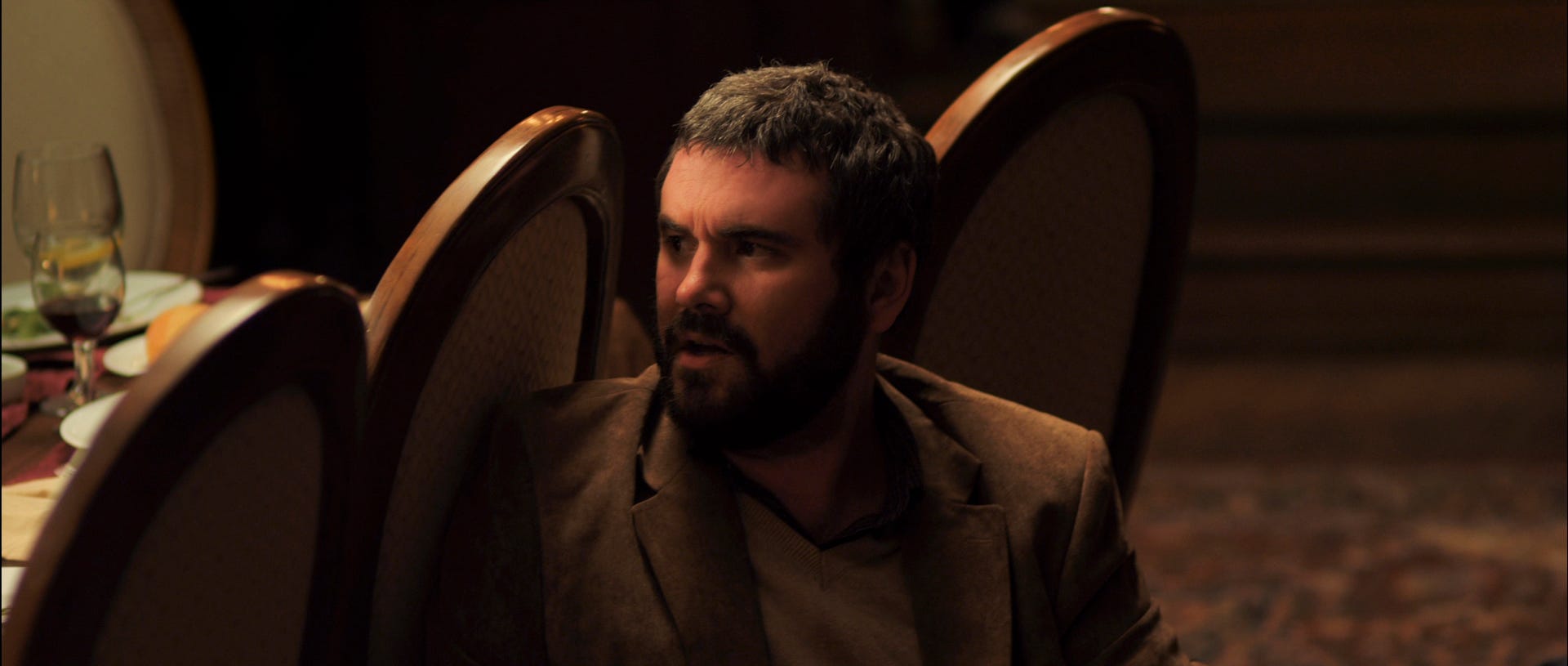
Conversations between the family – who have a rather tense, near estranged relationship – turn to Erin and Crispian’s meeting. Crispian was her lecturer at university and Erin dropped out of his class so that they could legitimise their relationship. The inherent misbalance in the power dynamic is made even worse by the fact that Erin is the one who had to pivot her education (there’s no indication that this will impact her career, but it isn’t a stretch to believe it would) so as not to impact Crispian’s job prospects.
If we fast-forward past the blood-letting that occurs at the house once the family have settled, we’re left with Crispian somewhere outside of the house, and Erin the sole survivor; her childhood on a survivalist camp giving her the skills to take out the animal-masked killers one by one.
A misguided phone call from Crispian reveals his role in the attack, and when he comes back, he finds Erin waiting for him. His belief that he has power over Erin comes to the forefront here. He explains that he and his brother planned the attack to get their parent’s inheritance and that Erin was always supposed to survive so that they had an unbiased witness to tell the police that the brothers were not involved.
Between his assertations that Erin was never supposed to be harmed, and his attempts to sell her a fanciful life where money is no longer an issue – ‘you can study with no student debt’ – he tries to gaslight her. The manipulation brings together all the threads that have been placed in the film. It isn’t subtle, but You’re Next, with its garotte wires, blenders-to-the-face, and axe hits, is not a film concerned with subtlety.
What it is concerned with is modernising horror tropes, and the manipulation and gaslighting of women have always played a role in the genre. The term gaslighting is derived from a 1944 film called Gaslight (Dir: George Cukor). If you look at classics like Rosemary Baby (Dir: Roman Polanski, 1968), Mia Farrow’s character is manipulated into thinking everything is fine, or that her pregnancy is making her delusional, when in fact she has been groomed by a satanic cult.
Jump forward to the slasher era, and the final girl is often forced to question her sanity as some masked killer rampages through the town. A Nightmare on Elm Street (Dir: Wes Craven, 1984) is the perfect example of this, as the parents of the town attempt to suppress Nancy’s (Heather Langenkamp) search for the truth. Wes Craven would be more direct with this in Scream (1996), wherein the killer Billy Loomis (Skeet Ulrich) not only tries to convince Sidney (Neve Campbell) that he is innocent, but also manipulates her into having sex.
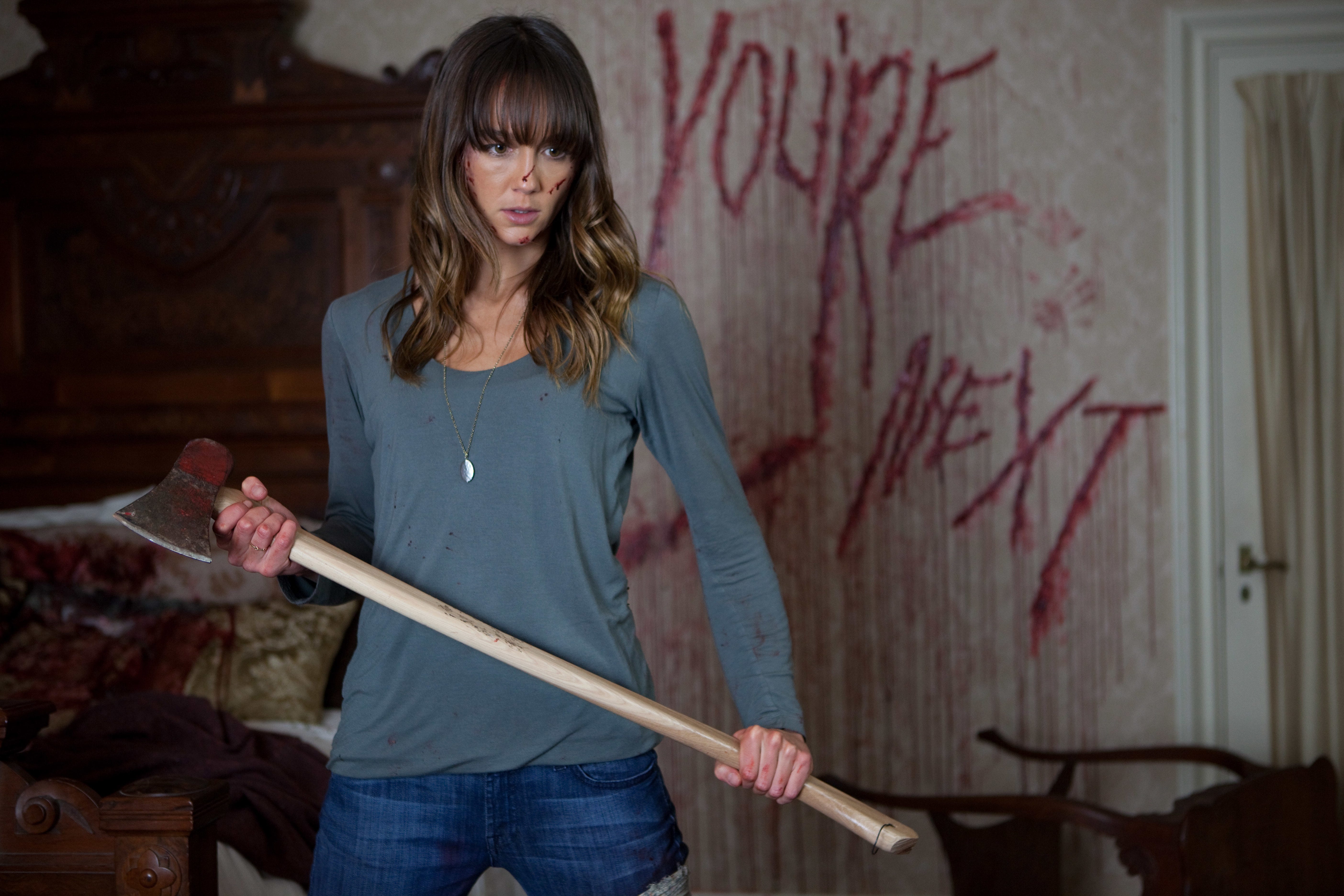
You’re Next updates this further. By making Crispian Erin’s superior in many ways (financially, social standing etc), it links the film to the gradual shift in attitudes around women's experience. In 2006 on MySpace, the #MeToo campaign started highlighting many of the issues around the treatment of women, eventually growing into an international movement in 2018 that would expose many predators who essentially held the forward progression of women in industries behind demands for sexual favours.
It's never implied that Crispian is manipulating Erin for sex. She is shown to be an independent and consenting party. However, by attempting to sell a perfect future to her, he diverts that manipulation from wanting sex to coercing her into being a passive accomplice in the spree killings of an entire family.
Director: Adam Wingard
Writer: Simon Barrett
Starring: Sharni Vinson, A. J. Bowen, Rob Moran, Barbara Crampton, Joe Swanberg, Sarah Myers, Nicolas Tucci, Wendy Glenn, Amy Seimetz, Ti West
 | A guest post by
|