

XTRO
A scene too far



Spoilers for Xtro (1982)
Harry Bromley Davenport’s sophomore directorial effort is often unfairly categorised as a sub-par Alien rip-off. It certainly isn’t perfect, much of the acting falls flat, and the story takes several turns that make little sense. Yet, there are flashes of brilliance, helped by some excellent, low-budget practical effects, that give the film an eeriness and keep the viewer engaged until the remarkably bleak ending.
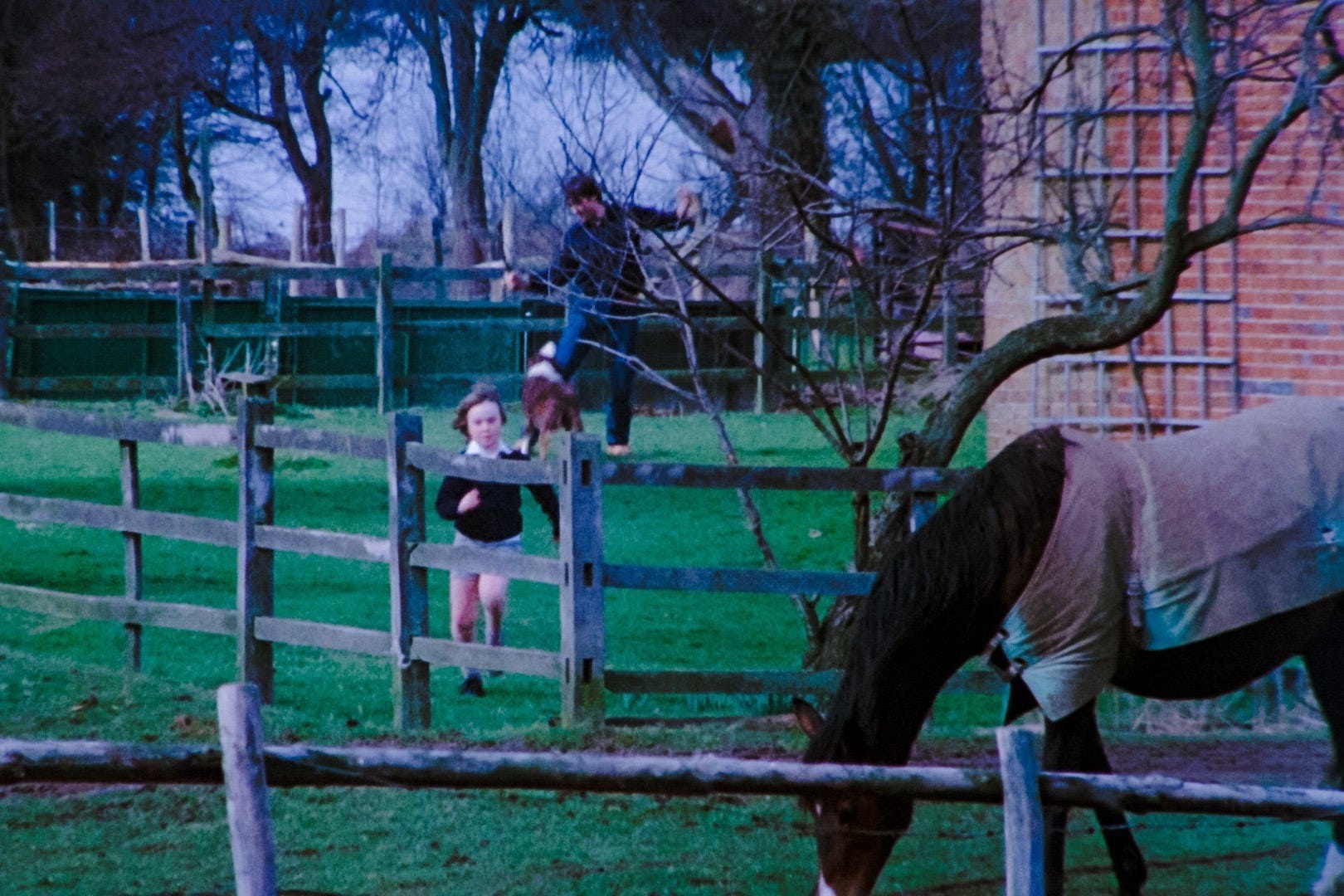
If we fast-track through the story, Sam Phillips (Philip Sayer) is abducted by extraterrestrials while playing outside with his son, Tony (Simon Nash). Jumping forward in time, Tony lives with his mother, Rachel (Bernice Stegers), her new partner Joe (Danny Brainin) and a live-in nanny, Analise (Maryam d’Abo). Rachel is convinced that Sam ran out on the family, while Tony insists that his father disappeared and will come back for him.
The extraterrestrial returns, crash landing onto earth and stalking the British countryside, until it attacks and impregnates a young woman, who is killed when she gives birth to the fully grown Sam. It’s a suitably brutal scene, but ultimately misguided, and one that is worth some analysis on its own. It’s probably the most obvious reference to Alien (Ridley Scott, 1979) in that an alien being rips apart its host from the inside. However, in Alien, it became a shocking exploration of pregnancy from the male perspective – acknowledging that men can not fully understand the trauma that a woman goes through, both physically and emotionally, when giving birth, and this unknown creates a level of fear that is masterfully put on the screen.
In Xtro, it is a woman giving birth. It is exaggerated and brutal, and no doubt made plenty of audience members wince, but it is little more than a cheap reference, helping the film to capitalise on the trend for gory science fiction movies. It fails to really say anything about the events, instead bringing it back around to traditional gender roles, in which the man does little, and the woman goes through the trauma of giving birth.
If we were to look at modern takes on the theme, we can see that there is far more interesting things that can be done with the subject matter; whether it’s the bodily harm and gender identity at the heart of Titane (Julia Ducournau, 2021), or the fear of motherhood and losing that child to adulthood that is explored in Chris Nash’s short Zygote, included in the anthology film ABCs of Death 2 (2014).
Back to the story, and Sam tracks down his family and bestows his alien powers to Tony – either by drinking his blood, or otherwise inhaling the boy’s lifeforce, it’s unclear because he’s just sucking on the boy’s shoulder blade in the film. From here, the film becomes a wild mix of Poltergeist-style possessed toy sequences, animal attacks and supernatural horror, almost all revolving around the Damien-esque performance of Simon Nash.
He kills the nanny and implants a series of eggs inside her, all with the help of a little person dressed as a clown, a human-sized GI Joe, and a panther.
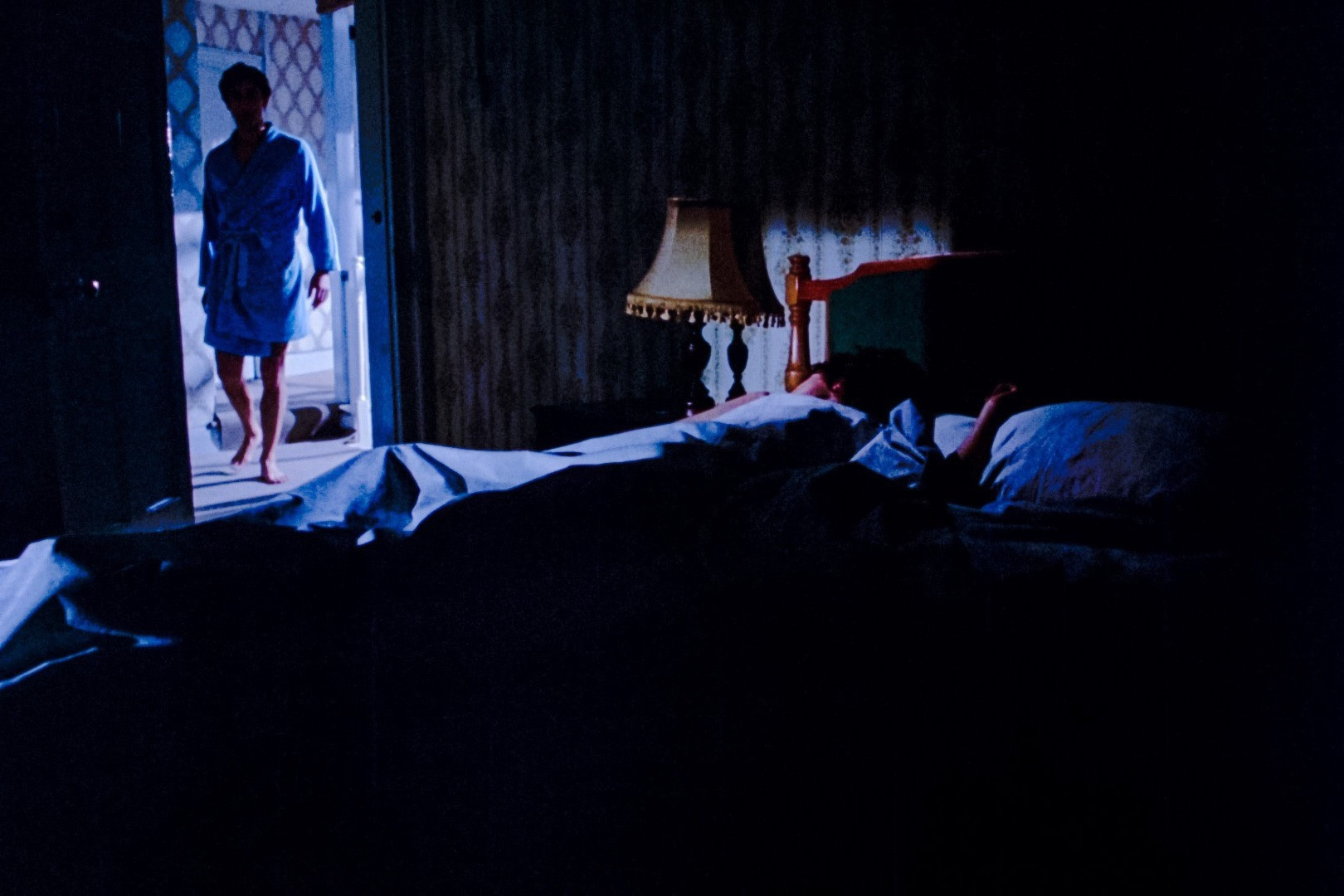
While this is going on, Sam takes Rachel back to the cottage where he was abducted and sleeps with her, seemingly impregnating her with another alien. Joe arrives with Tony to try to rescue Rachel, but is killed by Sam, who takes his son to be lifted back into space. Rachel is left alone.
It’s a remarkably bleak ending for what is, at its heart, a rather schlocky horror. For as much as the filmmakers appear to relish every opportunity to showcase gore and nudity, those moments with Rachel sat in a field, looking up at the sky and mourning the loss of her family, are very effective. It speaks to some of the fears of motherhood we mentioned earlier, as well as the more existential fear about our significance within the universe.
The story, when you take out the more extravagant set pieces, also has a thematic link to films like Invasion of the Body Snatchers (Don Siegel, 1956/Philip Kaufman, 1978), and can also be viewed as part of the wider imposter genre of horror that has inspired several recent video games.
Yet, this isn’t the full story. While Rachel left helpless is the more effective ending, it is not the final scene of Xtro. Two ending scenes were shot for the film, the first having Rachel return home to find that the eggs have hatched and her apartment is filled with clones of Tony, who all approach and rub her pregnancy bump. While this is certainly uncanny, and has a certain Cronenberg quality to it, it lacks the power of the previous scene, feeling very much like a quickly tacked-on finale. Even worse is the director’s cut ending, in which Rachel returns home and picks up one of the eggs, only to have a small version of the creature attack and kill her.
Bleak? Yes, but done in such a cliched way that it does little but provide a minor jolt.
Davenport has been open about the writing process of the film, acknowledging that while the basic plot was always in place, many of the more far-out scenes were added because the team thought they would be cool. The choice of ending scenes, overshadowing the far more downbeat sequence, is perhaps the most egregious of this.
Director: Harry Bromley Davenport
Writers: Harry Bromley Davenport, Michel Parry, Iain Cassie, Robert Smith
Starring: Philip Sayer, Bernice Stegers, Danny Brainin, Maryam d’Abo, Simon Nash, Peter Mandell
 | A guest post by
|
Xtro is such a fantastic movie. Never let anyone tell you budget should hamper anything like creativity and audacity.