

THE X FROM OUTER SPACE
Adding melodrama to kaiju chaos


Spoilers for The X From Outer Space (1967)
The X From Outer Space (宇宙大怪獣ギララ, Uchū Daikaijū Girara) is by no means the best kaiju film to come out following the success of Godzilla (1954, Ishirō Honda). In fact, it handily falls into the ‘so bad, it’s good’ category.
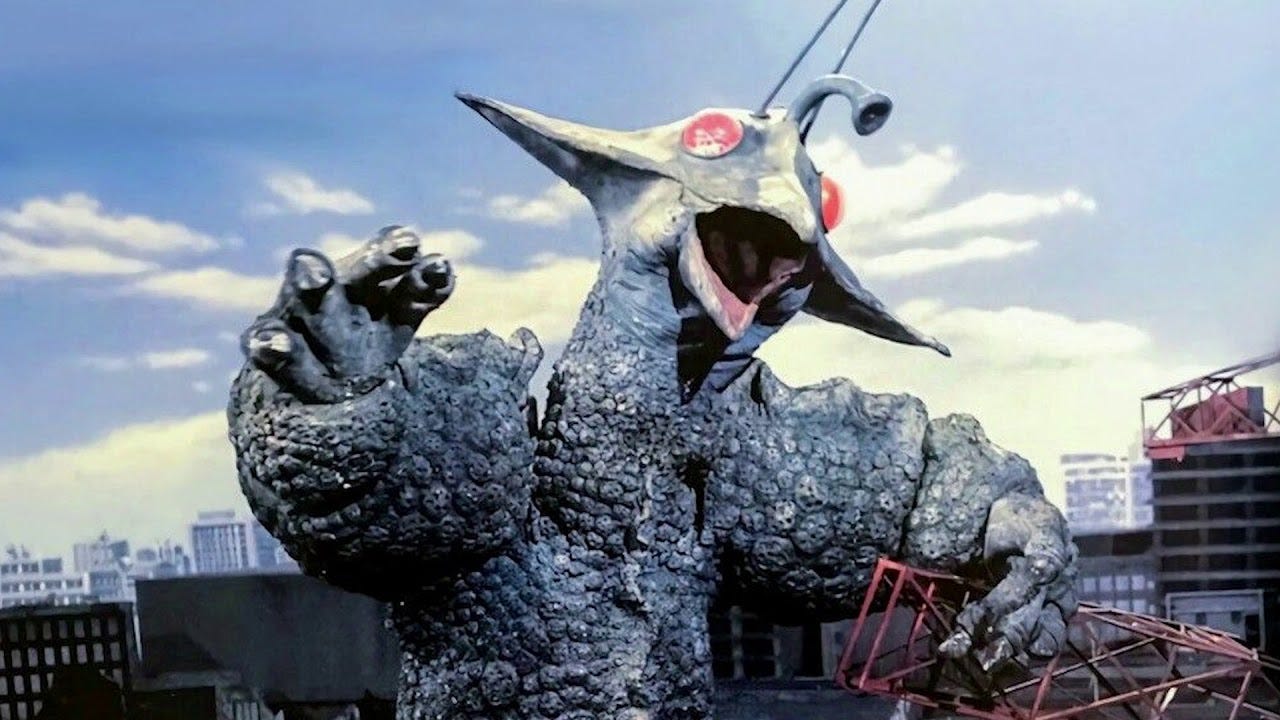
Its nuclear-powered space monster, Guilala (Yuichi Okada in an obvious rubber suit) has a laughable design; the sequences in space force a complete suspension of disbelief; and the final sequence involves the creature being covered in Guilalalium, creating the first, and likely last, scene of kaiju bukkake ever committed to film.
Yet it has a reputation that far exceeds that of other rubber-suit monster movies, despite never having a theatrical release in America. It was even entered into the Criterion Collection, as part of the When Horror Came to Shochiku boxset, which also contained Goké, Body Snatcher from Hell (1967, Hajime Sato), The Living Skeleton (1968, Hiroshi Matsuno) and Genocide (1968, Kazui Nihonmatsu). This release allowed viewers to watch with subtitles, rather than deal with the horrendous dubbing.
To look at why The X From Outer Space has continued to be appreciated by fans nearly 60 years after it was released, we have to break down some of its components. Yes, it has the silly rubber suits. It has the, admittedly impressive, miniature work to demonstrate the destructive power of Guilala. But it is also filled with non-sequiturs, which add little to the overall plot but which are certain to have viewers sniggering.
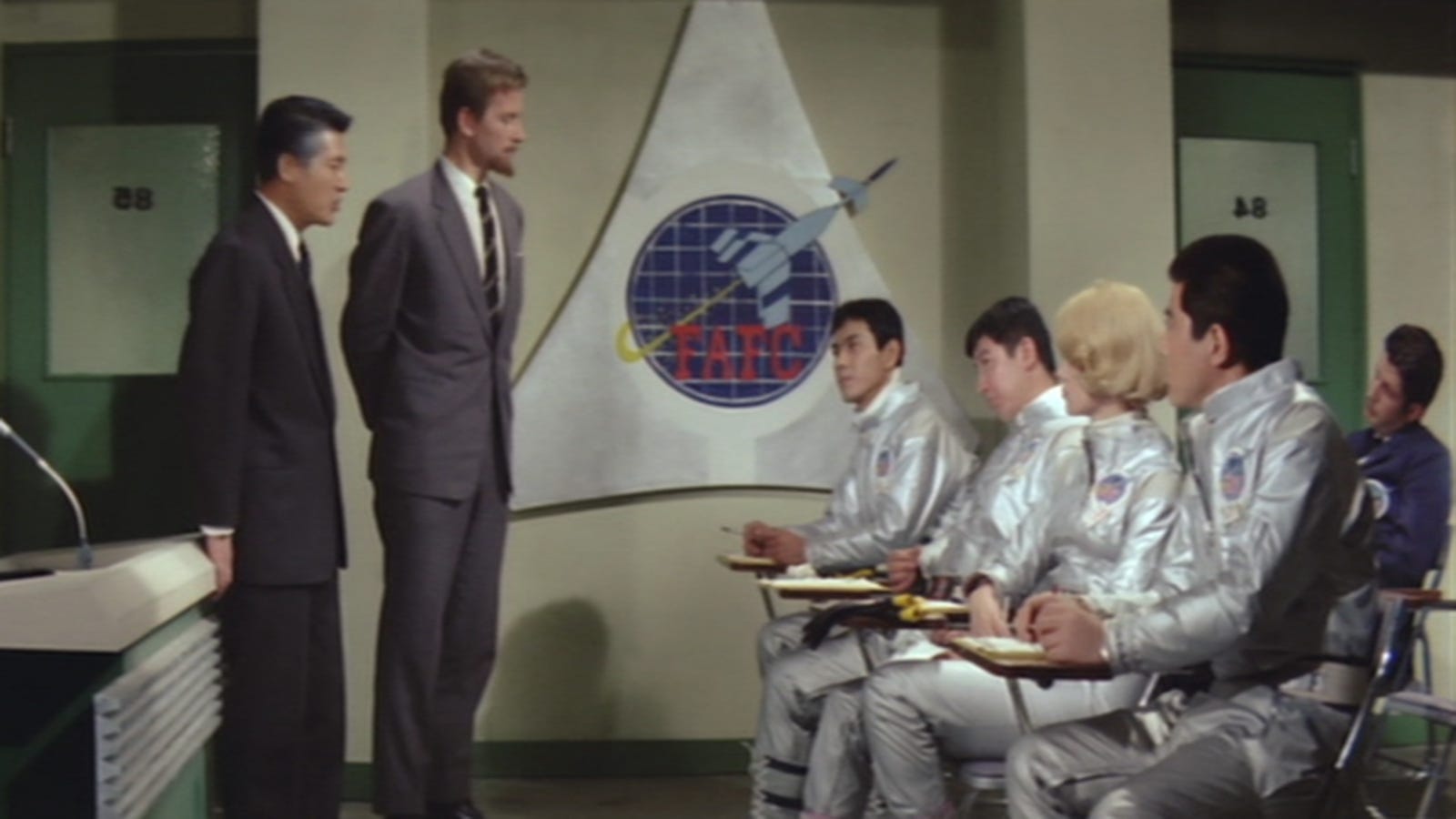
We don’t even see the monster for half of the film. Instead, director Kazui Nihonmatsu, who shared writing credits with Eibi Motomochi and Moriyoshi Ishida, focuses on the spaceship AAB Gamma and its crew Captain K. Sano (Toshiya Wazaki), H. Miyamoto (Shinichi Yanagisawa), Dr Kato (Eiji Okada) and Lisa Schneider (American actress Peggy Neal, dubbed in the Japanese release by Reiko Mutō). Their mission is to travel to Mars – a journey that is given the same sort of gravity as nipping down the road to the shops – and investigate sightings of UFOs.
The importance of this mission is highlighted early on, with Japan’s entire space programme at risk should another craft be lost. Yet, the team seem unphased by the danger. Schneider and Sano tease Miyamoto, while simultaneously flirting with each other. Miyamoto desperately tries to get the attention of Schneider, and they all laugh and joke their way onto the spaceship.
The writers were going for some sort of Westernised banter, showing a level of camaraderie between the group to build a connection with the audience. Between the awkward scripting and poor dubbing, it does little more than create a humourous detachment between the characters and the plot.
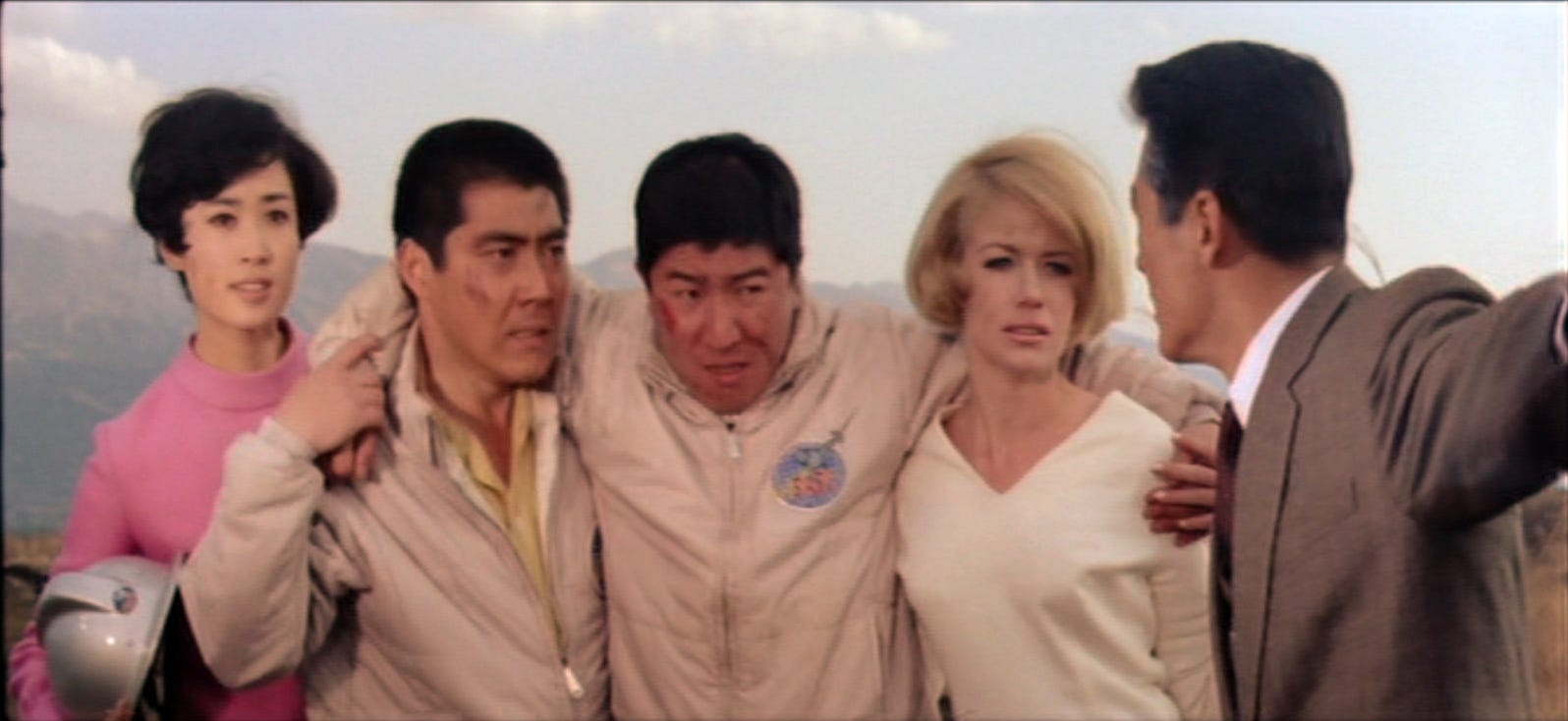
Things get stranger when Kato becomes ill soon into the journey. Miyamoto makes contact with the moon base and arranges for them to make a pit stop to have Kato checked over. Michiko Taki (Itoko Harada) answers the call. It’s clear that she knows most of the crew, and is happily talking with them until she sees the closeness of Schneider and Sano. Taki becomes cold and ends the transmission.
This isn’t the only disaster film to add a dose of melodrama and romantic tension to proceedings, despite the audience thinking that the character must have more important things to worry about. Jurassic Park has the testosterone-driven bickering between Sam Neil and Jeff Goldblum over Laura Dern; Twister builds its central relationship between Bill Paxton and Helen Hunt on their continued sexual tension. Even the original kaiju, King Kong, has the ape/woman romantic relationship at its core.
However, few are so clumsy in the approach. Taki’s jealousy leads to an unintentionally hilarious scene just after the call. She turns the picture of Sano around and storms out of the room, only for two colleagues to say that AAB Gamma is in trouble. Rather than swallow her feelings and professionally warn the crew of the impending danger, she snaps:
Tell them yourself.
In any other film, Taki would be the villain from this point on. Purposefully risking the lives of those around her because of her personal feelings. Here, it’s a character quirk that is never followed up. When she meets Schneider, the pair seem to get along famously, with only hints of jealousy dropped into later scenes, none of which have any bearing on the remaining plot.
It's moments like this that make The X From Outer Space such a fun watch. These non-sequiturs; random moments that are never acknowledged again, turn this from a generic Godzilla rip-off to something far campier, and far more entertaining for it.
Director: Kazui Nihonmatsu
Writers: Eibi Motomochi, Moriyoshi Ishida, Kazui Nihonmatsu
Starring: Toshiya Wazaki, Itoko Harada, Shinichi Yanagisawa, Eiji Okada
 | A guest post by
|