

THE VIRGIN SPRING
Finding parallels between the old gods and the new


Spoilers for The Virgin Spring (1960). Trigger warnings for discussions of sexual assault.
Ingmar Bergman’s The Virgin Spring has an interesting history. Taking influence from the 13th-century ballad Töres döttrar i Wänge, with a screenplay by historian and novelist Ulla Isaksson, it’s a thematically heavy piece of cinema. Delving into guilt, religious fervour and the clashes between organised Judeo-Christian religion and ancient belief systems – notably the Norse mythology here.
Yet it also has a link to exploitation. Made in 1960, The Virgin Spring could be argued as one of the earliest examples of a rape-revenge film. It certainly influenced one of the most notorious, with Wes Craven upping the violence and stripping much of the subtext away to loosely remake this into The Last House on the Left.
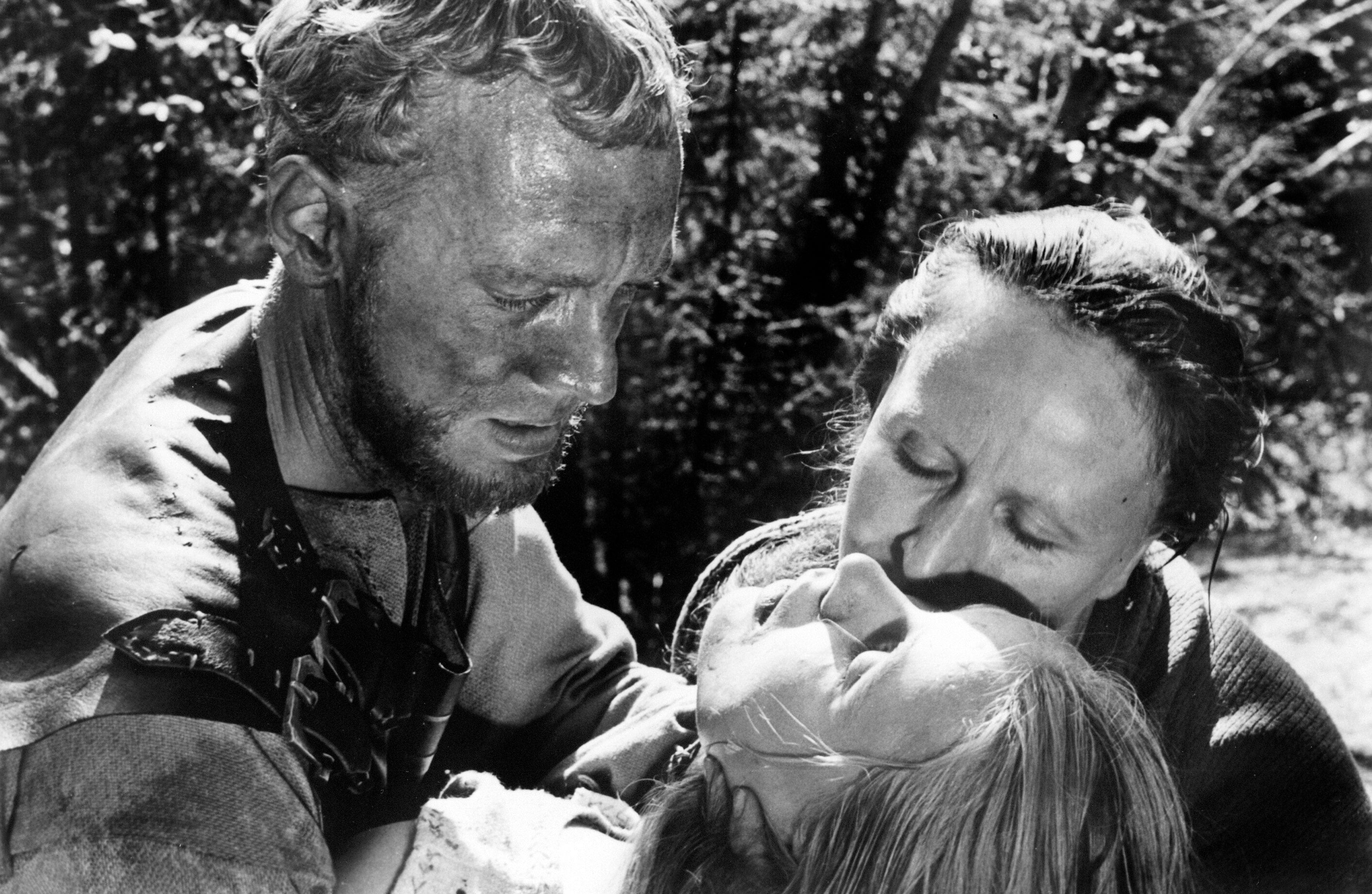
It follows Per Töre (Max von Sydow), a Christian leader in his village, who sends his virginal daughter Karin (Birgitta Pettersson) on a day’s ride to deliver candles to a nearby church. She’s accompanied by Ingeri (Gunnel Lindblom), the household’s servant who secretly maintains her belief in the Norse gods and can be seen praying to Odin. During their trip, Ingeri becomes unsettled and abandons Karin, who is later assaulted and murdered by two herdsmen, all while a young boy watches.
Having stolen Karin’s clothes, the herdsmen and the boy unwittingly seek shelter at Töre’s home, where they proceed to try and sell the clothes to Karin’s mother (Birgitta Valberg). When Ingeri returns, she confirms the assault to Töre who systematically murders the herdsmen.
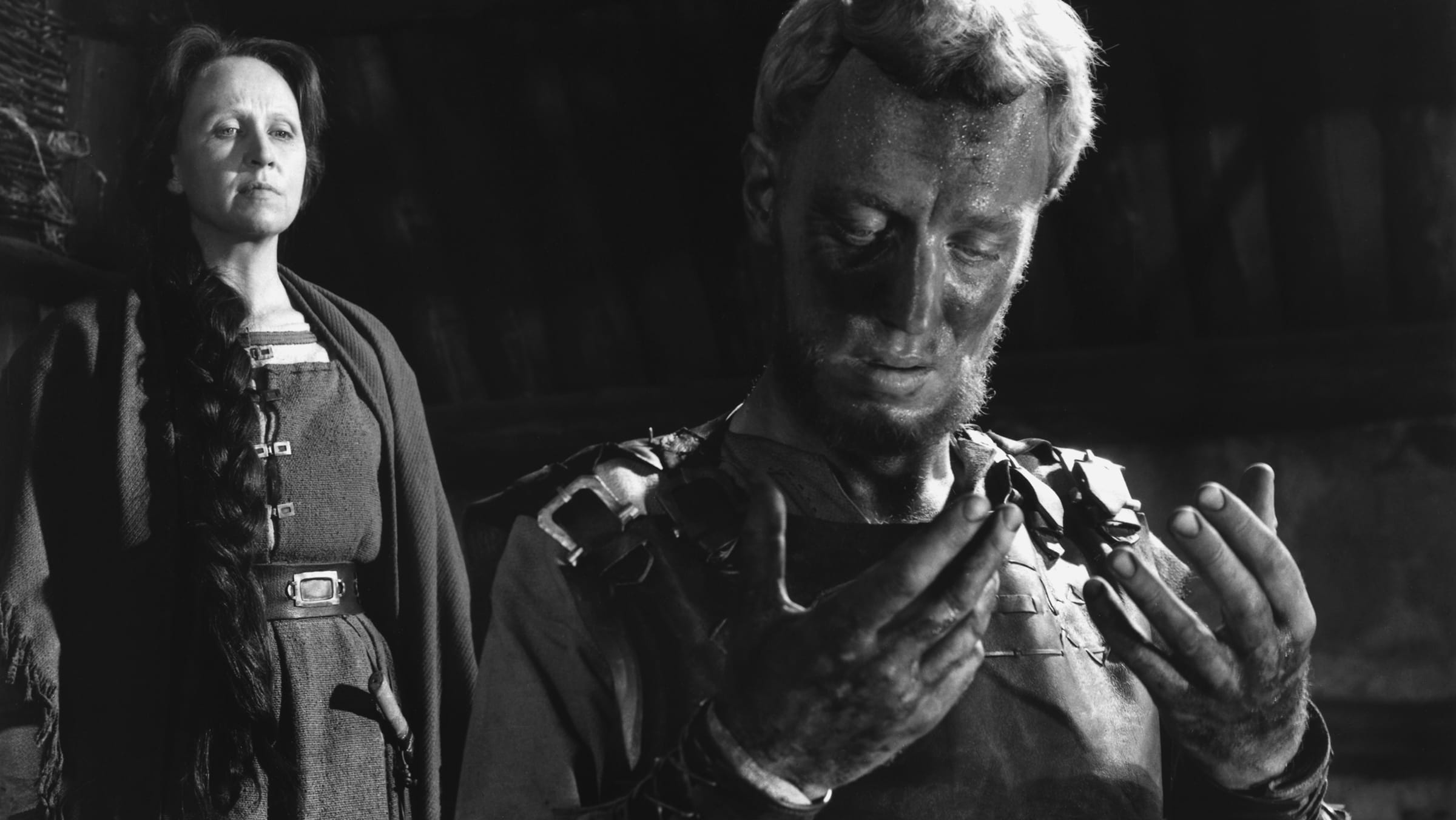
While there are no chainsaws, boobytraps or castration (like in Craven’s remake nearly 20 years later), the murder of the herdsmen is surprisingly brutal. Töre stabs one of them, holds another over the fiery stove and, after a moment of hesitation, throws the young boy (who by all accounts was innocent) into the wall. He shocks himself with the outburst of violence and spends the remainder of the film searching for some kind of redemption.
When they find Karin’s body, Töre cries out that he does not understand a god that could simply stand by and watch. Yet it’s the same god that sat and watched as Töre murdered an innocent child. The same god in whose name Karin was initially sent out and put in harm’s way. This impassive god that Töre praises and damns in equal measure is measured up against the Norse gods. A clear representation of Odin approaches Ingeri when she is separated from Karin. This god is crude but a deity of action. He offers Ingeri an abortion and tries to force himself on her.
If we are to believe that the Norse gods still have power in the region, it’s heavily implied that Ingeri casts a spell to bring harm to Karin. She even admits this to Töre when she returns; that she was riddled with jealousy that the virginal Karin was given preferential treatment while Ingeri, pregnant out of wedlock, was treated with contempt.
Bergman is no fan of religion. His semi-autobiographical epic Fanny and Alexander explored the difficult relationship he had with his devout, Lutheran father. In The Virgin Spring, his distaste is more obvious. If the Norse gods are shown to be brutish but effective, the Christian god is cruelly impassive, only giving Töre a sign of his existence after Karin has been taken. The spring that wells up under Karin is a consolation to retain Töre’s faith, rather than a miracle to protect the innocent girl.
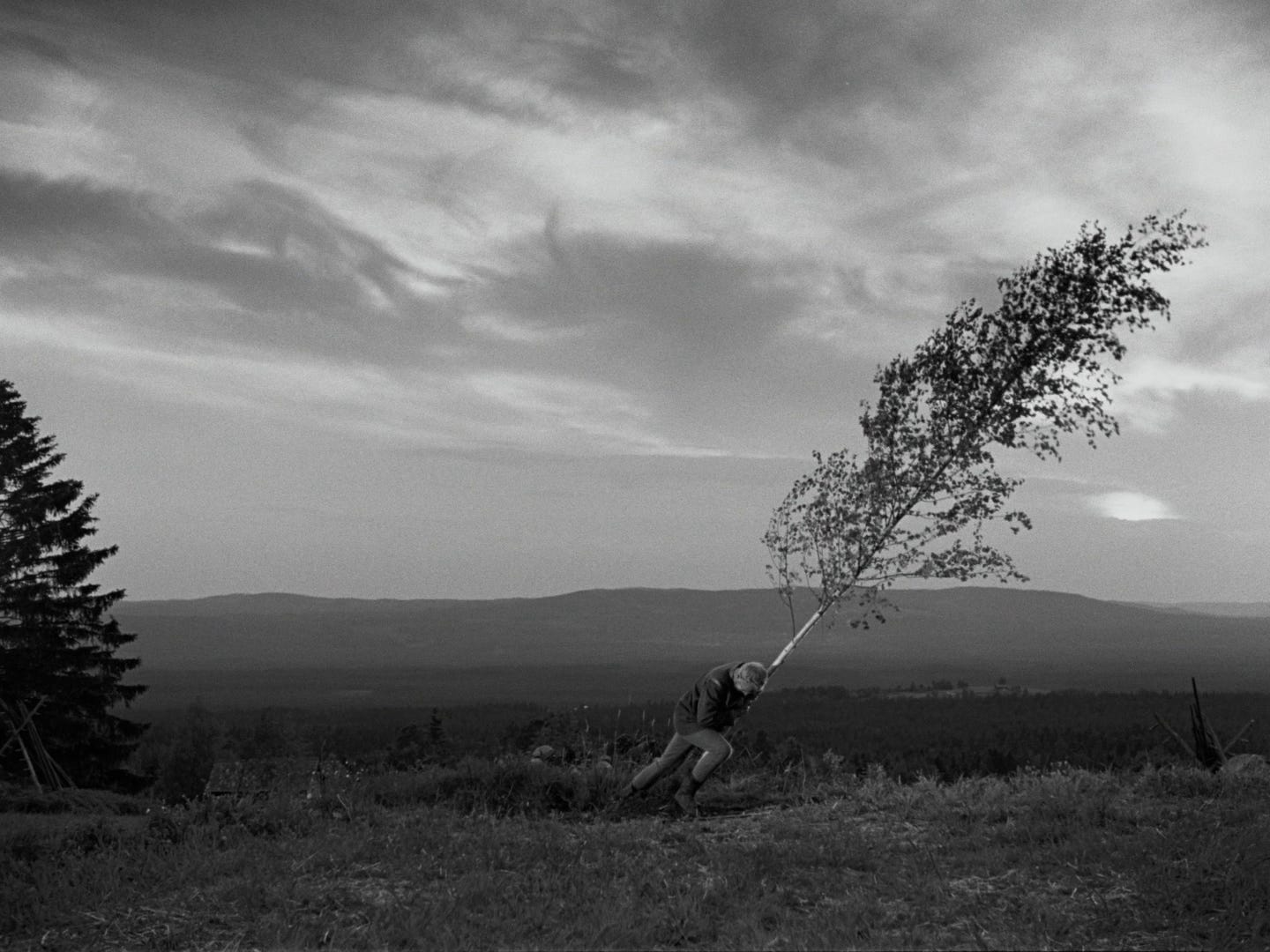
But Bergman never allows it to be quite so black and white. Töre may be respected in the community, but his devotion is shown to be lesser than his wife’s. Not only that but his resolve to take revenge is depicted almost like the veil of civilised, Christian actions slipping away. Once he hears of Karin’s murder he heads outside, grabs hold of a young birch tree and bends and twists it until it is felled. The image of von Sydow wrapped around the tree, harks back to the opening of the film, where Ingeri, wrapped around one of the wooden supports calls for Odin.
This simple scene of Töre felling the tree takes just over a minute and yet it’s full of symbolism. Ancient religions are far more in tune with the natural world. Ingeri is drawn to fire and water throughout her scenes, whereas Töre’s family, initially are shown to covet less permanent things, like clothing. Töre wrestling with the birch could be seen as him reconnecting with the natural world. After this, he also utilises fire, killing one of the herdsmen with the flames (presumably the ones stoked during Ingeri’s incantation at the start of the film).
An added wrinkle is the fact that Töre destroys the tree. If paganism is seen as a link to the natural world, then Christianity has, over the course of history, been a rather brutal disconnecting of this. By ripping up the tree, does Töre unwittingly continue that destruction of ancient traditions? His actions, at this point and during the murders, could be seen through Christian eyes as returning to a feral, uncivilised state. Through pagan eyes, it’s the Christian religion continues to convert or destroy those in its way.
When the spring bursts forth from under Karin’s body at the end of the film, we have the trifecta of earth, wind and fire. While Töre has chased a single deity, thanking them for his prosperity and blaming them for the death of his daughter, has it actually been the Norse gods in control throughout the film? Rather than a mocking Christian god providing a miracle when it’s too late, perhaps the spring is the final gift of Odin. He provided the tree with which Töre cleanses himself before the murder; he stoked the fire which took the life of one herdsman; and, in the final moments, he provides water to wash the sins of Töre and his family.
Director: Ingmar Bergman
Writer: Ulla Isaksson
Starring: Max von Sydow, Birgitta Pettersson, Gunnel Lindblom
 | A guest post by
|