

THE UNTOUCHABLES
Home run


Spoilers for The Untouchables (1987)
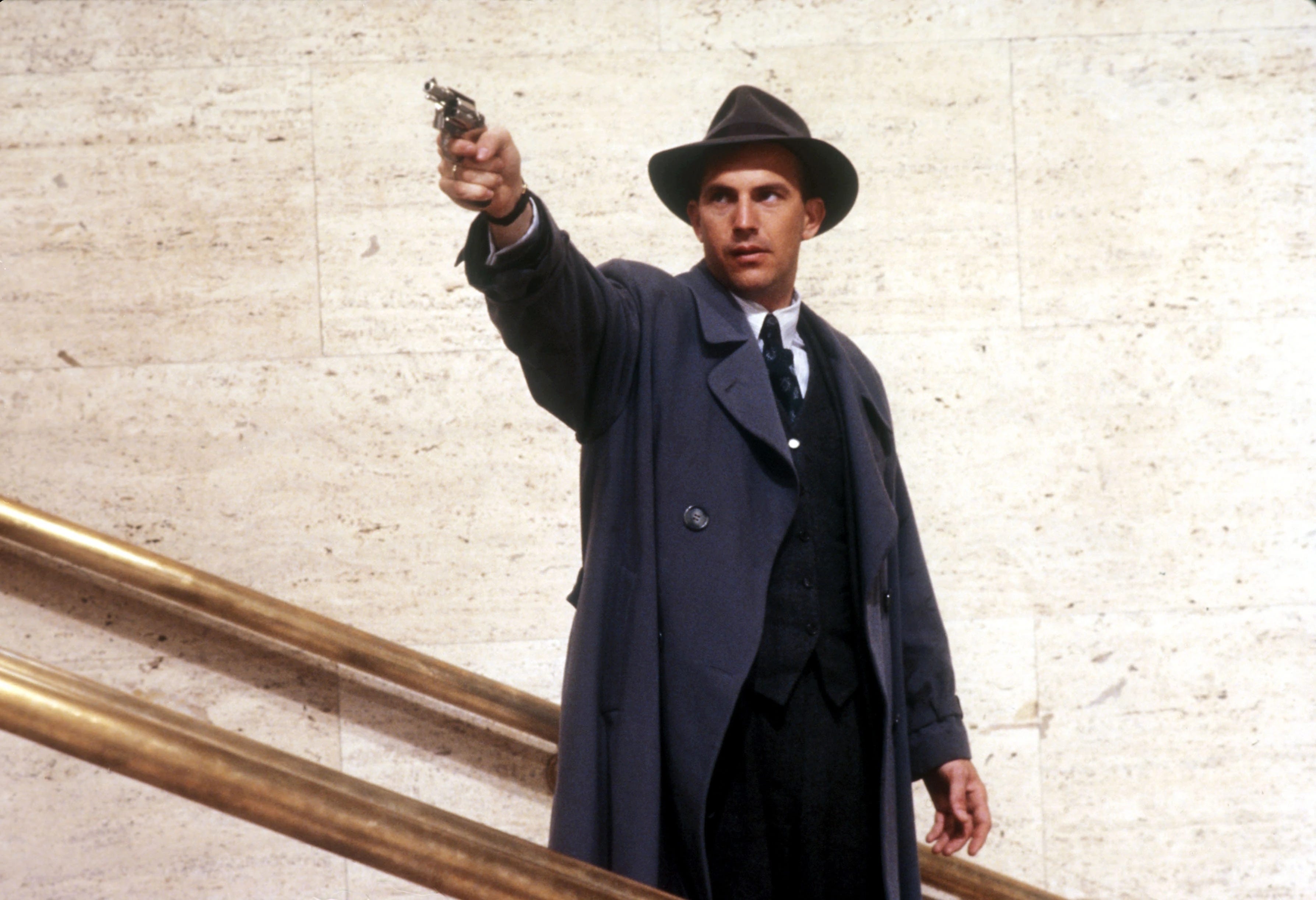
The Untouchables is a good film, but it’s not a great film. Director Brian De Palma and writer David Mamet were more concerned with creating an action film than a real accounting of the events that led to Al Capone’s arrest and sentence for tax evasion. For starters, prohibition agent Eliot Ness and his team had very little involvement in bringing the Chicago crime boss to justice, but were responsible for cranking up the pressure on him and shutting many of his bootlegging dens.
The film whitewashes many of Ness’ more unsavoury traits; invents an Irish cop, played by Sean Connery, who is incapable of playing anyone but Sean Connery; and when Capone is finally put in front of a judge, the film creates a chase sequence that leads to the death of Frank Nitti – the man who would run Capone’s operation for a decade after the events of the film.
It would be fair to say that both De Palma and Mamet wanted to capture the feel of the gangland epics that had come in the decades before, making something that is more referential than factually accurate. The raid on the Canadian border, another event with no basis in history, is pure Western, like a colourised John Ford movie. There’s the obvious homage to the Odessa Steps montage in Sergei Eisenstein’s Battleship Potemkin (1925) near the end of the film, and the attack on Malone (Connery) is shot from the assailant’s point of view, much like the giallo films that De Palma referenced in his earlier work.
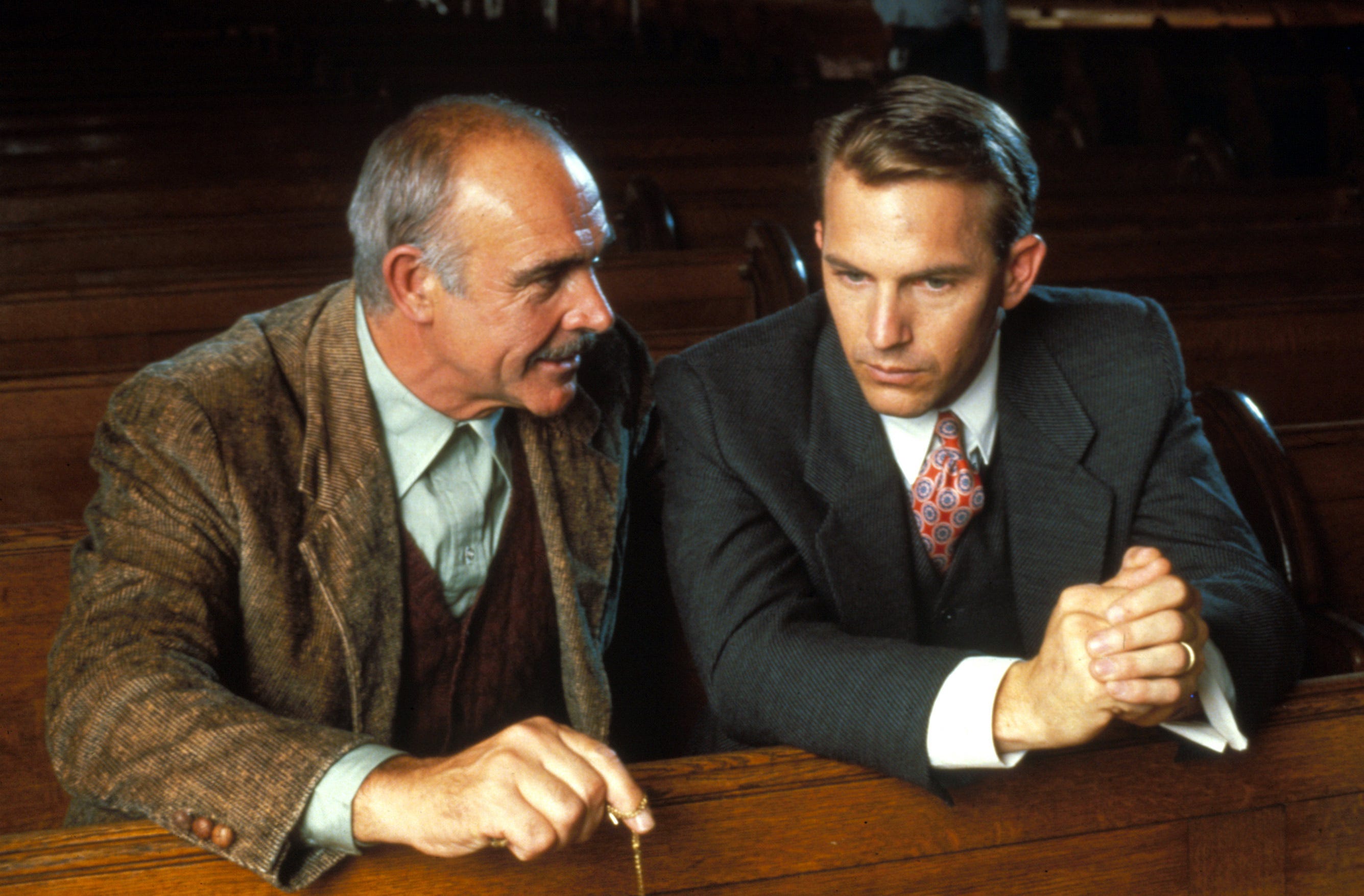
It all makes for an entertaining, if unsatisfactory film. Kevin Costner is fine as Ness, though it’s hard not to think he’d have had more to work with if Ness were allowed to be anything but the ultimate good guy. Andy Garcia auditions for The Godfather Part III (Francis Ford Coppola, 1990) as Giuseppe Petri, while Connery is nothing but himself as the hard-nosed beat cop Malone.
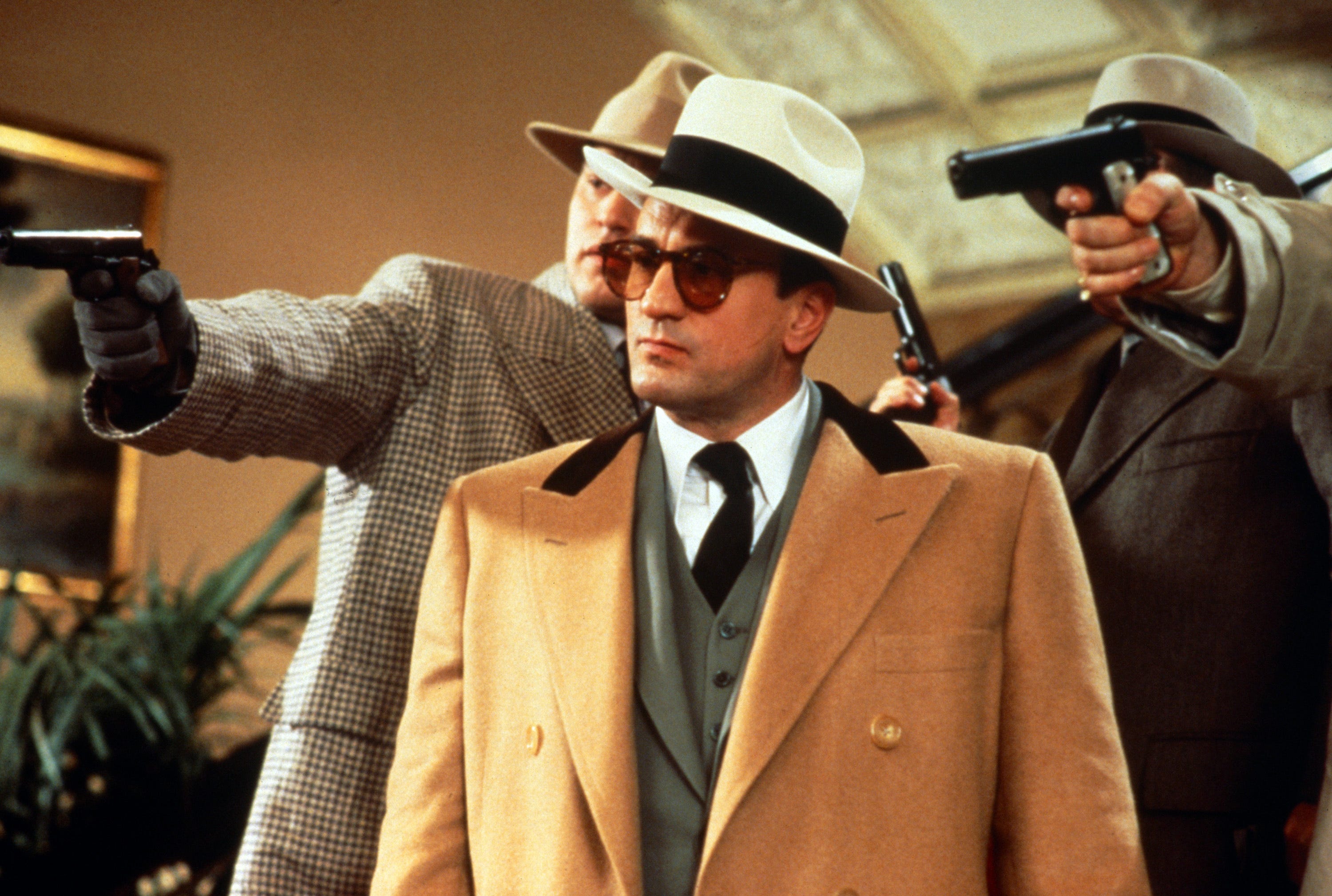
Acting for the bad guys, Billy Drago is brooding and silent as Nitti, but the real joy is seeing Robert De Niro chew scenery as Al Capone. And here is where the film succeeds. Organised crime is often depicted as a life of balance; doing just enough good to keep the public and the political figures on your side, always presenting yourself as the best case scenario, keeping a modicum of peace that is preferable to a power vacuum.
In The Untouchables, Capone is a showman. Happily giving interviews and making jokes, never actually hiding the fact that he is a bootlegger and gangster, but insisting that he is simply providing a service to the public during prohibition. For the first half hour of the film – despite the first scene being a Capone-ordered bombing of a bar – the bad guy is far more entertaining, and dare I say likeable, than the po-faced Ness.
The film needed a scene to show how vicious Capone could be behind closed doors. In real life, public opinion was already swaying against the man after the Saint Valentine’s Day Massacre in 1929, but as The Untouchables takes place after this event, De Palma and Mamet take a rumoured Capone murder and put it on screen.
After the first successful raid by Ness’ team, Capone holds a dinner with his team. He talks about his love of baseball and brandishes a bat. He discusses the skill of an individual and how, in baseball, this must be balanced with teamwork. He then proceeds to beat a man to death with the bat.
It’s a shocking scene, one heightened by De Niro’s ability to switch from calm to menacing in a second. If the start of the film made Capone feel like an extension of late-career Jake LaMotta in Raging Bull (Martin Scorsese, 1980), the baseball bat murder turns the mobster into the killer we know he is.
It’s pivotal to the film; from this point on, Capone never lets up the assault on Ness and his team, forcing the good guys to be more brutal in their actions. As Malone says early in the film:
“You wanna know how to get Capone? They pull a knife, you pull a gun. He sends one of yours to the hospital, you send one of his to the morgue. That’s the Chicago way! And that’s how you get Capone. Now do you want to do that? Are you ready to do that?”
Much like the baseball bat, it’s a blunt tool. The film has little time to go into the nuances of character. In this version of prohibition Chicago, you have good guys and bad guys with little room for interpretation. The film wouldn’t work with the bat, but there’s a far more interesting story about a tormented agent hunting a complex gangster hidden behind the film references.
Director: Brian De Palma
Writer: David Mamet. Based on the book The Untouchables by Eliot Ness and Oscar Fraley
Starring: Kevin Costner, Charles Martin Smith, Andy García, Robert De Niro, Sean Connery
 | A guest post by
|