

ROPE
A simple guide to building tension


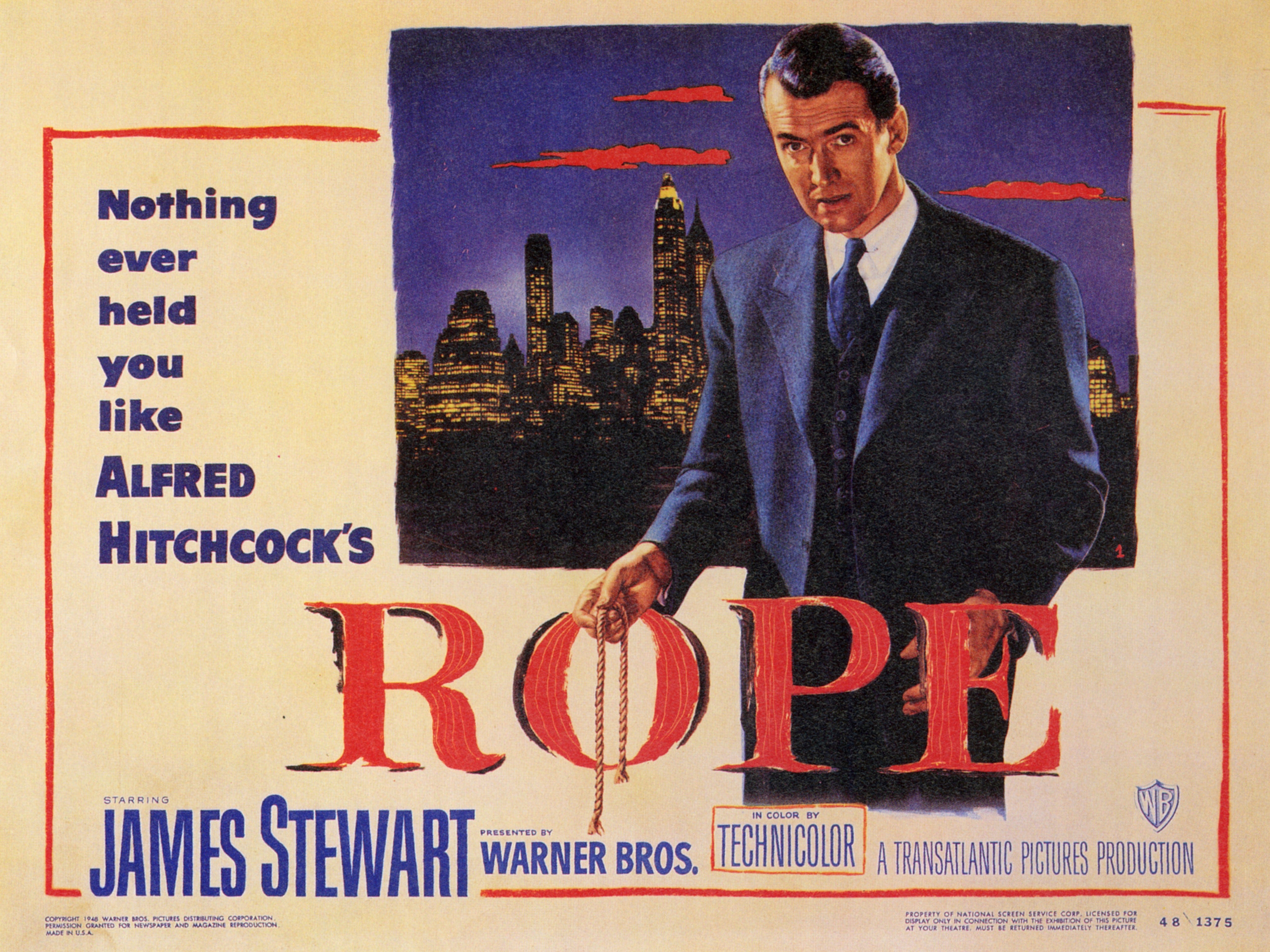
Spoiler for Rope (1948)
The easiest way to build tension is through time. A deadline adds stakes, whether it’s as inconsequential as getting the latest film essay written, or as world-altering as stopping a nuclear bomb from going off. Film has long used the ticking clock as the ultimate shortcut to heighten tension.
For Alfred Hitchcock’s Rope, loosely based on the real-life Leopold and Loeb murder case in 1924, there is no need to artificially raise the stakes. Tension is built into the entire setup, as a small dinner party occurs in the same room as a corpse. The audience knows that Brandon (John Dall) and Phillip (Farley Granger) have murdered their friend David (Dick Hogan), and they know where the body is hidden, so the film becomes a trail of clues leading the guests, headed up by Rupert Cadell (James Stewart), to the crime.
From the start, Brandon, the more confident and flamboyant of the two, delights in toying with the guests. He moves the party into the lounge, with the buffet laid out on the chest where David is hidden. He reconnects David’s fiancée Janet (Joan Chandler) with her old flame Kenneth (Douglas Dick), suggesting that Kenneth may not be around to protest. He goads his old professor Cadell to expound on ideas of intellectually superior men and how those less intelligent should be eliminated.
Phillip, on the other hand, is on edge. Uncomfortable with the constant risks that Brandon takes and, ironically, heaping more suspicion on the two by snapping at guests and refusing to engage in the party. Cadell notices this, as well as inconsistencies with what the pair have been saying and confronts Phillip, and here Hitchcock cleverly integrates time into this already tense situation.
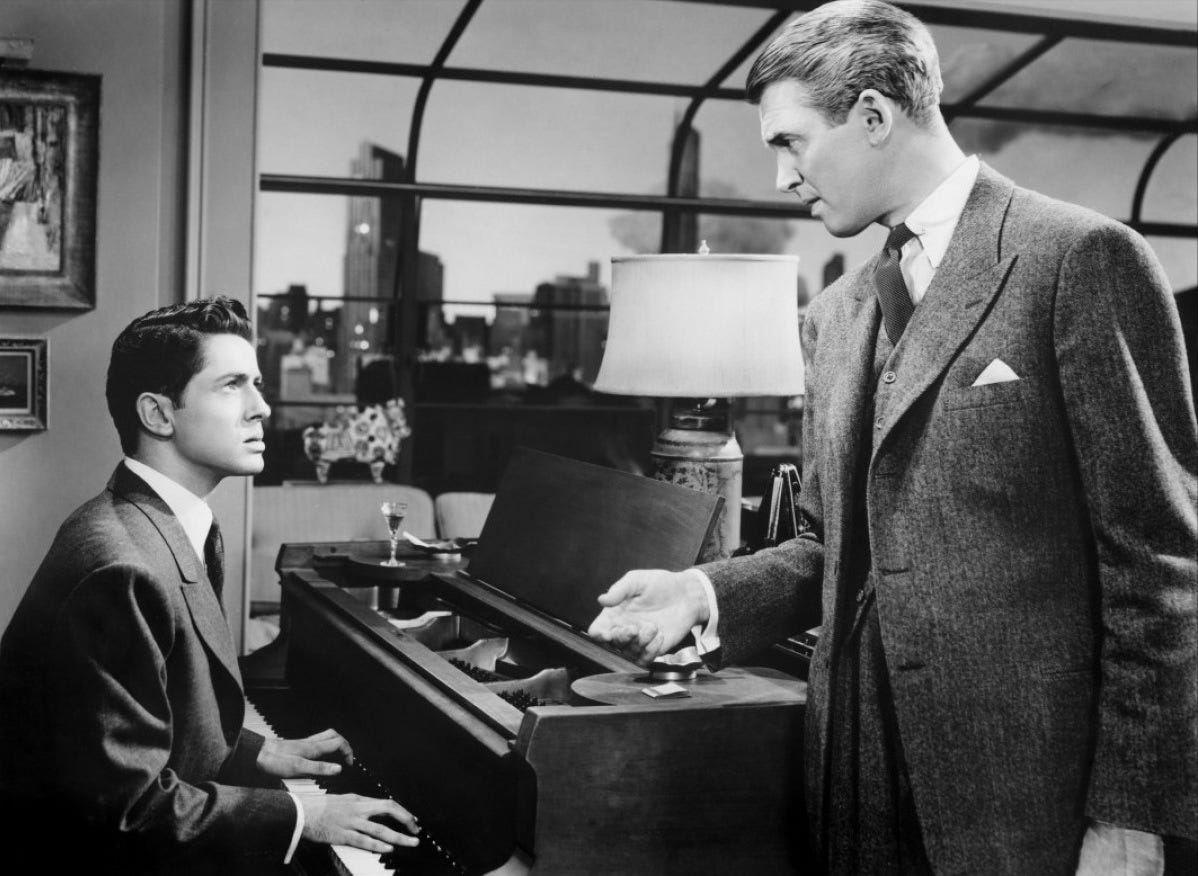
As Phillip plays the piano, Cadell approaches him. First messing with the lamp (possibly a reference to interrogations where bright lights would be shined into the suspect’s eyes) and then toying with a metronome. Having already raised suspicions to Phillip, Cadell sets the metronome in motion. The slow ticking dominates the soundtrack throughout the rest of the conversation, informing the audience that Phillip will likely slip up.
It's a surprisingly effective trick, aided by the smart scripting from Hume Cronyn and Arthur Laurents, which sees Phillip almost instantly go on the offensive when the metronome starts moving. Cadell confesses that he doesn’t know exactly what he is suspicious of but posits that Brandon may be keeping David away to push Janet and Kenneth back together. Phillip first tries to push Cadell away, telling him to question Brandon instead, and then laughs it off.
“You’re more than usually allergic to the truth tonight,” Cadell responds. As he says this, he stops the metronome. Resets it, and lets it go again, this time faster. The tension naturally builds at this point. The faster pace of the ticking suggests it nearing the end of the line, and Cadell goes on the offensive, changing his questioning of Phillip.
The chicken strangler
There’s an all too obvious point of contention introduced earlier in the film, where Brandon jokes that Phillip is adept at strangling chickens. Even for Hitchcock, this feels particularly on the nose. David was strangled by the pair – one holding each end of the rope for joint culpability – and it would be easy to relate their theories of lesser humans to livestock.
Back at the piano, as the metronome increases in pace, Cadell tells Phillip that he remembers him strangling a chicken. Phillip tries to dodge this line of questioning but has no choice but to admit that he lied, opening the possibility that he and Brandon have been lying about everything that evening. Cadell pushes more, forcing Phillip to near breaking point.
“Why did you lie to me?”
“Because I don’t like to talk about…”
“About what? Strangling…”
Both Cadell and Phillip cut themselves short just as it would seem an admission is going to come. Cadell’s cut-off is particularly interesting, leaving the question hanging not just about strangling chickens, but strangling in general.
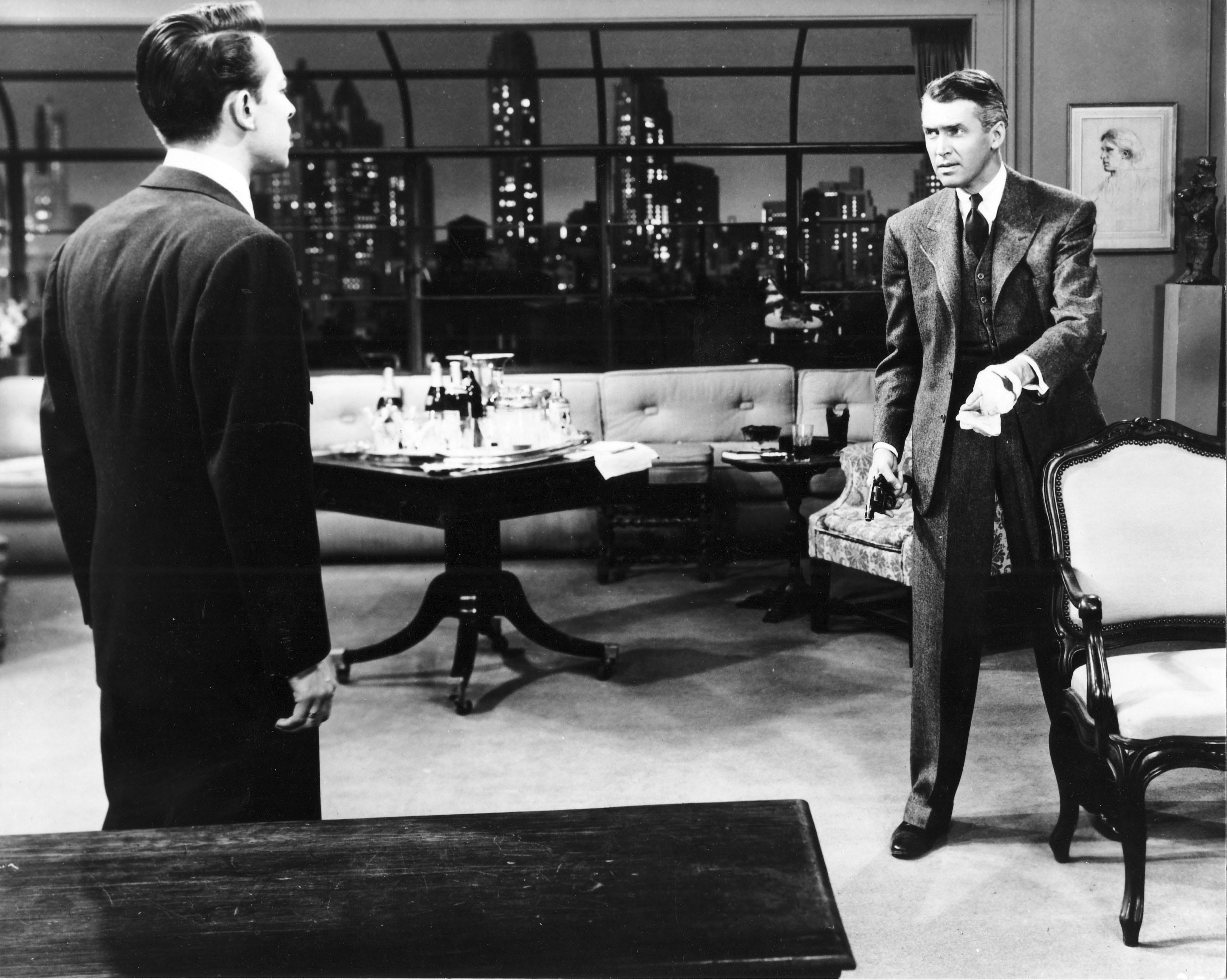
But Hitchcock doesn’t stop there, with the metronome still running David’s father Mr Kentley (Cedric Hardwicke) enters the frame. Only his midsection is in the shot, carrying a bundle of books tied together with the rope used to murder David. Phillip is aghast and this is clear to Cadell, who asks him what is wrong. Phillip tries to cover and states:
“I just think it’s a clumsy way of tying them up that’s all.”
As he says this, he stops the metronome. The interrogation is over, for now, but unwittingly Phillip has led Cadell straight to the answer. The ticking metronome, time pushing forward to an almost inevitable conclusion, forced his hand. The audience knows it’s only a matter of time (pun intended) before the truth emerges.
Director: Alfred Hitchcock
Writers: Hume Cronyn, Arthur Laurents. Based on the play Rope by Patrick Hamilton
Starring: James Stewart, John Dall, Farley Granger
 | A guest post by
|