

RINGU
Folklore from past to present


Spoilers for Ringu (1998). Trigger warnings for brief mentions of suicide
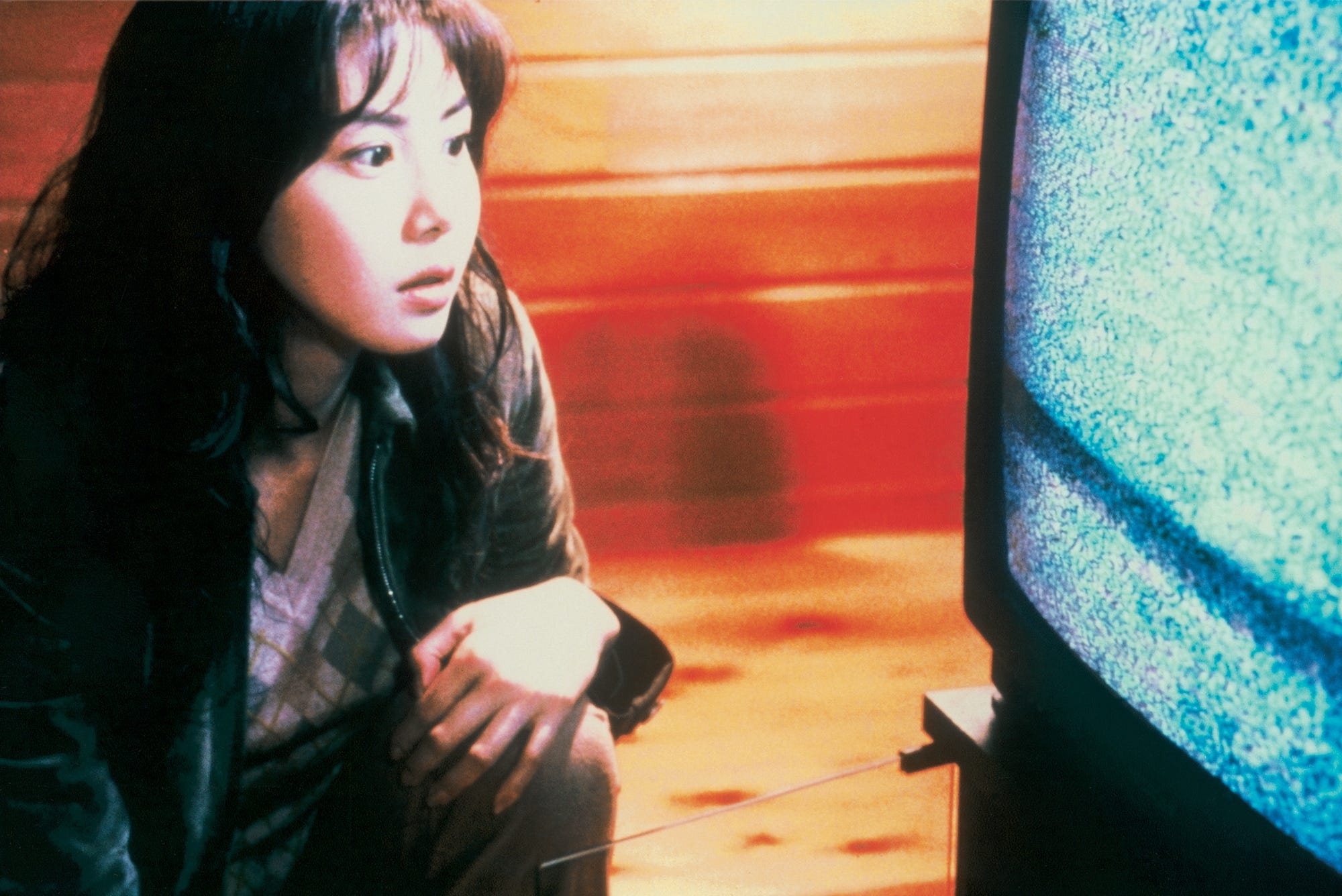
While the release of Hideo Nakata’s Ringu popularised J-Horror, as well as remaining an influence on analogue horror, it is a film that carves its own path. The story is relatively simple but makes very little effort to spoon-feed the audience. The story of Sadako Yamamura (Rie Inō) and the cursed video that her spirit inhabits takes place in a world that feels almost uncanny to the viewer.
We accept that characters are psychic and that these powers can be passed on through touch; the existence of spirits is not questioned and is instead a normal part of life in this world; and wild hunches about the reasoning behind the curse are proven to be valid at multiple points throughout the film.
Part of the reasoning behind this is the need to trim Koji Suzuki’s 1991 novel into a ninety-minute film. Events that have a much more in-depth explanation in Suzuki’s version are often mere asides in the adaptation in an effort to keep the film moving at a pace. According to various sources, the most faithful adaptation was produced for Japanese television three years before Nakata’s film (Ring: Kanzenban, Chisui Takigawa).
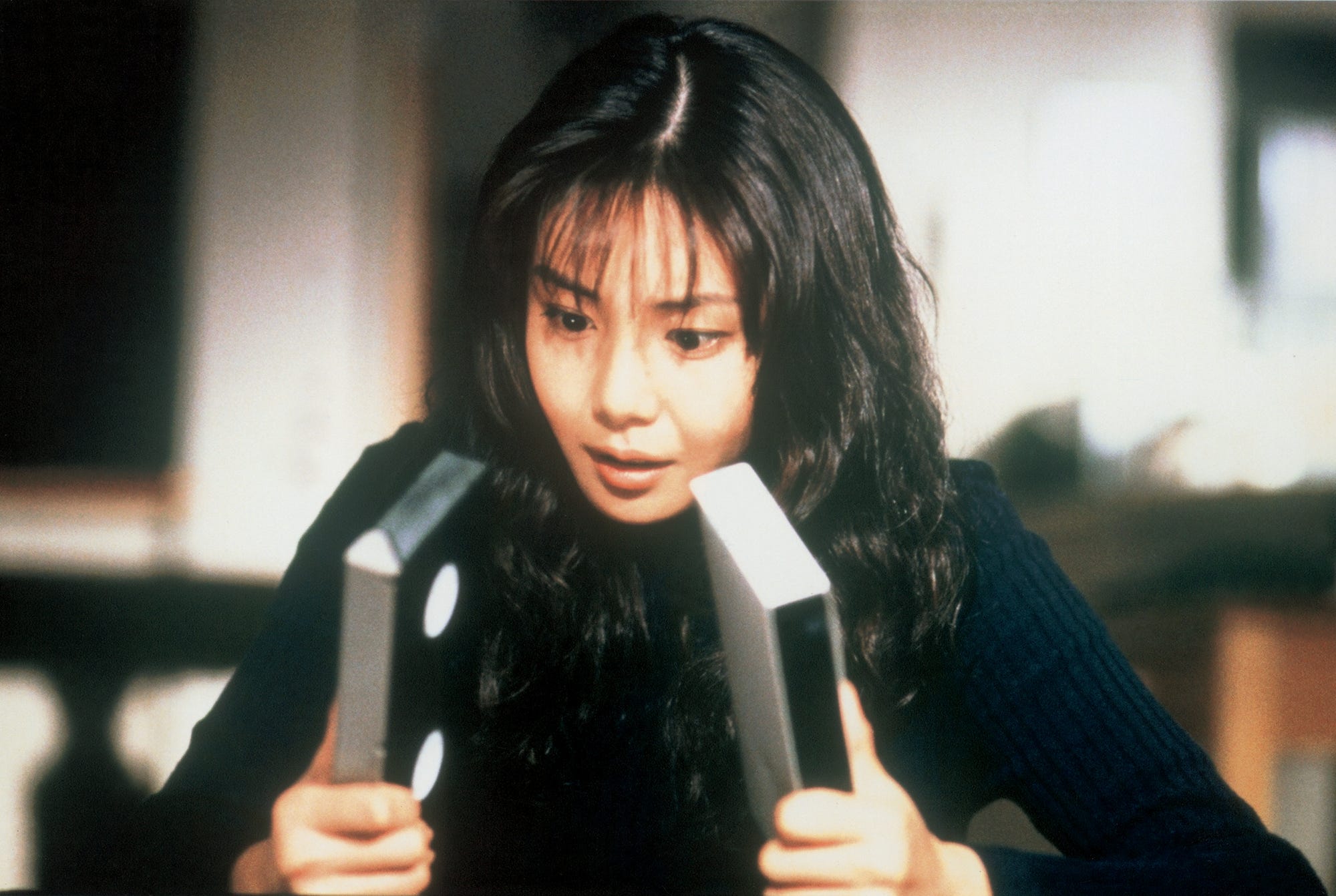
However, you could also view this slight worldbuilding as an example of the folklore that inspired the film. Folklore, myths and legends were generally passed down through word of mouth. By doing so, the stories were continuously rewritten, at least until they could be written down and mass-produced. Stories from different regions of the world were passed on as the population became more mobile, either through immigration or colonisation, and these tales were told, the speaker would naturally put their own spin on them.
This could be on-the-spot editing because the storyteller found some aspects to be less interesting, emphasising the exciting parts of the story. It could be a question that leads to an improvised expansion of a character or action. In many cases, the stories were adapted for children, adding a black and white morality to encourage good behaviour.
We see this at the beginning of Ringu, when journalist Reiko Asakawa (Nanako Matsushima) interviews high schoolers about the cursed videotape. Each of them has the main crux of the story – a tape, a curse, one week to live – but the origins of the curse change between tellings. For one student, it started when a child accidentally recorded what should have been an out-of-service channel while holidaying in the Izu Peninsula.
Asakawa’s colleague points out that these stories start after a tragedy – whether it’s the suicide of a pop idol or a traffic pile-up that causes a great loss of life.
In those initial interviews, the stories are never firsthand or even second-hand. They come from friends of friends, stories from people in the year above. Rumours spread and the story changes little by little.
And Ringu plays with this idea masterfully by implementing rules that do change the curse. When Asakawa watches the tape in Izu, she receives the now-famous phone call that says she has seven days to live. However, when she shows the tape to her ex-husband, Ryūji Takayama (Hiroyuki Sanada), who has agreed to help her get to the bottom of the curse, the phone call never comes.
Like the constant retellings of a story, the proximity to Izu, or lack thereof, makes a difference to how the curse reacts. Yet, it’s a small enough detail that it’s easy to miss on a first watch, and it isn’t until near the climax of the film that Asakawa makes this connection. If you think of the Telephone Game and how important details become distorted, Ringu uses the fallibility of our brains to adjust the curse throughout the film.
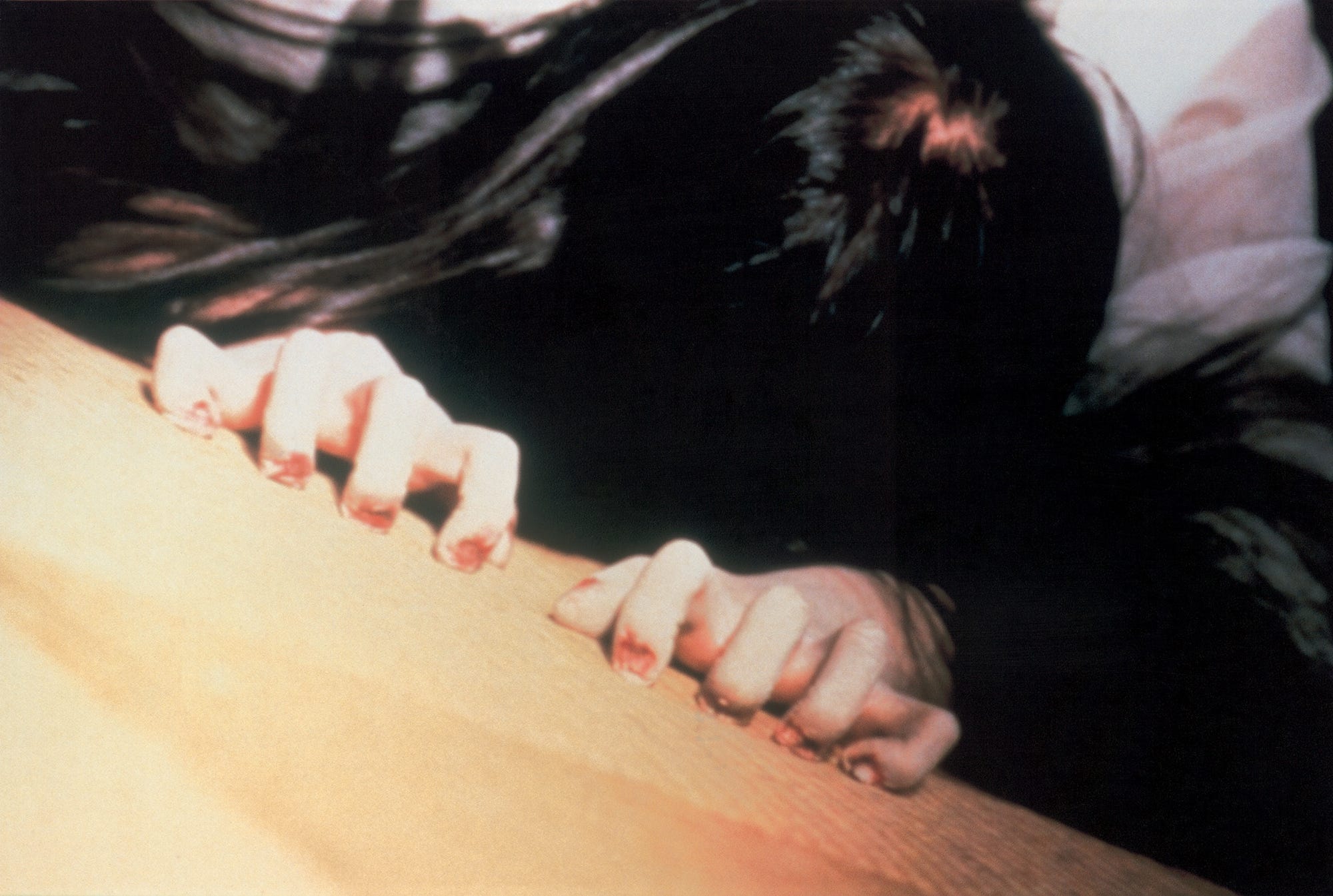
Similarly, every time a character watches the cursed videotape, we see something new. The camera lingers on the well a little longer; there is a hint of an arm grasping the rim. From a cinematic standpoint, this provides a subtle visual clue of the plot progression, leading us closer to that famous scene when Sadako crawls out of the television. But it is also a representation of how the retelling of what is on the tape would become exaggerated over time.
Ringu, of course, sits on the boundaries between oral, analogue and digital folklore. At the end of the film, when Asakawa realises that the only way to stop the curse is to make a copy of the tape and show it to someone else, it becomes a sort of chainmail – akin to how emails warning of bad luck if it wasn’t passed on to fifty other people would populate our inboxes just a couple of years later.
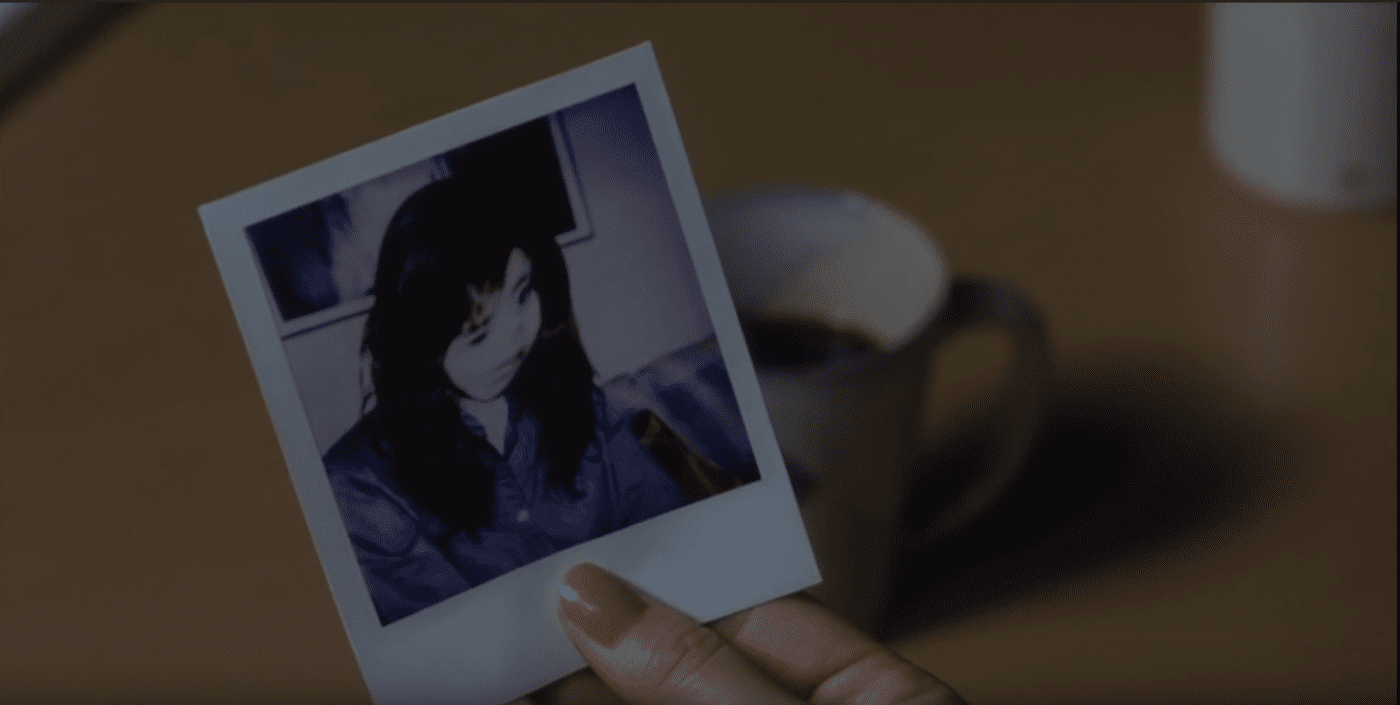
The distortion of the photographs, something that would occur in several J-Horror films, is reminiscent of the rise of analogue horror and the series of ‘imposter’ YouTube channels and video games. Purposeful image manipulation has also enabled new legends to appear in the internet age, such as Slenderman.
Combined with the impact of The Blair Witch Project (Daniel Myrick, Eduardo Sánchez, 1999), which popularised internet marketing and was a precursor to alternate reality games, Ringu acts as a testament to how folklore spread historically, while predicting how it would adapt to the internet age.
Director: Hideo Nakata
Writer: Hiroshi Takahashi. Based on the novel Ring by Koji Suzuki
Starring: Nanako Matsushima, Hiroyuki Sanada, Rikiya Ōtaka, Miki Nakatani, Yuko Takeuchi, Hitomi Sato, Daisuke Ban, Rie Inō
 | A guest post by
|
Excellent review. Really enjoyed reading.