

NOROÎT (UNE VENGEANCE)
Modernist history

Spoilers for Noroît (Une vengeance) (1976)
Jacques Rivette was a key figure within the French New Wave, reportedly the first in the movement to begin work on a feature film, although many of his peers released films before his debut was complete. He arguably directed the holy grail of slow cinema, Out 1 (1971), a largely improvised work that runs for almost 13 hours in its uncut form.
Rivette was continuously playing with the form of his work, taking simple narrative threads and making them complex. Following the success of Céline and Julie Go Boating (1974), he obtained funding for a four-film series, each of which would use genre to further experiment. Only two of these would ever be completed: Duelle (Une quarantaine), the second part of the tetralogy, and Noroît (Une vengeance), the third film. Both of which were released in 1976.
While work began on the first film, Marie et Julien, Rivette would suffer a nervous breakdown that would keep him away from the director's chair for over a year. During this time, the average reviews for the released parts of the series led to the producers pulling their support.
And it must be said that Noroît, widely regarded as the stronger of the two films, falls some way short of the joyous Céline and Julie…, or the mammoth undertaking of Out 1. Nor does it push boundaries in the way that Rivette’s earlier work did.
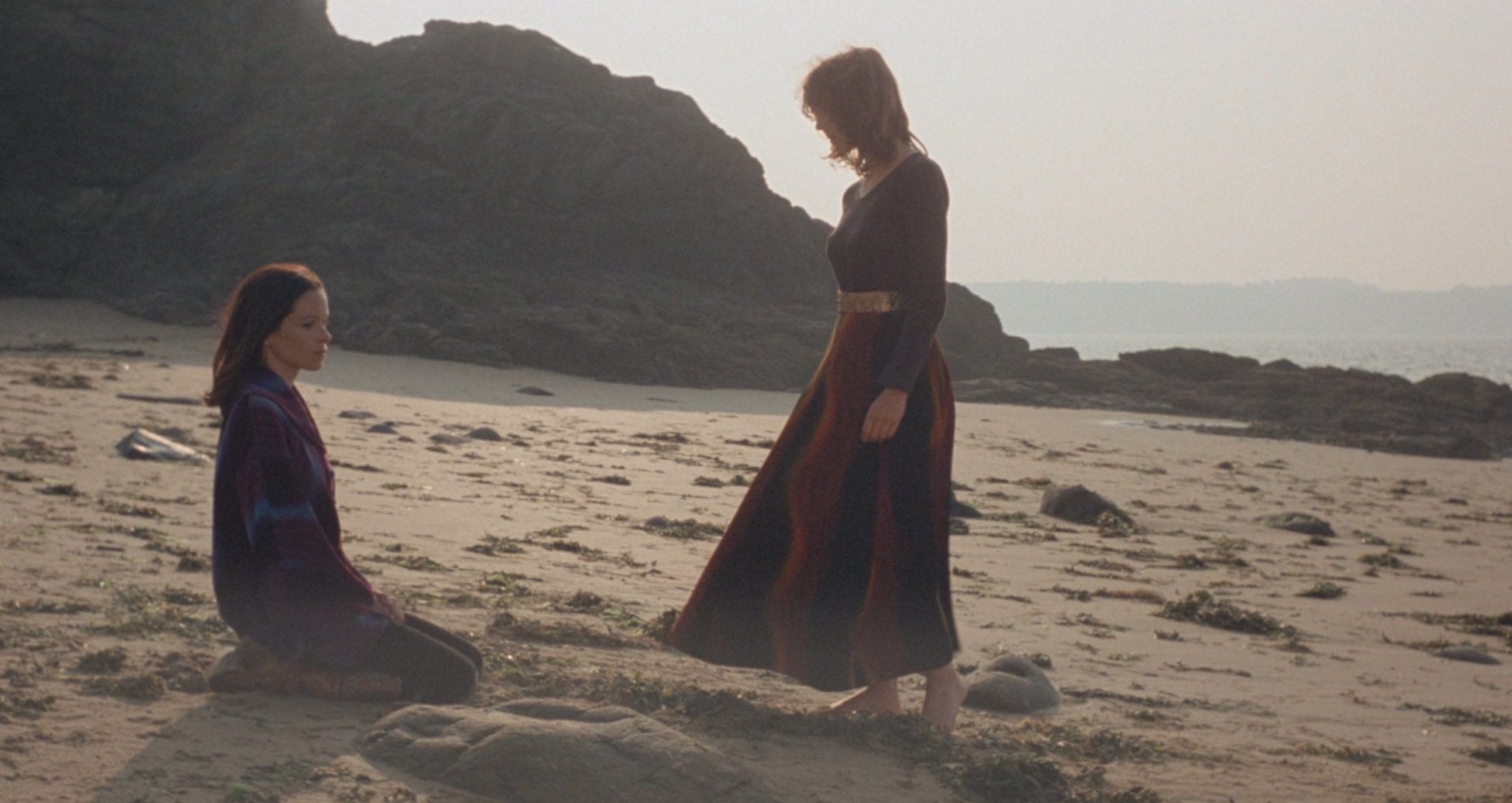
Noroît is very consciously a visual experiment. Loosely based on Thomas Middleton’s Jacobean play, The Revenger’s Tragedy, it rejects the conventions of a stage-to-screen adaptation.
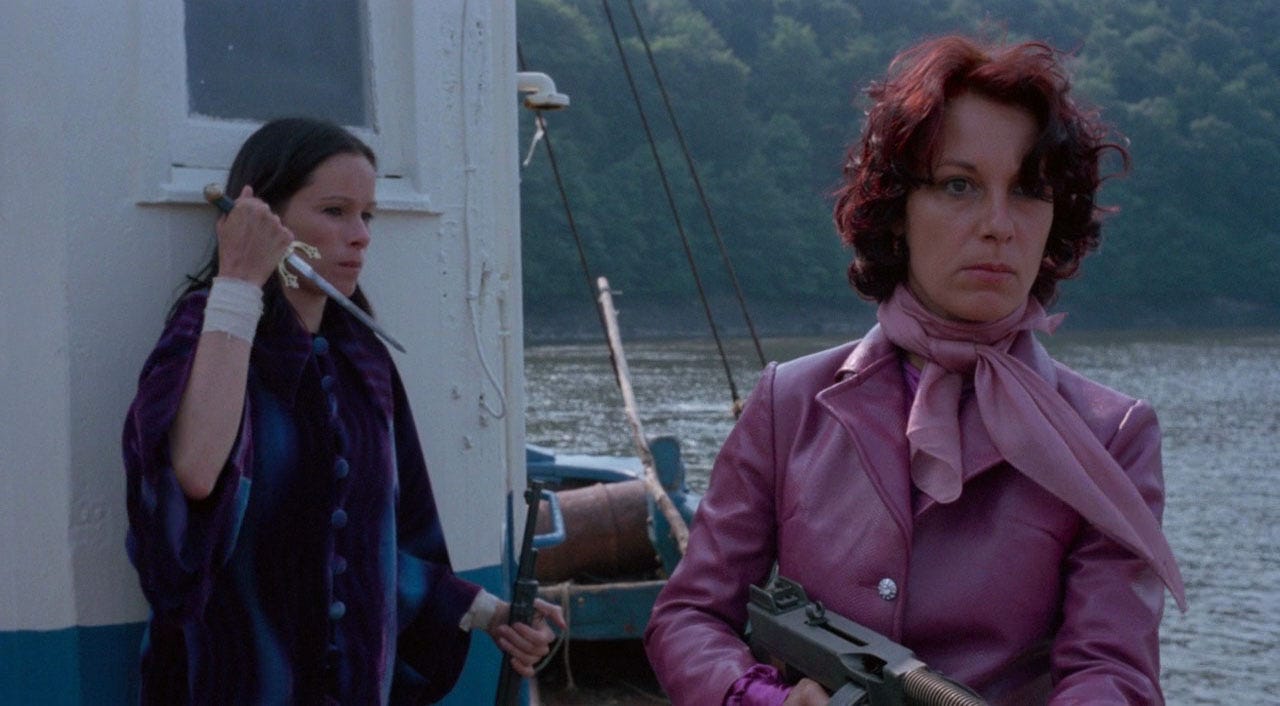
Geraldine Chaplin plays Morag, a pirate who seeks to avenge her brother by killing Guila (Bernadette Lafont). Guila runs a smuggling business out of a small island in the Atlantic Ocean and is suspected of being a witch, not just by her enemies, but those within her service. To infiltrate the group, Morag enlists the help of Erika (Kika Markham), who manages to secure the role of Guila’s bodyguard.
As you’d expect from the plays of the time, the simple plot is complicated by various twists and betrayals. However, Rivette doesn’t seem particularly interested in this part of the story. He keeps dialogue to a minimum, as well as any real confrontation between characters, until the final moments.
Instead, he plays up the fakery of cinema by transferring the tools of the theatre onto the screen wholesale. This is done at times to add humour, with the camera panning around rooms to reveal that the soundtrack is diegetic, with a small band playing to the events that occur within the castle. Swordfights are so heavily choreographed as to never appear to be any threat to either party, very purposefully looking like a dance number.
At other moments, Morag and Erika repeat monologues to each other, urging themselves to go through with the plot to kill Guila. These moments also link to the supernatural elements of the film, with the various mantras and movements of the pair akin to a coven’s chants.
Then, once the audience has gotten used to the archaic tools used to tell the story, Rivette pulls the rug away for a very effective final sequence. As Guila wanders amongst her minions during a party, she starts to kill each of them, all while Morag infiltrates the castle and murders several more.
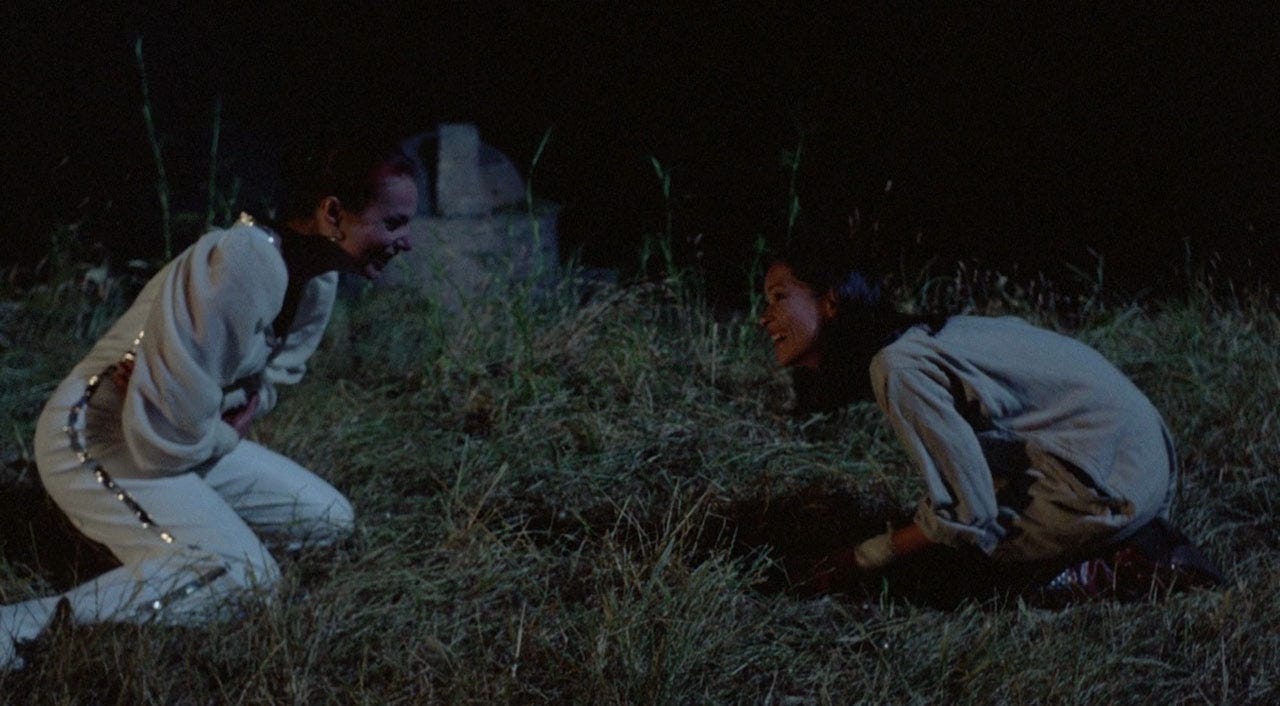
The choreographed fights are replaced with intricate dance sequences, while the violence takes on a grittier edge. At the same time, Rivette experiments with the visual style. Using coloured filters and rapid cuts to disorientate the audience. After two hours of watching a play unfurl on the screen, we are suddenly reminded that this is a piece of cinema. A medium that is easily manipulated to suit a director’s will.
Guila’s magic turns out to be purely cinematic tricks. Her poisoning of the crew is multi-coloured, flashing up primary colours as characters fall. Rivette keeps endlessly twisting the formula of his own film until only Morag and Guila remain. Then, as if to pay homage to the theatrical traditions that brought about cinema in the first place, he holds the camera still as Morag and Guila fatally wound each other.
It’s a climax pulled straight from a Shakespearean play – differing wildly from the source material – as our protagonist has the bittersweet experience of seeing their enemy die, only to die moments later. Rivette could be making the same comment on cinema; how it never quite killed off the theatre, and to do so, would be to end its own existence.
Director: Jacques Rivette
Writers: Eduardo de Gregorio, Marilù Parolini, Jacques Rivette. Based on The Revenger’s Tragedy by Thomas Middleton
Starring: Geraldine Chaplin, Bernadette Lafont, Kika Markham, Humbert Balsan, Larrio Ekson, Anne-Marie Reynaud, Babette Lamy