

NAKED
Turning our backs on redemption


Spoilers for Naked (1993). Trigger warnings for discussions of misogyny and sexual assault.
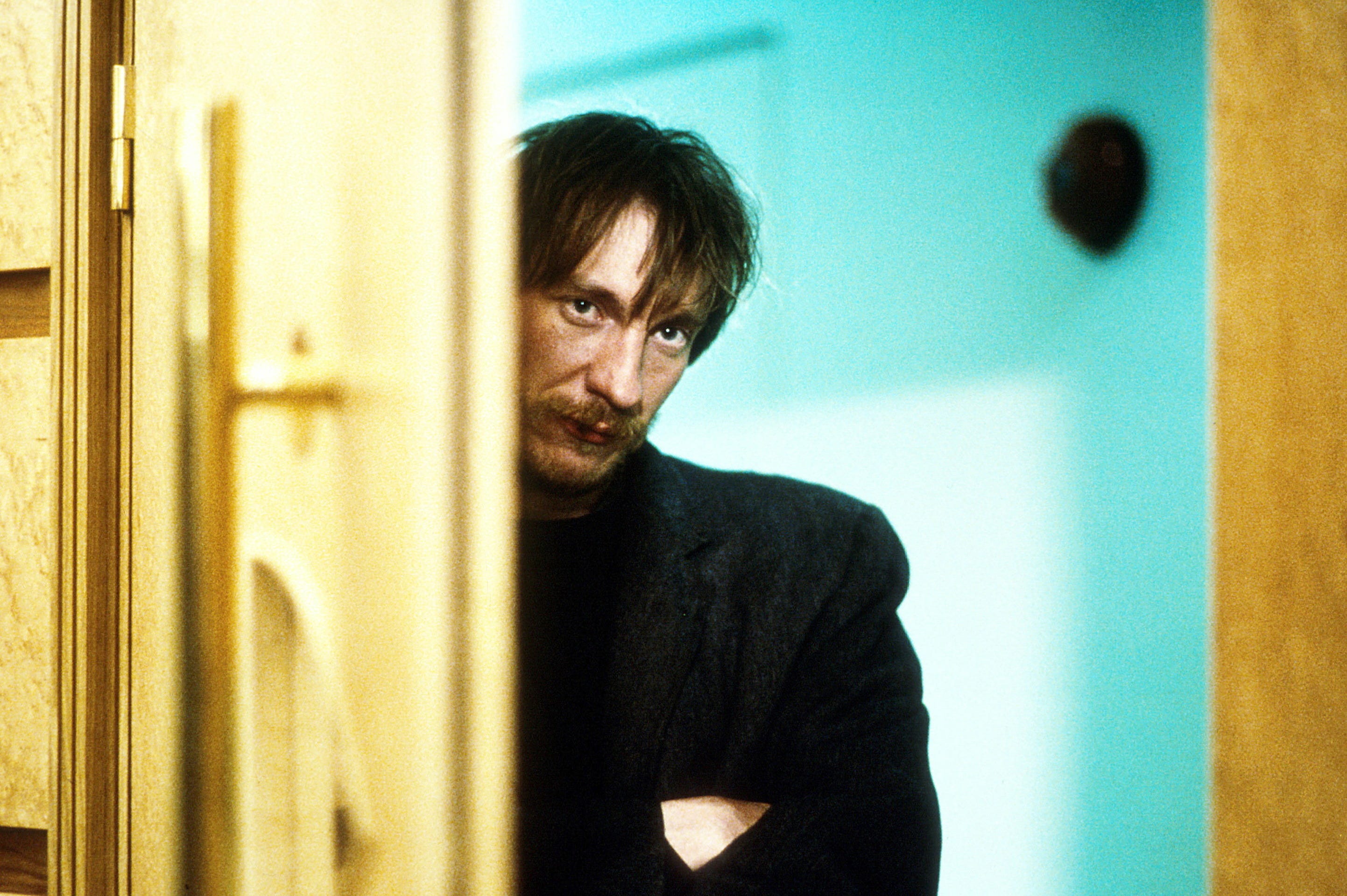
Mike Leigh’s 1993 Palme d'Or nominated Naked is not an easy watch. Our first introduction to the motormouthed drifter Johnny (David Thewlis) shows him turn a consensual sexual encounter into a violent assault, then steal a car to escape a deserved beating.
He is unemployed, displaced, and willing to lash out verbally at anyone around him. Despite his big ideas and intelligence, he is a pathetic character, a ball of toxic masculinity unable to support himself in Thatcher’s Britain. Taking from everyone around him (financially, sexually) and turning on the second they show any resistance or try to get too close to him.
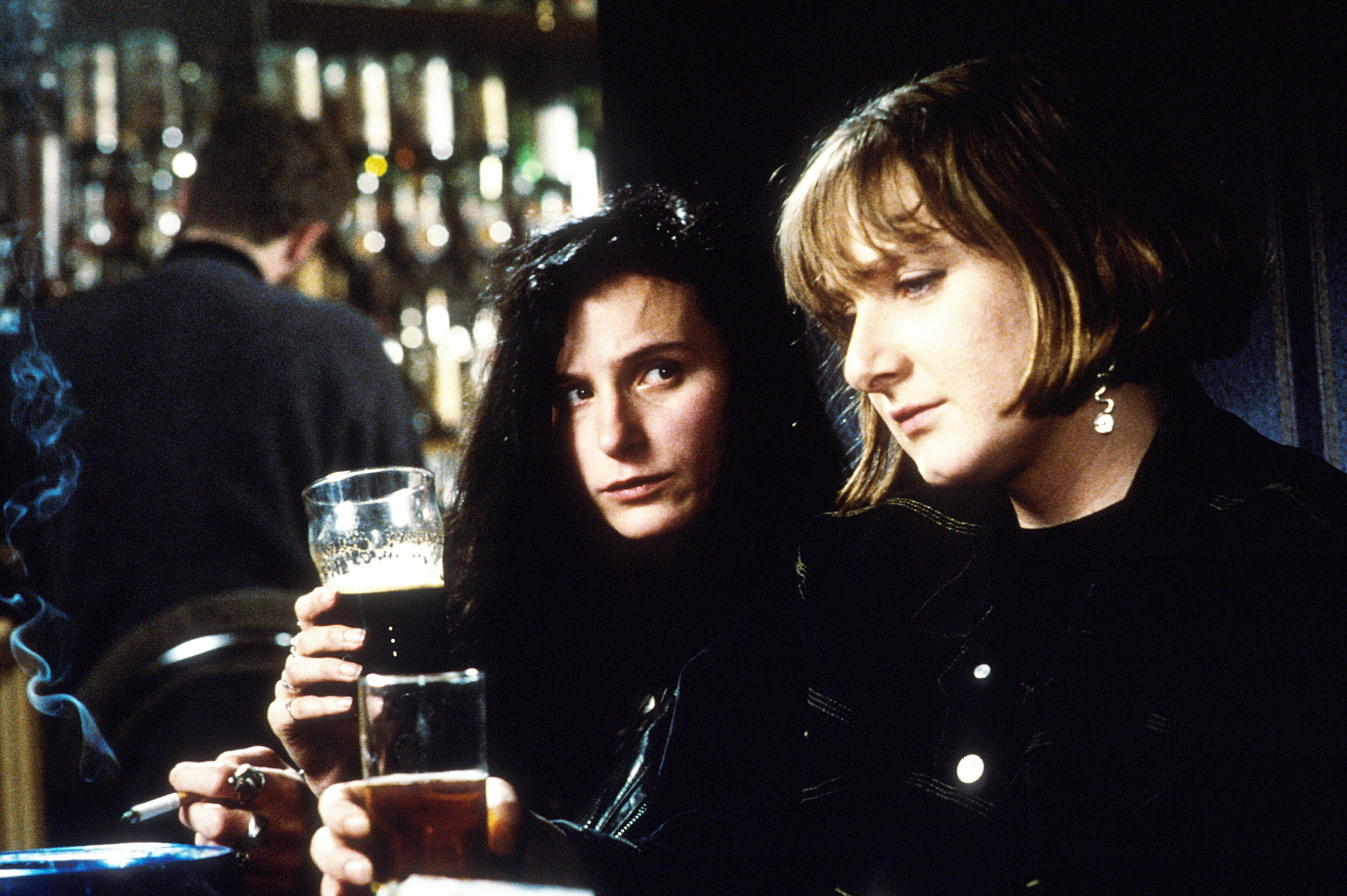
When he tracks his ex-girlfriend down in London, Louise (Lesley Sharp) tries to explore why he left Manchester. Their relationship grounds the film, giving the rootless Johnny a rock on which to hold onto as he wanders a monochrome, unfriendly London. Similarly, he reminds Sophie of home. She is strong and independent, carving a new life for herself but tired and lonely in a city known for its anonymity.
Still, he lashes out at her, avoiding the question and turning it into a diatribe not just at her, but at mankind in general.
“Was I bored? No, I wasn't fuckin' bored. I'm never bored. That's the trouble with everybody - you're all so bored. You've had nature explained to you and you're bored with it, you've had the living body explained to you and you're bored with it, you've had the universe explained to you and you're bored with it. So now you want cheap thrills and like plenty of them, and it don't matter how tawdry or vacuous they are as long as it's new, as long as it's new, as long as it flashes and fuckin' bleeps in forty fuckin' different colours. So whatever else you can say about me, I'm not fuckin' bored.”
This retort, and Johnny’s actions throughout the film, would easily position him as the antagonist but Leigh is careful to walk a line with the character, helped by Thewlis’ performance. Johnny is rarely shown to be in control and his antagonistic actions are often because of this; with no place to sleep, he belittles the kindly security guard Brian (Peter Wight) when offered a place to stay warm for the night. He sleeps with, then ignores Louise’s flatmate Sophie (Katrin Cartlidge) because she, like him, is unemployed and listless and so he looks down on her.
He is misogynistic, belligerent, and, at times, violent. So how can I argue that there is anything redemptive about Johnny?
There are two key elements to Naked that shine a light on the good in Johnny, perhaps not overtly but through the relationships within the film. Both revolve around Louise.
Told in parallel with Johnny’s wanderings and rants is the story of Jeremy (Greg Cruttwell), an affluent businessman and a violent misogynist, who assaults and leers at every woman he meets in the film. While Johnny’s hatred of women is hinted to be deep-seated in his childhood, Jeremy’s actions come from a place of entitlement. After he rapes Sophie, she tells Louise that no one will believe her because Jeremy is a rich man.
He attacks people because he can, because the institutions in place and his role within them, allow him to act and speak freely. He is this way because he has power, Johnny lashes out at others because he is powerless and cannot see a way to escape his situation. Early in the film, this is highlighted. Johnny sits on the steps of Louise’s flat until Sophie lets him in. Jeremy walks into the building, waiting for Sophie when she returns.
The differences between the two characters are highlighted by Louise’s reactions to them. Louise continues to care for Johnny, reminded of a distant good in him that she has seen in their past. She does not justify or forgive his actions but hopes that he can be guided back to the person he was. It’s naïve, yes, but it’s never as misguided as ‘I can change him’. In stark contrast to this, when forced to confront the entitled Jeremy, who spouts the same sort of misogyny, she pulls a knife on him.
The tragedy of Johnny becomes apparent in the final moments. After being jumped by a gang in the street and brought to his physical and mental low point by his weakness being exposed in front of Louise, Sophie, and Jeremy, Johnny is nursed by Louise, and the two share a tender moment. Seemingly reconciling their differences, Louise decides to leave her job and her life in London, planning to return to Manchester with him.
But Johnny cannot have redemption. While the audience will no doubt have sympathy for him, he has done little to convince us that he deserves any redemptive arc. More importantly, he does not believe he deserves it. The easy option is not one he will allow himself to take; it’s far more important for his narcissistic consciousness that he continues to rally against everyone around him. That life never be boring, easy, or lead to contentment.

Instead of waiting for Louise to return, he eyes a wad of cash left by Jeremy, pockets it, and escapes the flat. Our final scene, Johnny hobbling up a London street is the perfect end to Naked. Despite everything that has happened in the two hours previously, nothing has changed.
Sophie will remain vulnerable, dealing with the trauma of her dealings with Johnny and Jeremy. Louise will have to restart her life again, possibly back in Manchester, having sacrificed everything for Johnny again. Jeremy, perhaps with wounded pride, will continue to stalk the streets of London.
Johnny, so close to something better, will continue to wander. To chew the ear of anyone who will listen and then lash out when he becomes bored, or irate. Like the political situation in the UK at the time, and now, which Leigh was so critical of, the established roles are maintained. There’s no walking into the sunset, no injured hero returning home. Johnny left Manchester to avoid a beating, got a beating anyway, took the easiest option, and avoided redemption.
Writer & Director: Mike Leigh
Starring: David Thewlis, Lesley Sharp, Katrin Cartlidge, Greg Cruttwell
 | A guest post by
|