

MISERY
It takes a village


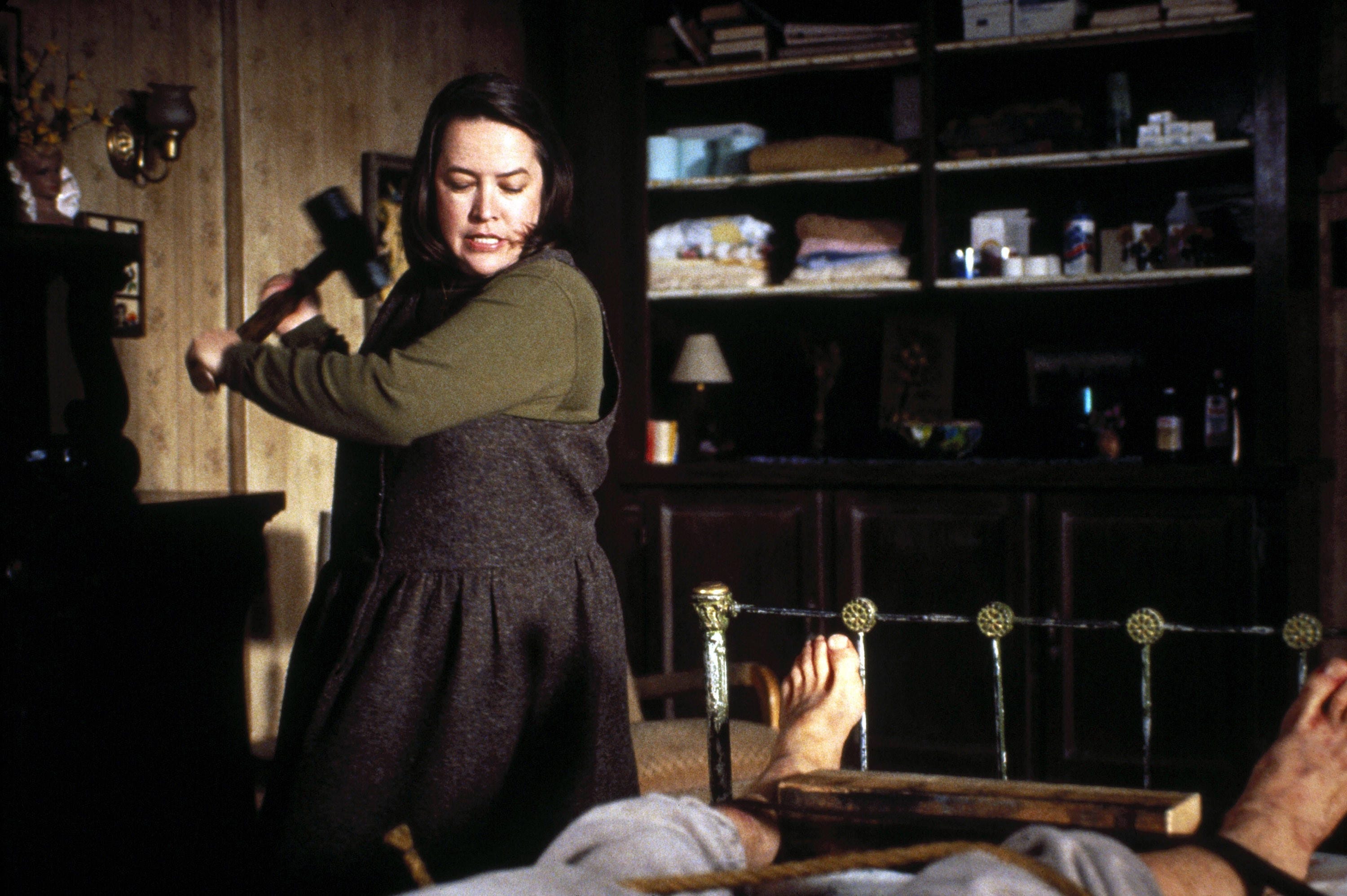
Spoilers for Misery (both the 1987 novel and the 1990 film). Trigger warnings for discussions of infanticide.
One thing that Stephen King has always managed to do in his novels is create a living, breathing world around his characters. You understand the dynamics of the Maine settings, the superstitions, and how each peripheral character fits into the universe.
I think back to his 1991 novel Needful Things. An overlong novel that I will defend until the end of time because it was one of the first of his I read. While the story of a shopkeeper who may be Satan, and could be yet another variant of Randall Flagg, destroying a town could be told in a couple of hundred pages, King takes 690. The reason for this is that nearly every inhabitant gets a backstory, relationships, rivalries, and instead of a typical good vs evil story, we get a game of chess. Harmless pranks that light a fuse between enemies.
Leland Gaunt likely only needs a chapter or two to tell his story. What King does is tell the impact.
Misery is less dense with its characters. As one of King’s tensest chamber pieces, it only needs the resourceful author Paul Sheldon and his disturbed fan Annie Wilkes, with some minor characters walking through the scene primarily to meet their end.
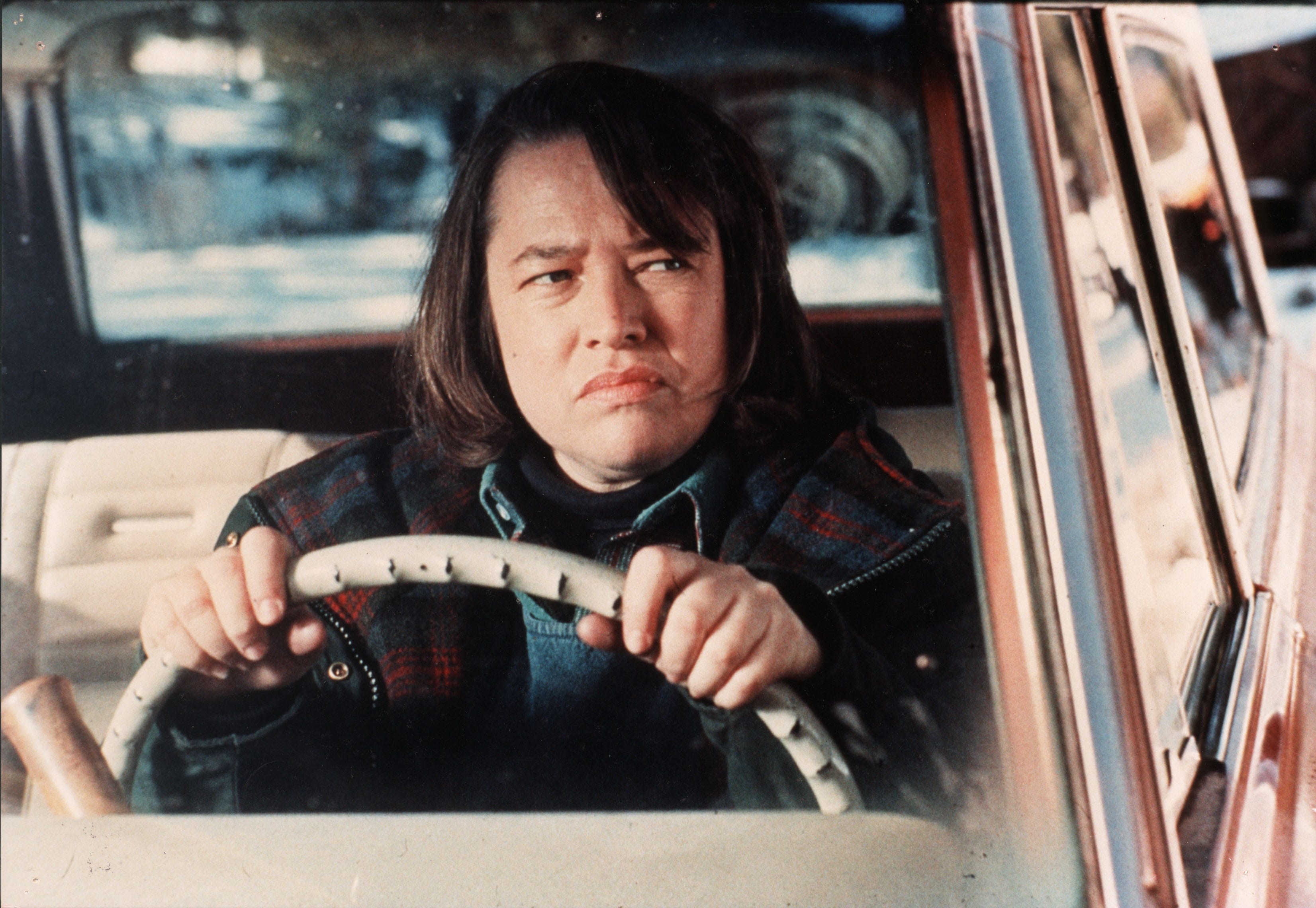
In the 1990 film adaptation, the plot is almost untouched. Paul Sheldon (James Caan) crashes his car during a snowstorm, after just completing his latest novel. He is rescued by Annie Wilkes (Kathy Bates), a former nurse who tends to his wounds while discussing her love for his series of Misery novels.
And here we find the problem. Paul’s last Misery novel is due to hit shelves any day, in which the titular character is killed off. There are hints that not all is okay within the Wilkes household prior to this, but after discovering the fate of her favourite character the situation changes rapidly from nurse and patient to captor and prisoner.
Paul is forced to burn his new manuscript – a grittier story based on his childhood – and start writing a new Misery novel that will undo the character’s death. All the while Annie’s mental health continues to deteriorate, and her punishments become more severe.

When Rob Reiner adapted the novel, using a screenplay written by William Goldman, there were a few changes to the source material. In the novel, Paul finds a scrapbook that suggests Annie is a serial killer, with deaths dating back to her childhood, while the film she was unsuccessfully tried for a series of infant deaths in the hospital she worked at.
It’s bad taste to rank atrocities, but by removing the previous killings in the films and keeping the infant deaths at the hospital, Reiner and Goldman create a character not defined by an excessive body count. King was reportedly inspired by the case of Genene Jones when writing Annie Wilkes, a nurse who murdered infants. In the 1998 book Deadly Medicine, authors Kelly Moore and Dan Reed suggested that Jones committed her acts because she was made to look heroic when attempting to resuscitate her victims.
Another famous case, that of Beverley Allitt, which took place in the UK a year after the film was released, has being theorised to be caused by Munchausen syndrome by proxy. While the crimes are just as heinous, arguably worse due to how vulnerable the victims are, the case of women, and especially nurses, killing infants is more closely related to mental illness.
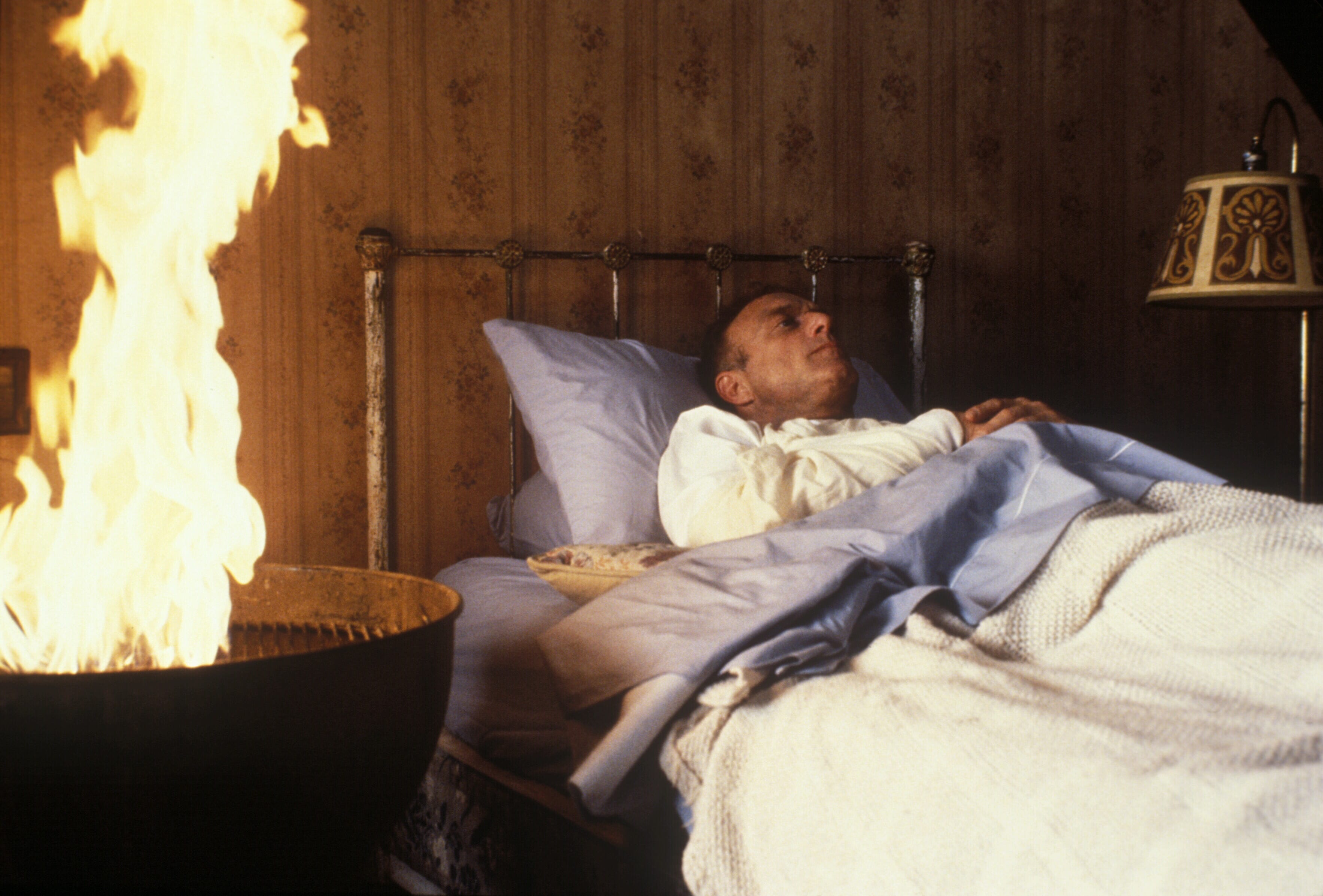
Perhaps the most famous change focuses on the torture of Paul. In the film, Annie cuts off his foot after finding out that he has escaped his room. She later cuts off his thumb. In the film, the attack is less gory but is more impactful. She hobbles him. Placing a piece of wood between his restrained ankles and smashing his feet with a sledgehammer.
This would become perhaps the most famous scene in the film. It’s visceral impact, achieved with practical effects that still hold up today, is stronger than any gory amputation.
However, the change we’re going to discuss links back to that idea of community. The side characters that King is so good at drawing. In the novel, these are few and far between. Annie’s stalkerish behaviour and her past are common knowledge in the town, and so a rotating line up of officers come to the house until she eventually murders a state trooper by running him over with a lawnmower.
Again, the film goes for a less gory ending for its law enforcement. Sheriff Buster (Richard Farnsworth) meets his end quickly with a shotgun blast to the back. But it’s what Reiner and Goldman do before this that sits nicely within King’s own community style of writing.
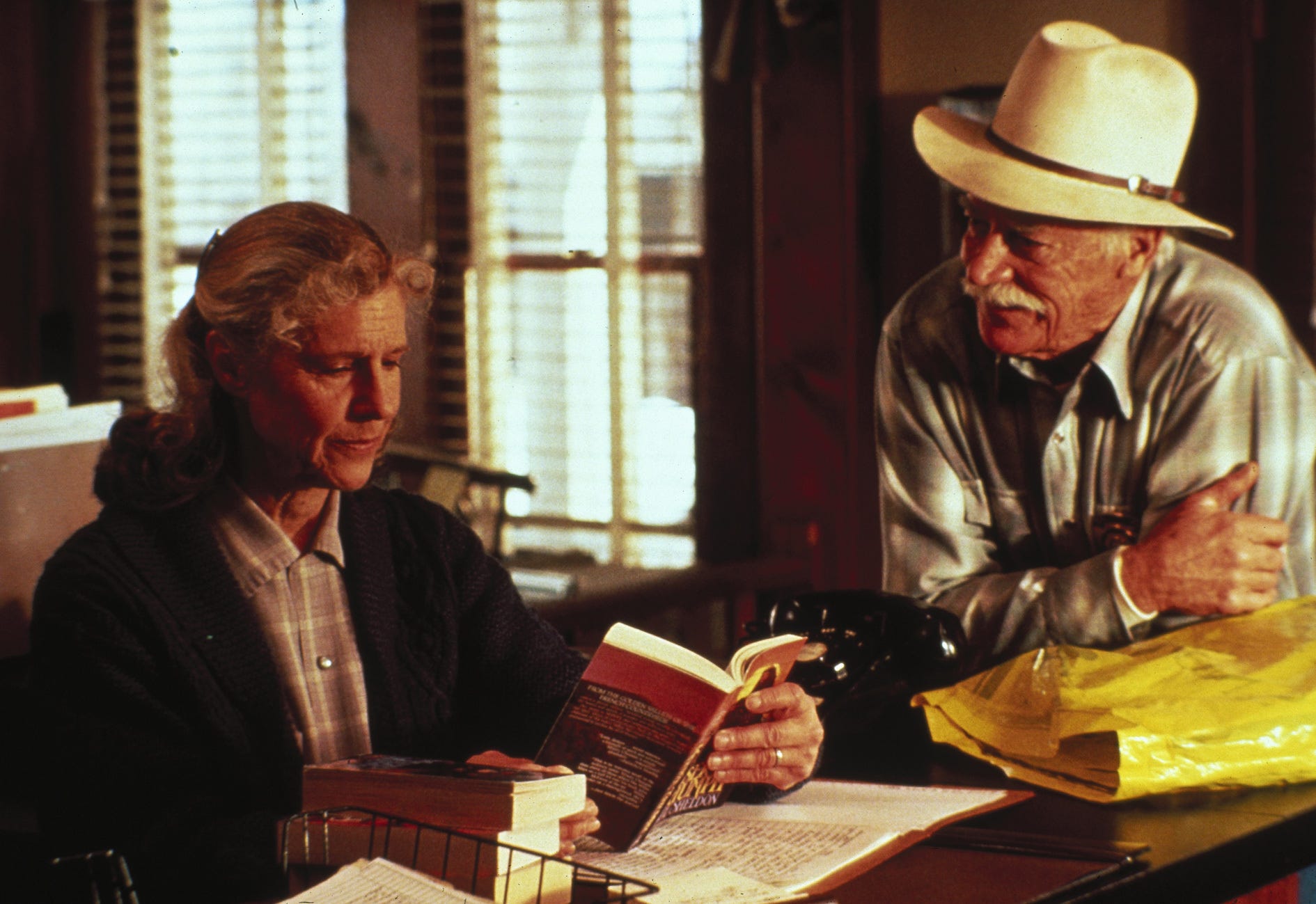
In the film, there is no line-up of officers stopping by to question Annie. It is just Buster, and his deputy-come-wife Virginia (Frances Sternhagen). Through these two characters, we get the sense of what a small, sleepy town Silver Creek is. Buster sits with his feet up and takes the odd phone call.
After he takes a call from Paul’s agent, Marcia Sindell (Lauren Bacall), Virginia notes:
“We got a phone call? Busy morning.”
It’s slight but we instantly get a feel for the town. Similarly, we get a feel for the characters. Buster is a man who likes a quiet life but takes his job seriously. He is there to protect and serve. Virginia is a loving wife, but with a verbal edge that makes her hugely entertaining.
When on the hunt for Paul’s car, she puts her hand on Buster’s leg but her advances are knocked back.
Buster: Virginia, when you’re in this car, you’re not my wife, you’re my deputy.
Virginia: Well, this deputy would rather be home under the covers with the sheriff.
Between this, and her jovial accusations of an affair when Buster starts leaving the office to investigate Paul’s disappearance, they not only fill the space where that community should be, they reinforce the isolation that enables Annie to hold Paul for so long and bring some much needed comic relief when Paul’s ordeal is at its peak.
On reflection, it’s amazing King didn’t have this in his own story. His minor characters are rarely just victims. They’re funny or mean. Old fashioned, or weak to vice. They add colour to the world and break up the misery (pun intended) when things are at their darkest.
Misery wasn’t missing much, but it was missing that, and in just a few, short scenes, we get two characters that add so much. They add stakes, knowing that someone is on the case, no matter how slowly, or which roundabout way they approach it. When Buster is killed, we mourn him, but we also think of Virginia (who never appears after this), left without a sheriff to cuddle under the covers.
Director: Rob Reiner
Writer: William Goldman. Based on the novel of the same name by Stephen King
Starring: James Caan, Kathy Bates, Frances Sternhagen, Richard Farnsworth, Lauren Bacall, Graham Jarvis
 | A guest post by
|