

KLUTE
A matter of control


Spoilers for Klute (1971). Trigger warnings for brief descriptions of sexual violence
Despite having the storyline of a thriller, Klute is less concerned with uncovering the identity of its antagonist – a reveal that is obvious from the start. It’s gentle pacing and the fact that the protagonists often slip into their discoveries give it more in common with into Robert Altman’s The Long Goodbye two years later, than William Friedkin’s The French Connection (1971).
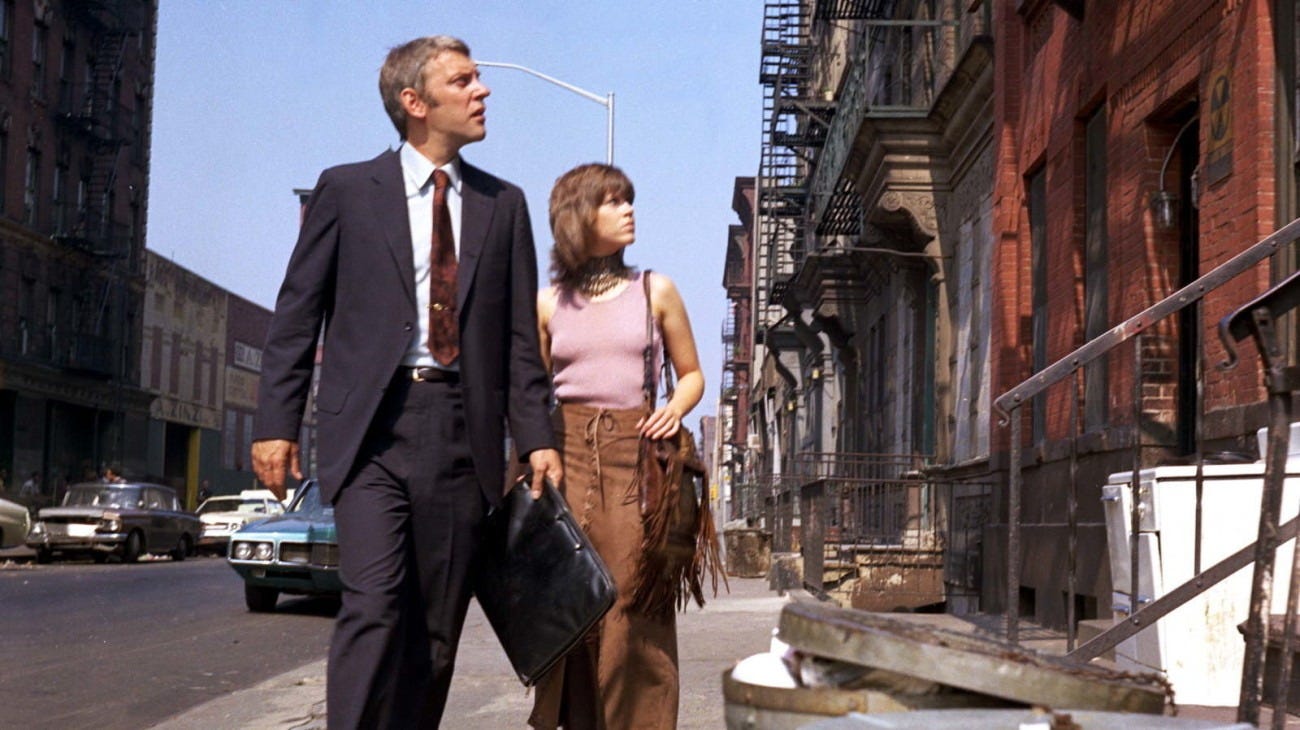
Indeed, the small-town detective John Klute (Donald Sutherland) is often a background character to the more complex Bree Daniels (Jane Fonda). Daniels is an exclusive call girl, working with a small pool of regular customers while auditioning for acting and modelling work. The film follows Daniels closely, not just her more salacious moments with clients, but her visits to her therapist, her moments alone in her apartment, fearful of the unseen threat that Klute is hunting, and to her various auditions.
Whereas other films would build the streetwise call-girl around a series of well-worn cliches, Klute looks deeper, presenting a fully-rounded character that is both confident and vulnerable, somewhat satisfied with her life and yet yearning for more, unwilling to give up on the control she feels she has, even when that control is stripped away.
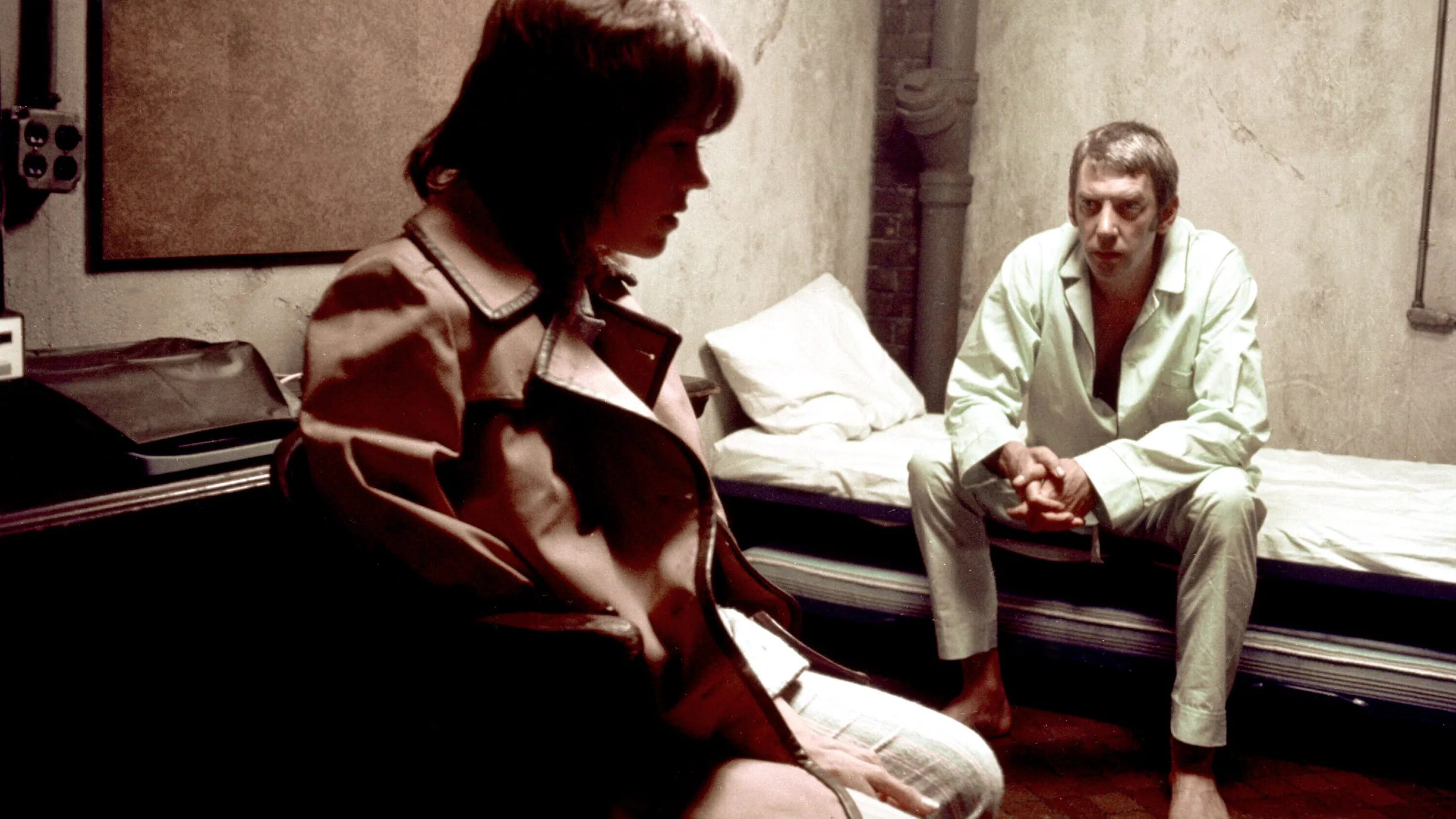
And the film revolves around control. The antagonist Peter Cable (Charles Cioffi) is a sexual sadist who is desperately trying to regain control of his professional life by killing witnesses to his crimes. Klute is the detective trying to gain control of the situation and maintain control of his own urges around Daniels. Daniels starts the film in control, but it is stripped away quickly.
We see her with a client. Putting on an act that encourages him to fulfil his desires; while also ensuring he pays the higher fee for her services. And when she sees her therapist after this, she says:
“And for an hour... for an hour, I’m the best actress in the world, and the best fuck in the world.”
As a sex worker – and this film provides one of the most grounded depictions of sex work; not just something for those down on their luck but a way for women to express themselves, fulfil a demand and earn money without a glass ceiling – Daniels has control of her situation. At least she does now, her experience with Cable before the film starts forced her to pull back, refuse to take on new clients.
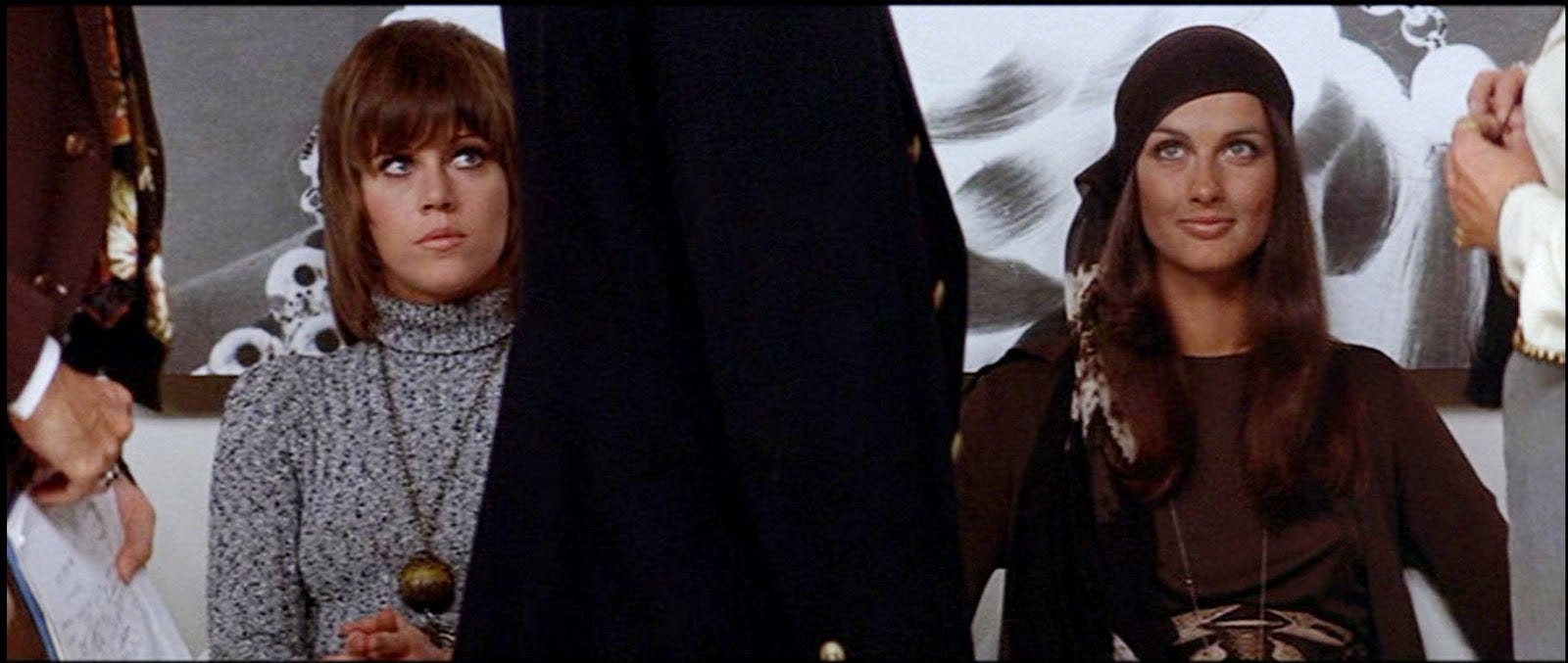
It’s more control than she has in her over career attempts. Early in the film, we see Daniels in a line-up of potential models. She is silent, at the mercy of the agents who will pick someone based solely on their looks. Whereas her seductive whisper in the ear convinces men to part with their money elsewhere, here she never gets a chance to speak.
Later, she meets with an agent to try and get theatre work but the man is distracted, uninterested in either her voice or her body. The control that she claims to have, only extends to the hour she is with a client. And she knows this, she doesn’t admit it straight away, because a small level of control is better than none at all.
This is why when she develops feelings for Klute, after he gives up his control and sleeps with her, she returns to the therapist and explains that her feelings worry her.
“I mean, he’s seen me horrible! He’s seen me ugly! He’s seen me...mean. He’s seen me whorey...and it doesn’t seem to matter. He seems to accept me. I guess...having sex with somebody and feeling those sort of feelings towards them...is very new to me. I wish that I didn’t keep wanting to destroy it.”
This comes at a point when she is losing control of other parts of her life. Cable is speeding up his attempts to kill those who could damage his reputation, and this means terrorising Daniels. She returns to her previous partner and pimp, Frank Ligourin (Roy Scheider), because he represents not safety as such, but predictability. This is short-lived, but the image of this confident woman, sweating and near tears in Ligourin’s arms is startling.
This is all grounded by Fonda’s incredible performance. She isn’t overtly aggressive, or even weak willed. She portrays Daniels as self-assured but, in a situation, where any confidence would falter. She is no more a victim than Klute, in the film and he relies on her just as much as she ends up relying on him.
Director: Alan J. Pakula
Writers: Andy Lewis, Dave Lewis
Starring: Jane Fonda, Donald Sutherland, Charles Cioffi, Nathan George, Dorothy Tristan, Roy Scheider, Rita Gam
 | A guest post by
|