

JUBILEE
They all sign up eventually


Spoilers for Jubilee (1978). Trigger warnings for discussions of fascism.
Derek Jarman’s second feature is a blunt instrument of a film. Wildly swinging outwards in an effort to upset almost everyone who saw it. Despite cameos from members of the punk scene, it enraged the subculture so much that designer Vivienne Westwood wrote an open letter to Jarman criticising the film, which she would then print onto a t-shirt.
Yet it’s hard to imagine other parts of society being any more accepting. It’s sudden bursts of violence, an incestuous, bisexual relationship, plenty of nudity and sex, and clear attacks on capitalism, which means that the ‘establishment’ would have just as much to criticise as the punks.
Yet like the spirit guide Ariel (David Haughton) in the film, who transports Queen Elizabeth I (Jenny Runacre) and her advisor John Dee (Richard O’Brien) to a dystopian 1970s London, Jarman was prophetic. He was openly critical of punk’s obsession with violence and fascism, yet equally despondent with how insincere the movement was becoming. Bands signed to major labels (or, in the case of the Sex Pistols, were simply made up and planted into the scene), and their open rebellion became something more corporate.
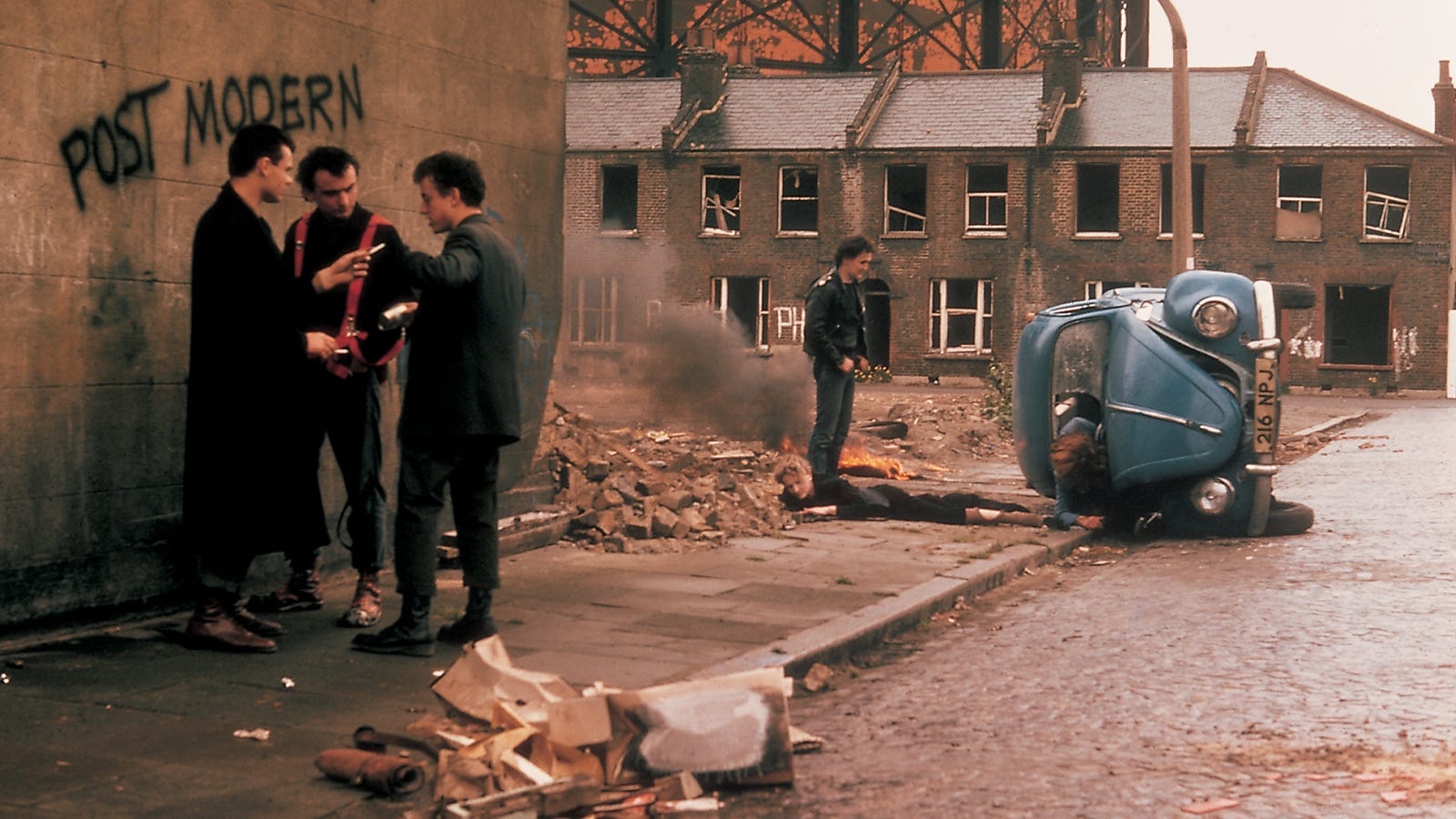
The character of Borgia Ginz (Orlando) is a direct response to this. His control of the media throughout the film sees punk music become the norm – an increasingly shallow repeat of the same formula, which reaches a peak with the introduction of Lounge Lizard (Jayne County), an androgynous singer who practices their tracks from an affluent central-London flat.
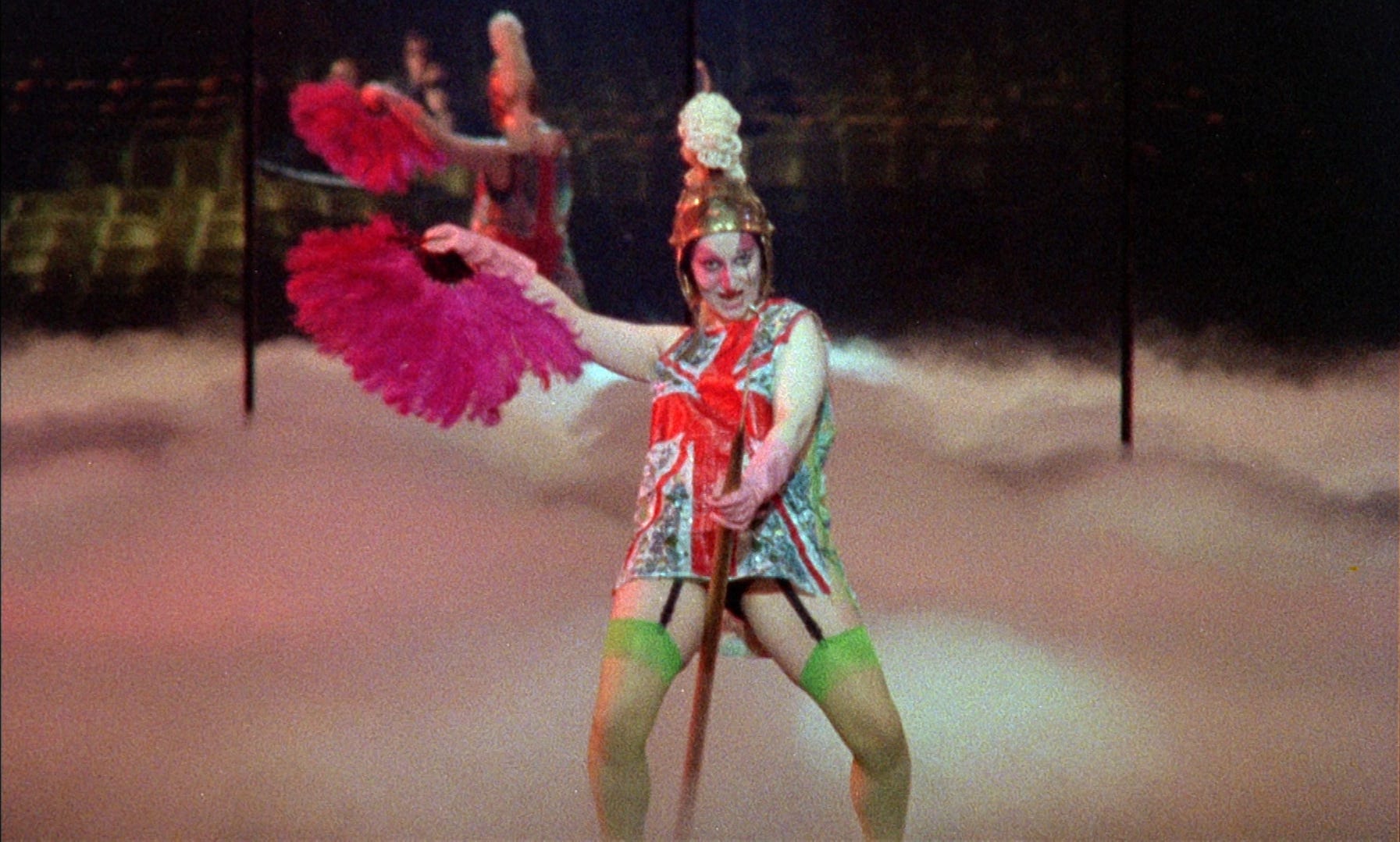
At various points in the film, we see key characters pander to Ginz as both a way to get their music out to a wider audience and to escape their impoverished lives. Amyl Nitrate (Jordan) performs a mocking version of Rule, Britannia as Britain’s Eurovision entry; Mad (Toyah Wilcox) records a song for Ginz, having spent much of the film saying how pointless any artistic endeavour is; and Crabs (Little Nell) uses her connection with Ginz to seduce the attractive Kid (Adam Ant).
The irony is that while Jarman appeared far more conservative and old-fashioned, he positioned himself as more counter-cultural than the screaming voices and loud fashion sense of 1970s punks. His films were unique to him; concerned with personal retellings of historic and literary stories, always with an eye to gay rights and, later, the treatment of those with AIDS.
And so much of what he believed would happen ended up happening. By the time Jubilee came out, punk had already started to fracture. While many bands were fighting against discrimination and fascism, punk still found room for bands such as Skrewdriver, who reformed as an explicitly neo-Nazi band in 1982 after teasing their affiliation in the late 1970s.
It’s not hard to see the chain of events that led to this. Punk had adopted the swastika. Westwood, who used it in several designs, would claim it was an attempt to demystify the symbol, while Jordan (who worked for Westwood and Malcolm McLaren) would say in England’s Dreaming (Jon Savage):
“Malcom was in awe of the symbolism... He had a stock of Nazi memorabilia, including Nazi Youth badges, gold SS wedding rings and swastika hankies.”
Siouxie Sioux would claim it was a symbol of rebellion – a way to push back against a generation that fought against fascism and wouldn’t stop talking about. This desire to shock is taken to extremes in Jubilee, when declarations about destroying and burning art are made. If fascism relies on keeping the population unaware, then the idea of these so-called rebels destroying art, only to willingly sign up to the latest mainstream craze, feeds right into this idea.
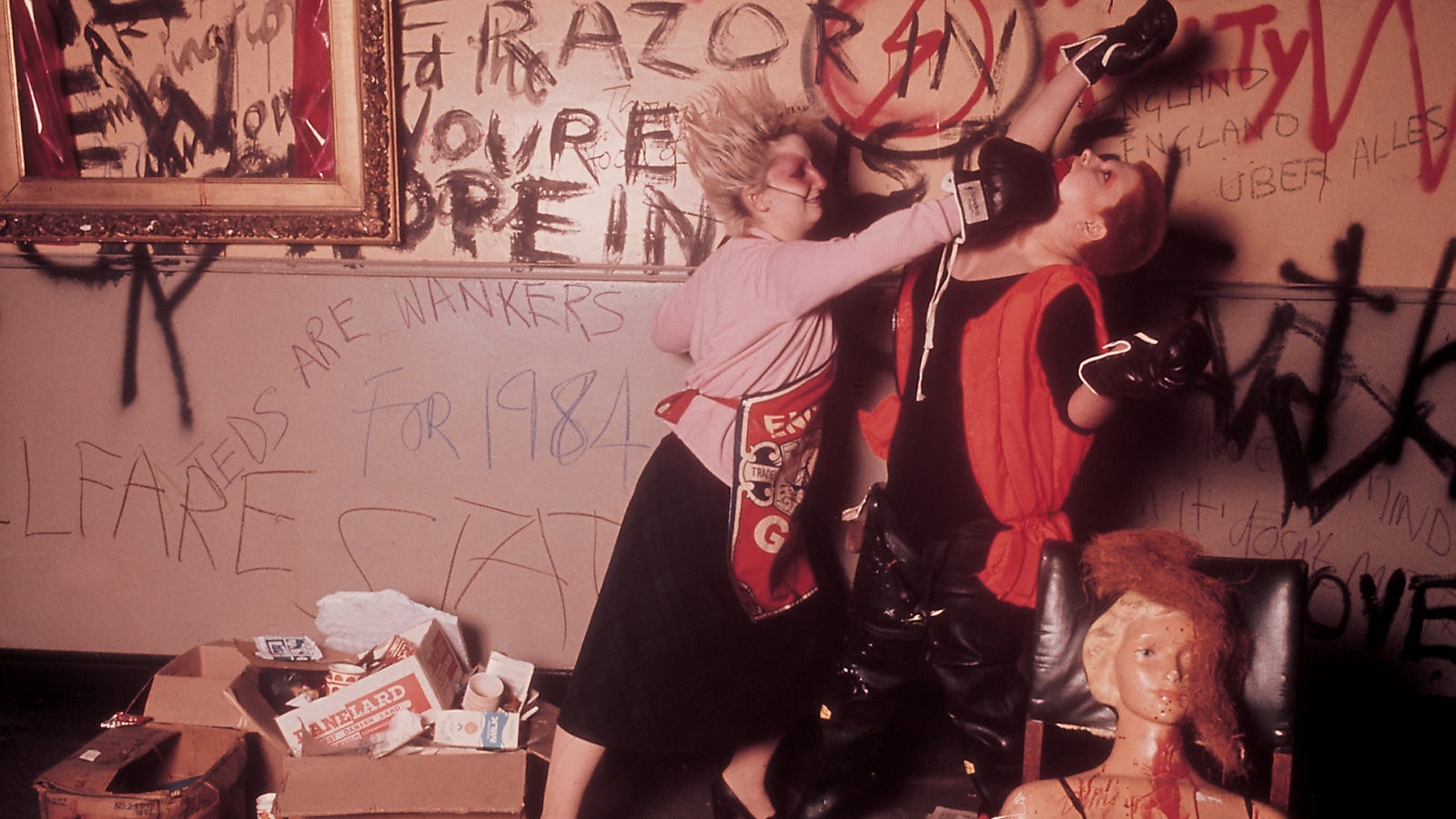
Jarman was a multi-disciplined artist. He wrote books, painted, designed sets and made films. The idea of wilfully rebelling against those disciplines would seem unbearable to him. A self-imposed ignorance that allows the worst to happen
And I wonder if this informed the opening of the film, where we see Elizabeth I and her reaction to the wasteland of London. While she looks forward to what is to happen, are we expected to look back? It cannot be a mistake that Ariel is plucked from Shakespeare’s The Tempest, which Jarman would adapt after Jubilee.
This cultural figure holds the ability to transport us to the past, present and future, as if art were not a blunt, money-making tool, but something far deeper, far more important. Jarman may have hated what punk became, but perhaps only because he saw the potential of what it could have been.
Writer/director: Derek Jarman
Starring: Jenny Runacre, Little Nell, Toyah Willcox, Jordan, Hermine Demoriane, Ian Charleson, Karl Johnson, Linda Spurrier, Orlando, Jayne County, Richard O’Brien, Adam Ant
 | A guest post by
|