

FASCINATION
Empowerment and eroticism


Spoilers for Fascination (1980)
The filmography of Jean Rollin is an interesting one. Often focused on surrealism, vampirism and eroticism, there’s an argument that many of his films prioritise style over substance. Yet, there is always something endearing about his work, from the bizarre non-sequiturs, to the artfully composed, near static shots. Even when things devolve into titillation, as they nearly always do, there is a sense that Rollin is attempting to say something more than the writhing bare skin might suggest.
Fascination, filmed in 1979 and in January 1980, is one of his most famous works and brings together all the themes previously mentioned. Loosely based on Jean Lorrain’s short story Le Verre de sang (The Glass of Blood), it grounds the vampirism by basing it around an archaic cure for anaemia, showing a group of Parisian socialites visit an abattoir to drink ox blood in the opening moments.
Cut to the main plot; a thief named Marc (Jean-Marie Lemaire) is on the run from a group of criminals when he takes refuge in an isolated château. Here, he comes across two chambermaids, Elizabeth (Franca Maï) and Eva (Brigitte Lahaie). Instead of being frightened by the intruder, they are playful, alternating between seducing the cocky Marc and teasing him.
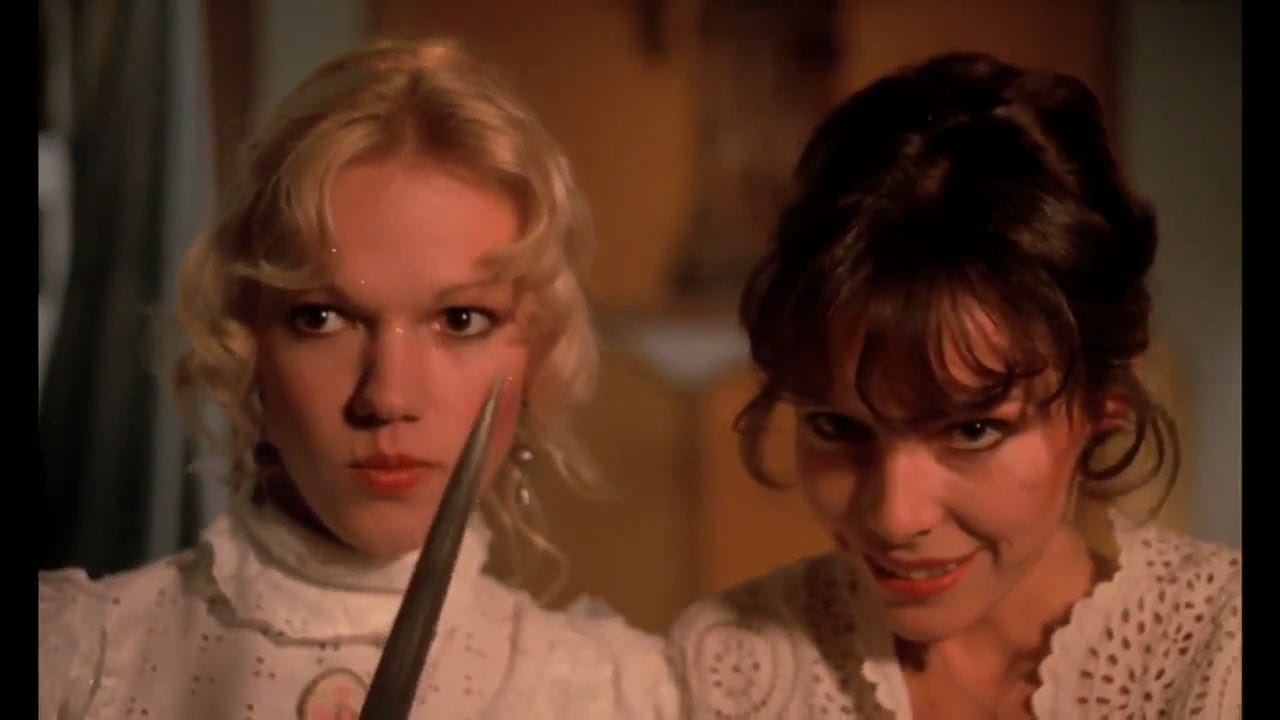
Rollin subverts the typical intruder narrative, using the sexuality of Elizabeth and Eva as a source of power. While not entirely feminist in its intentions – Rollin certainly had no issues with letting the camera linger on the female form, notably in the sex scene between Elizabeth and Eva – it’s far more empowering than many films of the time.
Marc continues to believe he has the power over the two, sleeping with Eva and toying with Elizabeth’s presumed feelings towards him, while the pair limit his escape options and keep in the château until the arrival of the Marchioness (Fanny Magier) and her servants. First, however, comes the film’s most iconic scene, a moment that would influence nearly every poster and cover art for the film.
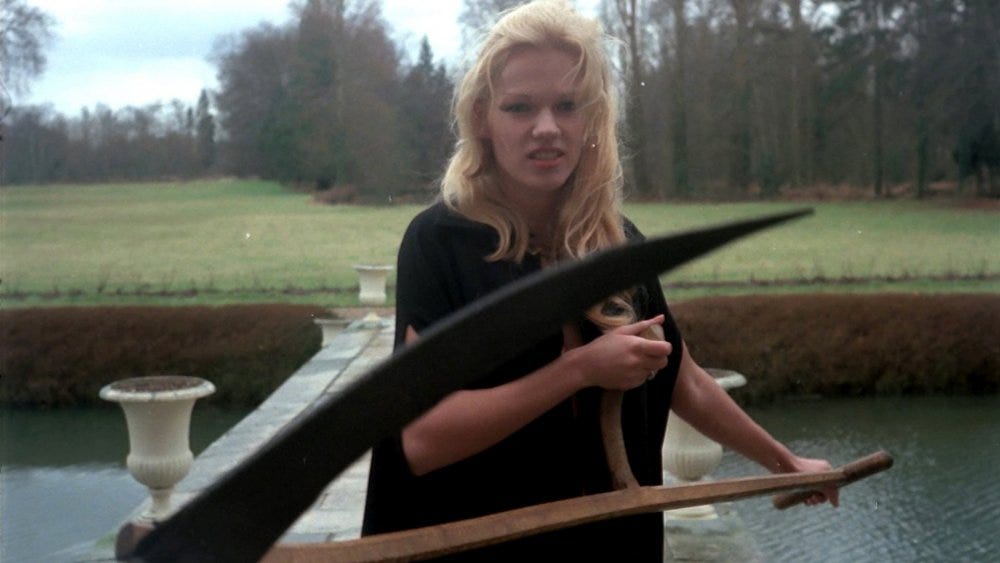
Marc’s pursuers block off the only exit and while Elizabeth distracts Marc, Eva takes his gold out to the other thieves. As Marc did, they underestimate the woman in front of them – despite one of the thieves being a woman herself (played by Sophie Noël) and aim to humiliate her. She is stripped and as revenge takes one of the thieves into the stables – implying a seduction – before stabbing him to death and murdering the other thieves while draped in a black cloth and carrying a scythe.
A naked Lahaie, half covered, scythe in hand, like a modernised grim reaper walking across the bridge to the château. Like some of Rollin’s based tableaus, it is both erotic and terrifying. It’s also no surprise. Rollin was a fan of the erotic and moonlighted making adult films to raise finances for his regular output.
Many saw the pornographic industry as something dirty, even at a time now regarded as a ‘golden age’, just a few years after Deep Throat (1972, Gerard Damiano) and Behind the Green Door (1972, Artie & Jim Mitchell) had dominated the box office. Yet Rollin would try to add his cinematic influences into his adult output.
Nor did he ignore actors who had worked in hardcore films. Lahaie had starred in over 100 adult films before working with Rollin, and while she wasn’t the first pornographic actress to find moderate success in the mainstream (Marilyn Chambers, from Behind the Green Door, had starred in David Cronenberg’s Rabid three years earlier), she remains part of a remarkably small list of people considering the size of both sides of the film industry.
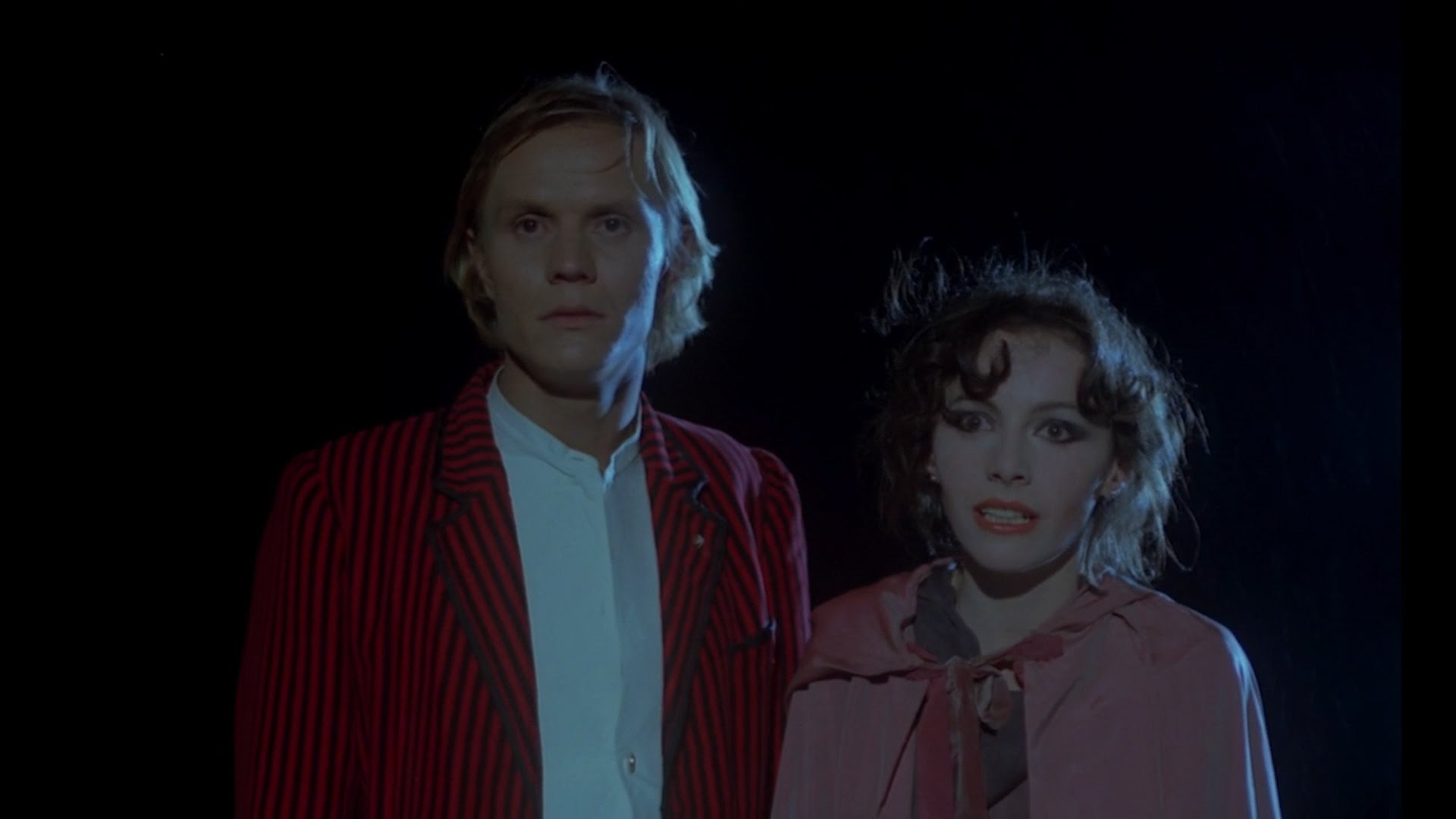
It could be argued that Lahaie’s scene perfectly sums up the themes of the film, yet Rollin goes a step further with the climactic party scene. Marc, as the only male, gets all the attention unaware that the group plans to drain him of his blood. Ego bolstered, he eagerly dances and drinks and allows himself to be blindfolded to try and guess which woman is which. This leads to the sort of drunken groping you might expect and when he correctly guesses the Marchioness, he insists on 15 minutes alone with her.
Again, Rollin subverts the scenario here. Marc believes that he is living out some male fantasy; a subservient woman at his whim, and yet while he flirts and toys with her, the rest of the women await midnight. Again, the sensuality of the women within the film tricks the main character into feeling a sense of control, unaware of the bloody fate that is only minutes away.
Writer/director: Jean Rollin. Based on The Glass of Blood by Jean Lorrain.
Starring: Franca Maï, Brigitte Lahaie, Jean-Marie Lemaire, Fanny Magier
 | A guest post by
|