
ENTER THE DRAGON
Justifying the first kill


Spoilers for Enter the Dragon (1973)
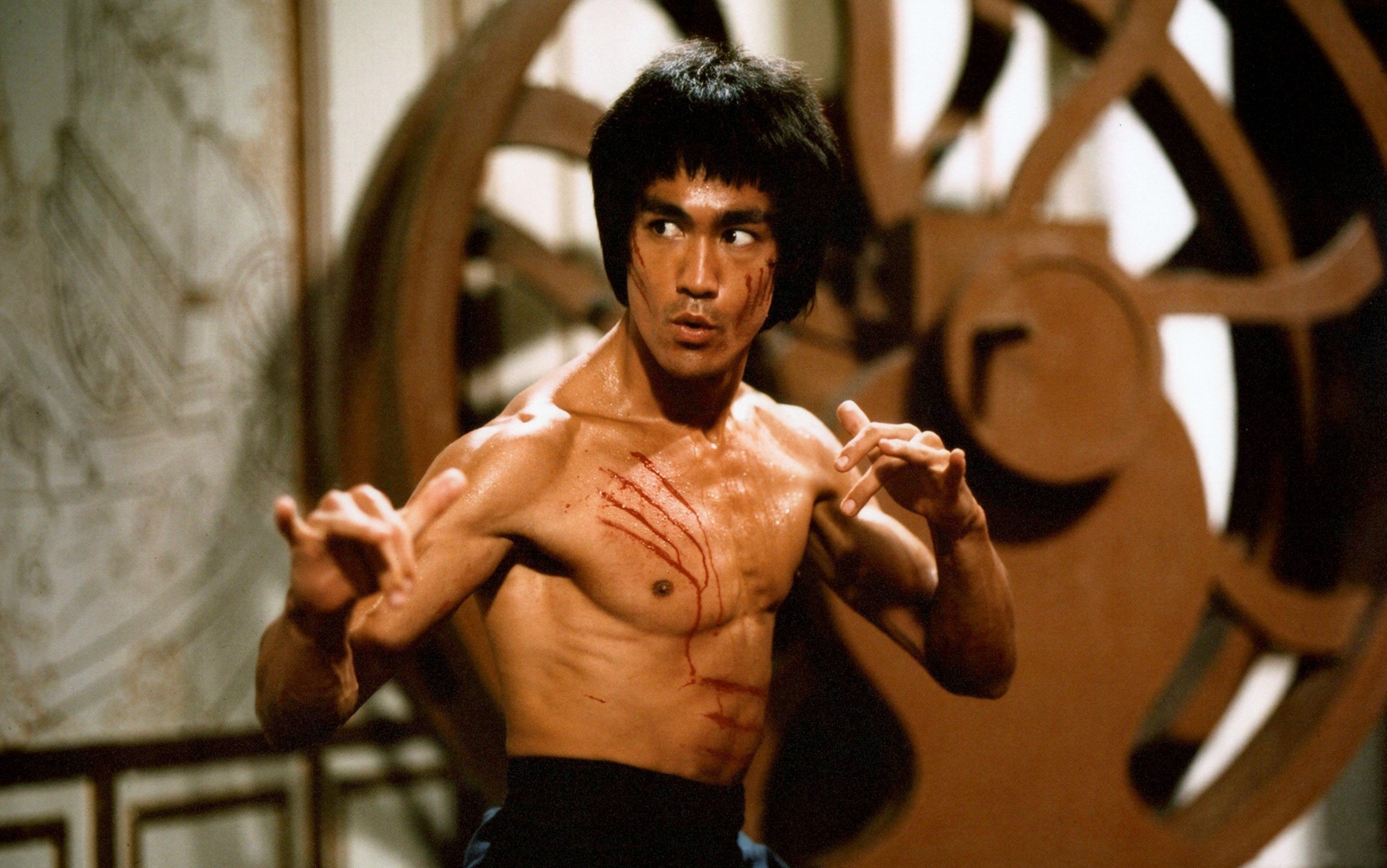
It’s hard to overstate the importance of Bruce Lee’s final completed film. His first for Warner Bros and therefore the first to receive a major American release, Enter the Dragon is widely regarded as the film that kickstarted the martial arts craze; a craze that would make stars out of people like Jackie Chan, who had a small role as a henchman here.
Enter the Dragon must be recognised as one of the most successful films ever made. Made for $850,000, it’s estimated to have made more than $400 million (around $2 billion when adjusted for inflation).
Its influence went beyond film, however. Would we have the Wu Tang Clan if Enter the Dragon hadn’t opened doors for audiences to see films like The 36th Chamber of Shaolin? We almost definitely wouldn’t have video games such as Street Fighter, Tekken or Mortal Kombat, all of which use a fighting tournament as the basis for the decades-long running franchises.
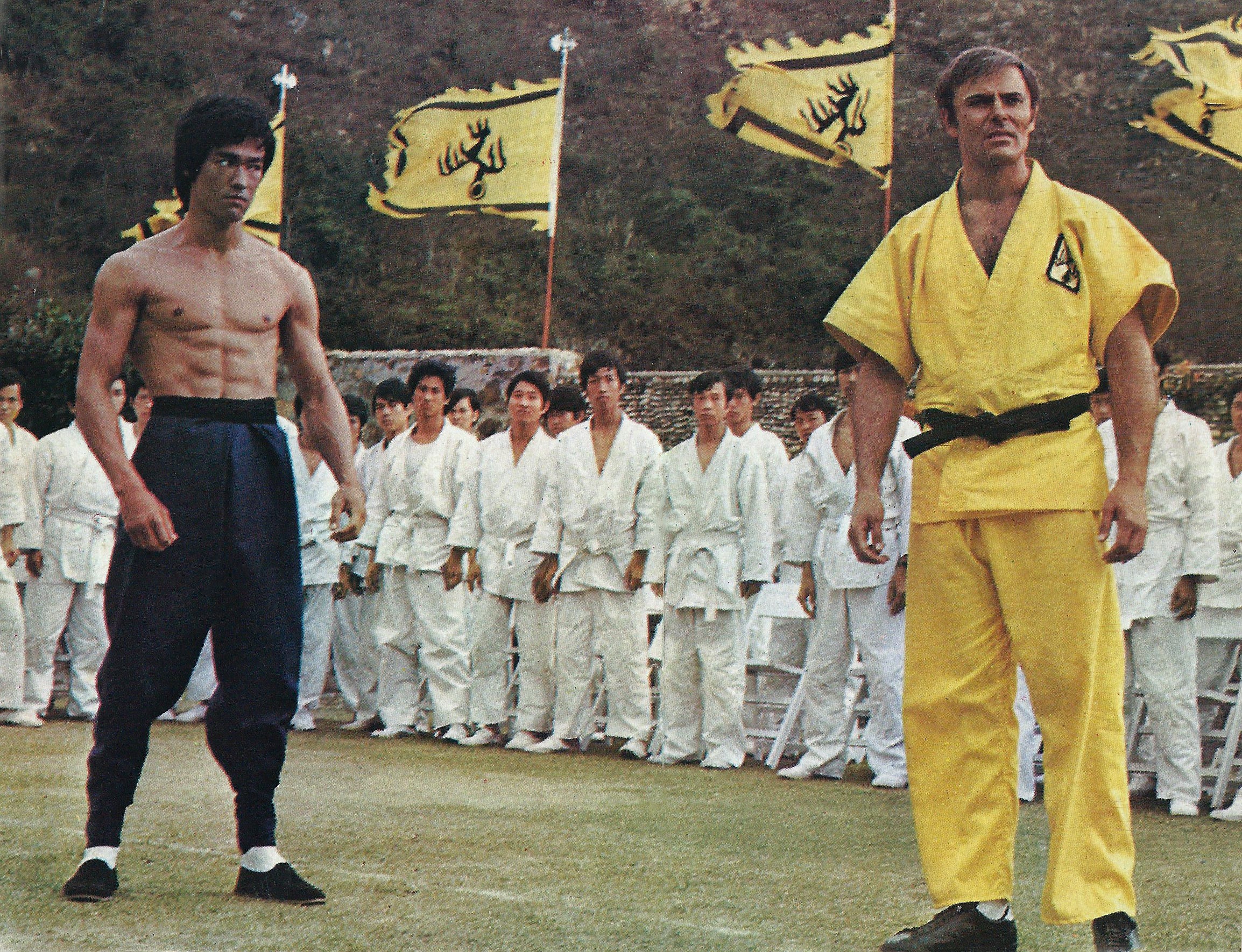
Outside of entertainment, the film heightened the interest in mixed martial arts, with Bruce Lee’s Jeet Kune Do style cited as one of the influences on modern-day combat sports. This is most notable in the opening scene, where Lee (Bruce Lee) spars with a student of the Shaolin Temple (played by Sammo Hung). Lee ends the fight with a modified armbar, something not seen in the typical Shaolin styles.
It's interesting that Enter the Dragon is solely renowned as a martial arts film. To modern eyes, it’s a true melting pot of established and burgeoning genres. Lee’s skills as a fighter are on full display, but with just a few key fights and the famous multi-man assaults, the kung-fu scenes make up a small proportion of the running time. As Lee says to the fighter Parsons before they get to the island: “Fighting without fighting.”
Enter the Dragon is as much a spy thriller, influenced heavily by the early Bond films – especially Dr. No (Terrance Young, 1962). This is most notable in the set-up of the villain Han (Shih Kien), who runs his illegal operations from an island. Lee is sent to the island by the British intelligence services, and key scenes of him exploring the facility play out very similarly to the Bond films, only escalating to a much more realistic form of violence.
Very purposefully, the film also touched on the growing blaxploitation genre with the casting of martial artist Jim Kelly as the equal rights activist Williams, who escapes to the island after defending himself against two racist cops. Michael Allin wrote the screenplay with instructions to have three leads – one Asian, one Black and one White – to appeal to the largest possible audience.
But the film would also influence the blaxploitation genre, with Kelly subsequently signing a deal with Warner Bros to star in a series of martial arts-themed films.
So how do you go about picking a single scene from a film that is such a melting pot of styles? You could look at the most famous moments, such as Lee’s climactic fight in the mirror room with Han. You could pull up one of the many humourous moments, like when Williams and Roper (John Saxon) conspire to con an onlooker out of his money, or when Lee embarrasses Parsons on the boat.
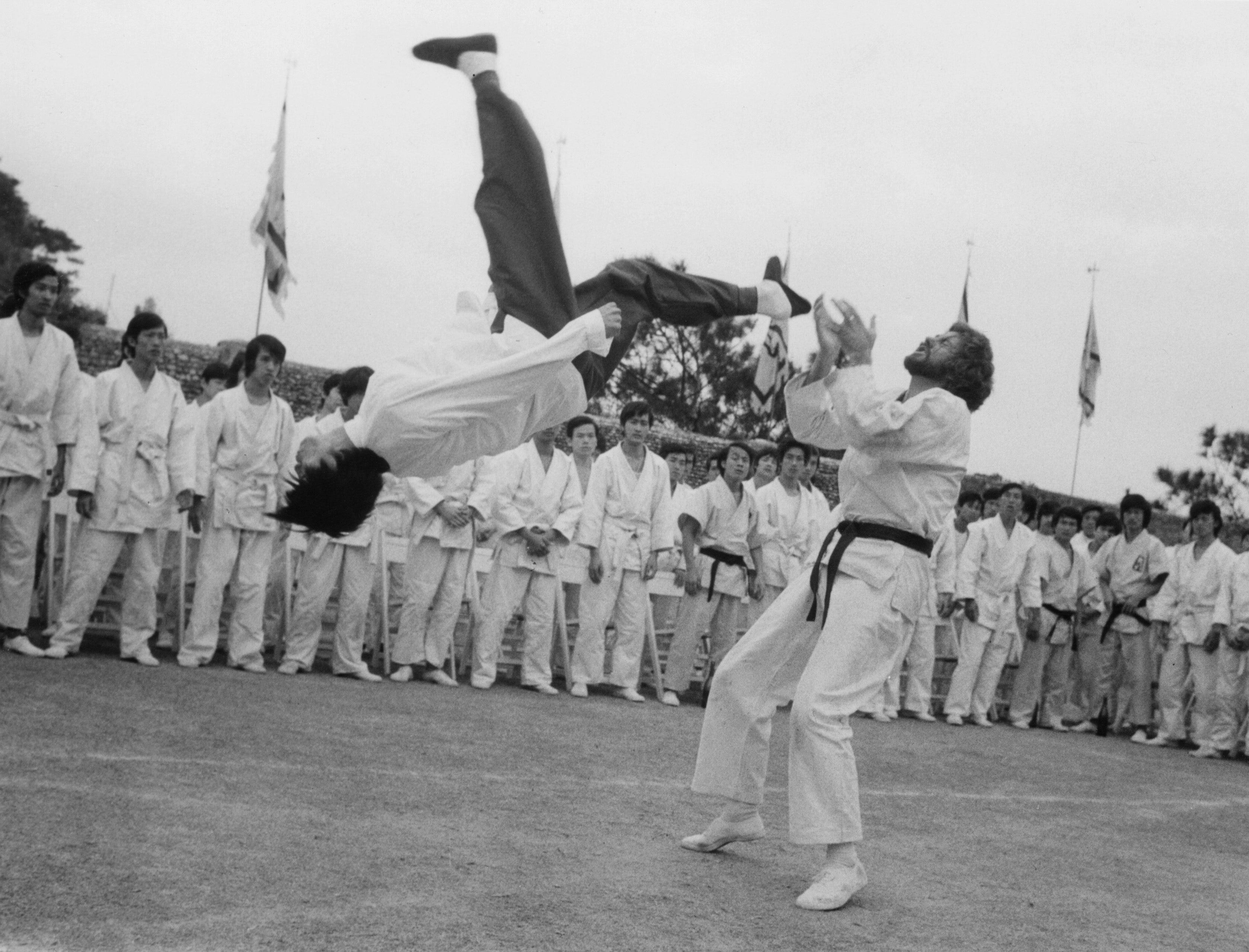
For me, however, one scene highlights the moral centre of Enter the Dragon and that’s Lee’s fight with Han’s bodyguard O’Hara (Bob Wall). Earlier in the film, Lee is told that O’Hara was responsible for the death of his sister Su-Lin (Angela Mao Ying). As you would expect from a protagonist, Lee is looking for vengeance, however, he does not pursue this at all costs. It’s only when the tournament brings Lee and O’Hara together that Lee can enact any sort of revenge.
Earlier in the film, Lee tells a student that they should strike with emotion, but not anger or hatred. His philosophy throughout the film has been to only attack when necessary, and at every point, up until now, he has enacted a swift, non-lethal assault on enemies.
O’Hara, on the other hand, seems to enjoy violence and becomes enraged when Lee continually outclasses him in the sanctioned fight. When Lee kicks him so hard that he is thrown into the crowd of onlookers, everyone, Lee included, believes the fight to be won. But O’Hara refuses to be beaten. Instead of showing respect to his opponent he smashes two bottles and comes after Lee, who swiftly disarms him and knocks him to the floor.
For the first time in the film, we then see the lethal effectiveness of our protagonist. Filmed in slow motion, Lee jumps into the air and brings both feet down on O’Hara in a brutal stomp. Whether O’Hara is alive or not isn’t a question, and the tournament is called off, setting up the final act of the film.
While it’s an incredible fight scene, mixing the measured pacing of a martial arts contest with some of the brutal, scrappy realism that films like The Raid (Gareth Evans, 2011) would interject into the genre, what impressed me most about it was Lee’s face during that slow motion stomp.
When he lands, his face contorts. It is at once a sign of exertion; of the energy he has spent; a sadness over taking a life; and something that could be read as vindication. It showcases Lee’s ability as an actor. Where many of his roles highlighted his physical prowess, this short moment shows his ability to project emotion without words. That inner conflict because O’Hara deserved to die, but Lee’s training revolves around using his skills to resolve conflict without lethal force.
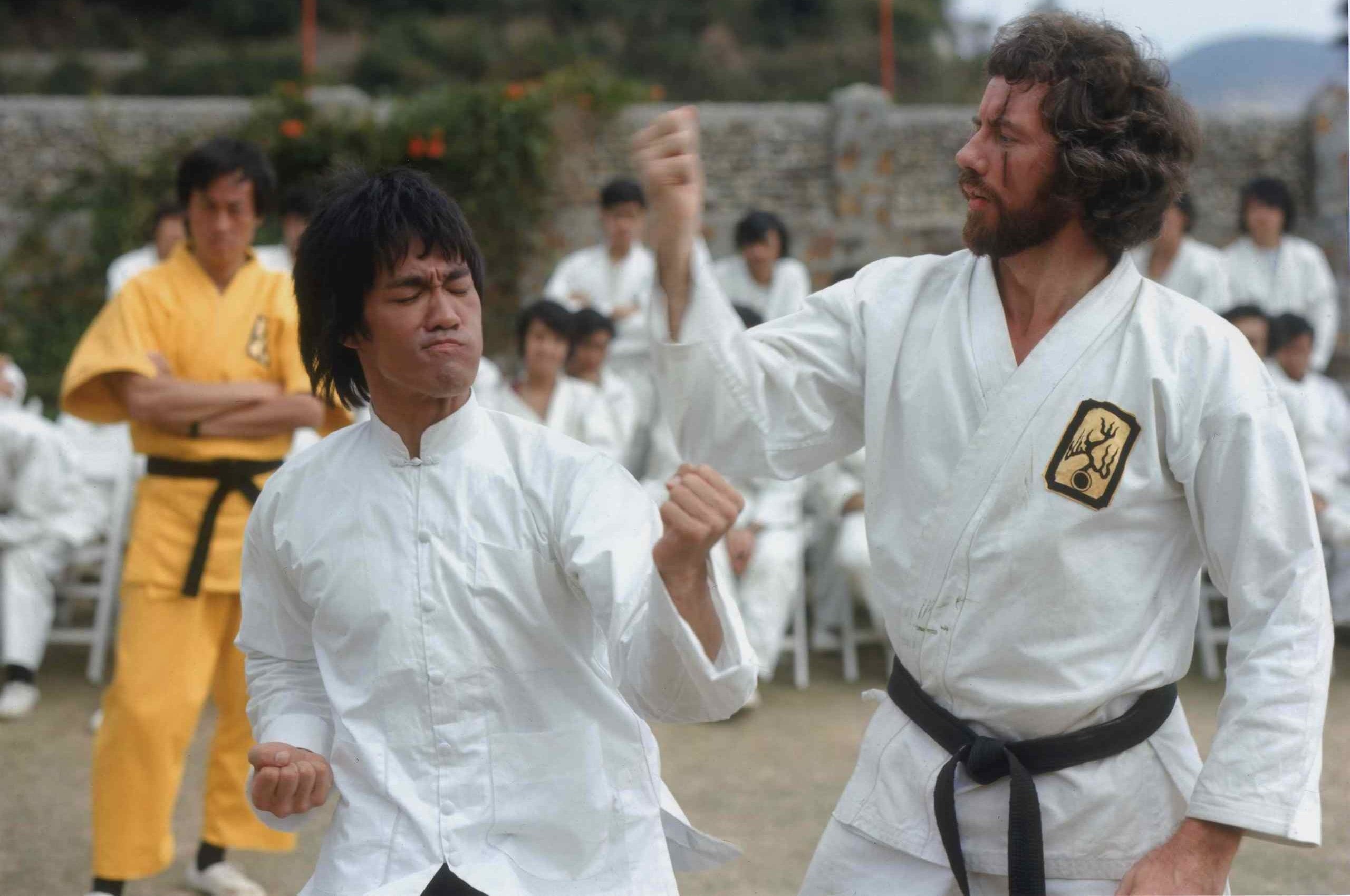
It also marks a shift in the film. As things quickly escalate, Lee becomes more determined and less concerned about taking human life. If we compare the stomp to O’Hara to a moment when Lee breaks the neck of a henchman (a young Jackie Chan) later, we see none of the same reservations.
Director: Robert Clouse
Writer: Michael Allin
Starring: Bruce Lee, John Saxon, Ahna Capri, Bob Wall, Shih Kien, Jim Kelly
 | A guest post by
|