

BLUE VELVET
The darkest scene in suburbia


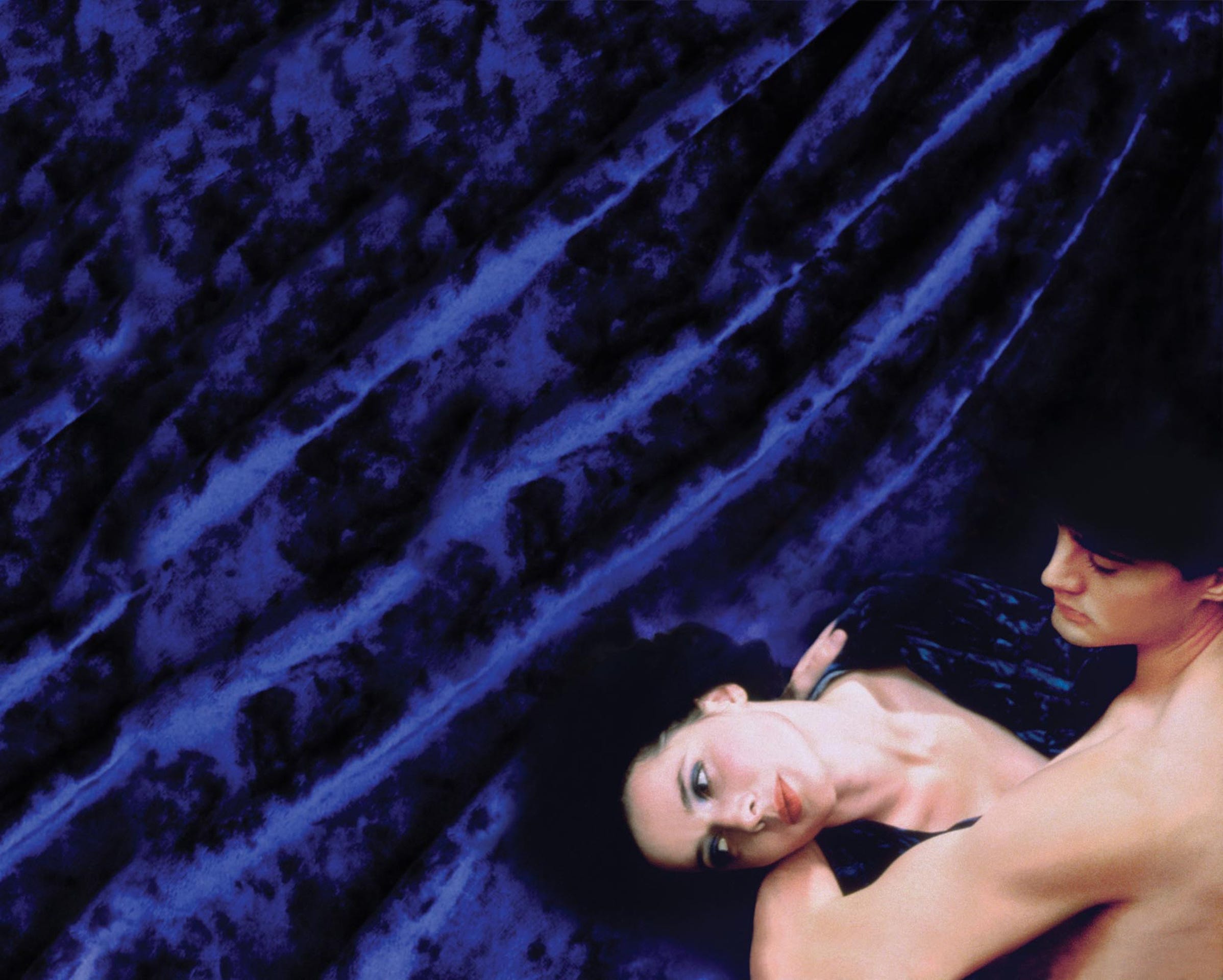
Spoilers for Blue Velvet (1986). Trigger warnings for discussions of sexual assault.
The scariest thing about David Lynch’s filmography is his ability to scratch away the aesthetic of suburbia to reveal something far darker underneath. Perhaps the most well-known example of this is the jumpscare behind Winkie’s Diner in Mulholland Drive, however, I would posit that he has never been more successful at expanding this idea than in Blue Velvet.
From the start, we are thrown into a gorgeous technicolour neighbourhood but it’s clear that this is a facade. People living their lives with pasted-on smiles; going through the motions and ignoring the darkness that is, in this case, literally a few streets over.
We follow Jeffrey Beaumont (Kyle MacLachlan) who, alongside his classmate and love interest Sandy Williams (Laura Dern), finds himself drawn into a bizarre mystery involving lounge singer Dorothy Vallens (Isabella Rossellini) and drug-addled, sexual sadist Frank Booth (Dennis Hopper). The specifics of the mystery are, as is often the case with Lynch, almost inconsequential. Instead, the film focuses on Jeffrey’s descent.
Lynch toys with the idea that there is not only a darkness in every suburbia but a darkness within all of us. One that, under the right set of circumstances, can turn a naïve, innocent high schooler into something much more malevolent.
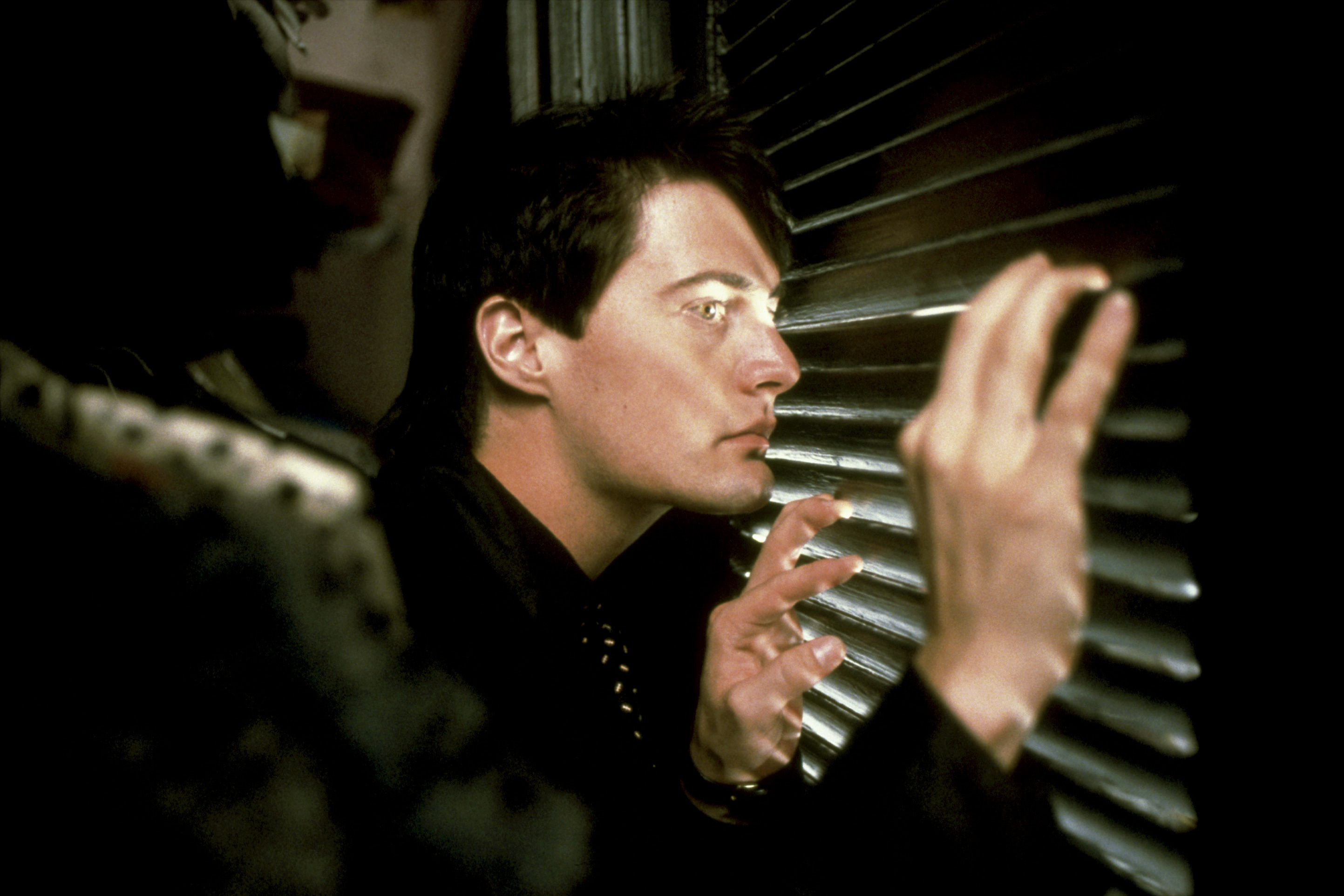
Very quickly into his investigation, Jeffrey sees Dorothy sexually assaulted by Frank. It’s a harrowing scene, with a terrifying performance by Hopper, but perhaps more unnerving is Dorothy’s response to it. Her discovery of Jeffrey watching from her closet leads to an attempted seduction, in which she urges the young man to strike her.
Dorothy’s association between sex and violence disturbs Jeffery, but he continues to see her, giving in to her demands to hit her when she becomes upset and tries to put a premature end to their tryst.
Each of these scenes stand out in their own way, but the one we’re discussing is a much quieter sequence. Having been dragged out on a joyride with Frank and his cronies (featuring both Brad Dourif and Jack Nance), which culminates in Frank beating the young man unconscious, Jeffrey awakens on the side of the road and makes his way home. In the safety of his bedroom, he breaks down.
More conventional narratives would frame this in the context of Jeffrey being in a situation he can no longer control or escape. But Lynch cuts the scene with Jeffrey’s memories of Frank and his own assaults on Dorothy. Jeffrey may fear the spiralling events, but it is his own transformation into a violent man that he cannot stand.
The jarring switch between Jeffrey as an aggressor with Dorothy and as a victim to Frank, both on the same night, adds credence to this. Frank’s beating of Jeffrey is as much about humiliating and emasculating him as it is about violence. He smears lipstick on himself and kisses Jeffrey before reciting the lyrics to Roy Orbison’s ‘In Dreams’, turning the playfully sweet words into ominous threats.
In dreams I walk with you
In dreams I talk to you
In dreams you're mine all of the time
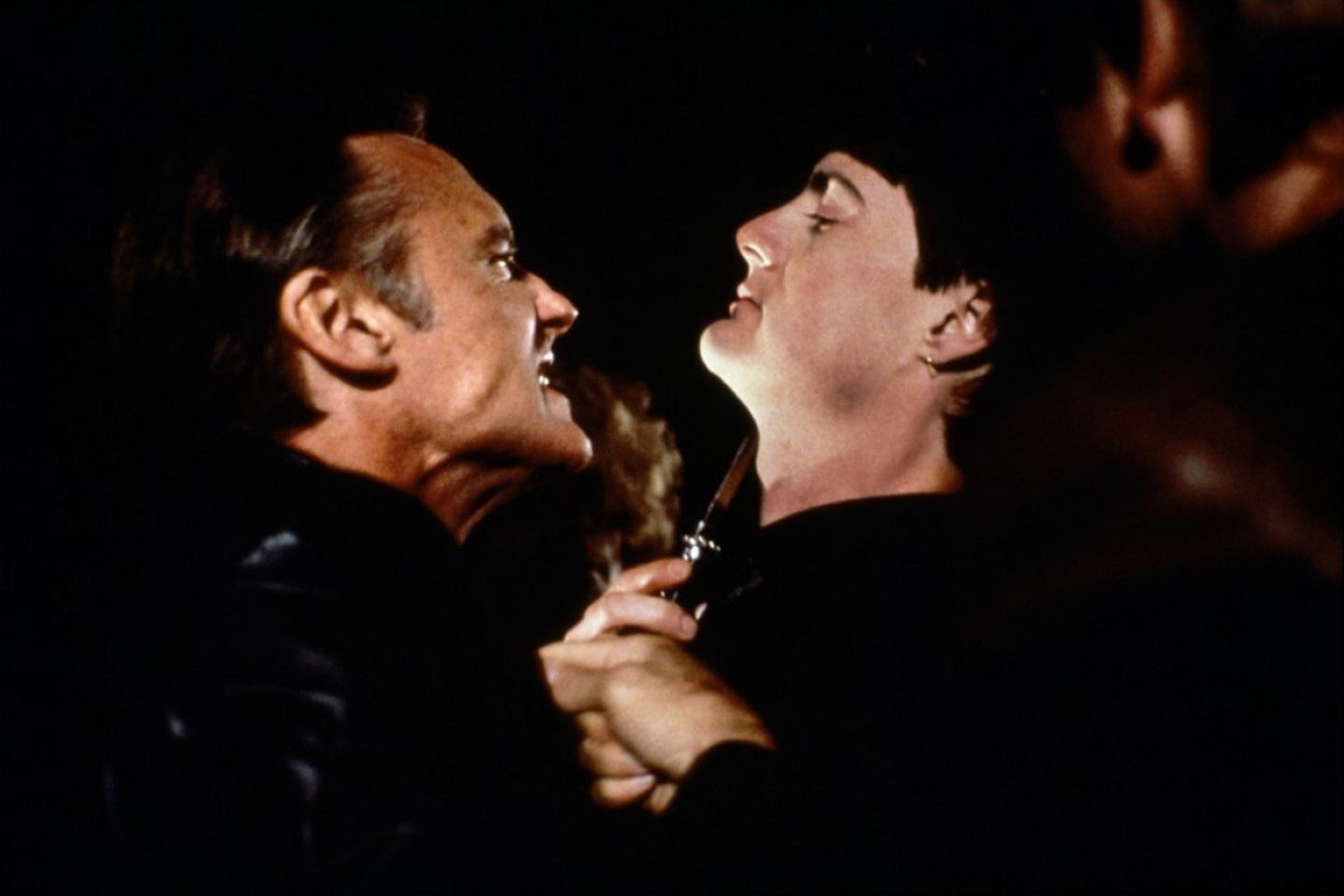
Frank recognises the violence in Jeffrey. He sees a kindred spirit of sorts and uses the song to highlight their connection.
There’s also the interesting if problematic, idea that Frank has little control over his actions. As if he has followed the same slippery slope that Jeffrey is now on.
“Don’t be a good neighbour to her,” he warns. It would be easy to frame this as victim blaming – Blue Velvet certainly walks a tightrope with its depiction of sexual violence – but the character of Frank is too unpredictable to be comfortably categorised in this way. Veering wildly from self-loathing to violence, wilfully attacking those around him, but weeping openly as ‘In Dreams’ or the titular ‘Blue Velvet’ plays.
Instead, Lynch’s script suggests that there are defining moments that lead people on their path. For Jeffrey there are two; the discovery of a severed ear which leads to his involvement with Dorothy and Frank, and his breakdown where he decides to reject the man he is becoming. He tries to return to his old life, to build a relationship with Sandy.
Those who have seen the film will know that it is not quite that simple; Lynch has saved more disturbing events for the final act, but from this point, Jeffrey is no longer an active player, he is instead desperately fighting to retain his humanity.
Director & Writer: David Lynch
Starring: Kyle MacLachlan, Isabella Rossellini, Dennis Hopper, Laura Dern
 | A guest post by
|