

NON-CANONICAL: BLUE JEAN
The importance of safe spaces in Georgia Oakley’s debut



Spoilers for Blue Jean (2023). Trigger warnings for discussions of homophobia and sexual assault.
The implementation of Section 28 in the UK eroded the idea of safe spaces for homosexuals. It was brought into law in 1988, just 21 years after homosexuality had been partially decriminalised, and remained in place until 2003.
For fifteen years, homosexuality could not be ‘promoted’ and there could not be any implication that homosexual relationships could provide the same level of stability or happiness as heterosexual relationships. Much like the discourse surrounding the status of trans people today, it was cynically worded to supposedly protect the morals of children.
In writer/director Georgia Oakley’s accomplished but imperfect debut Blue Jean (released this week by Altitude Films), we’re shown how Section 28 was hugely damaging for the young people it was meant to protect.
Jean (Rosy McEwen) is the focus for much of the film; a teacher in the northeast forced to live a double life, hiding her sexuality during the day while frequenting gay bars with her partner Viv (Kerrie Hayes) at night. However, it’s Lois (Lucy Halliday), whose story really highlights what can happen when people’s sexuality and identity are politicised.
From the start, she is shown as an outsider. Bullied by the girls in her class and treated with suspicion by Jean, who believes that this young lesbian (who is shown to be far more feisty and open) could inadvertently reveal her own secret.
By focusing on Jean, Oakley invites the viewer to share in her paranoia. We understand the damage being outed could do to her life and career, and we’re shown how she has compartmentalised the different aspects of her life but never truly given herself a safe space.
In fact, she’s seen to be the most comfortable at school. Until Lois transfers, Jean’s sexuality there is a non-factor. She enjoys her job, is good at her job and can maintain superficial relationships with colleagues without the need to pry into each other’s personal lives. While freer on her night outs, Jean is shown to be more reserved and on edge than Viv or the rest of their friend group. Even before her fears of being outed start to build, there’s a clear discomfort visible (due to the wonderful performance of McEwen) as if she expects to see someone who could expose her at any moment.
Even at home, she’s unable to truly be herself. With nothing but heteronormative television and the risk that family or neighbours could come knocking when Viv is staying over.
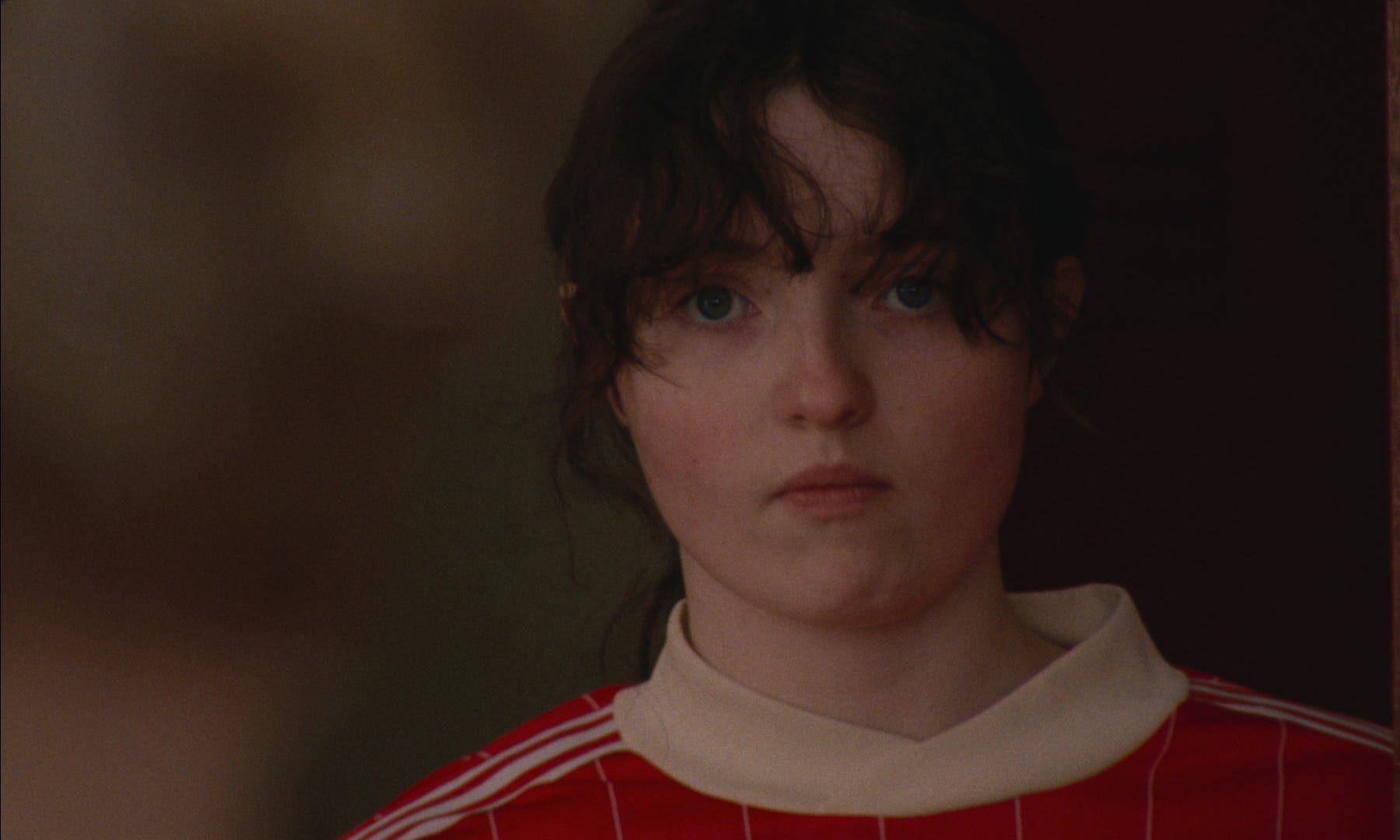
Lois, secure in her sexuality but struggling to find her place in a new town and a new school, brings Jean’s inner conflicts to the surface. The implementation of Section 28 handcuffs Jean, meaning that she cannot give any guidance to Lois, but her paranoia extends beyond the confines of the school and leads to her being cold and dismissive with Lois when the young girl makes her way to the same bar as on a night out.
Jean’s reaction is contrasted by the acceptance of Lois by the wider group. Oakley is smart by refusing to portray either party as wrong. We never really doubt that Jean cares for Lois, or wants to look out for her, but her own insecurity stops her from truly helping her. By insisting on caution, she believes she is helping Lois, as well as protecting herself.
Oakley has a real eye for detail. Her late-80s Britain isn’t a vibrant, colourful club night, or a snotty, anti-establishment punk show. It’s grey, industrial, and bogged down by discontent at nearly every level of society. Section 28 isn’t shown to bring in a wave of homophobia either; the film is set just as the act is coming into force, meaning the glances, the snide comments and the insidious bigotry shown here have always been present.
Nor is the gay community depicted as some utopian lifestyle. Oakley fills her cast with people from all walks of life, with different fashion choices, ideas about the world and relationships. There’s very little ‘us and them’. Gay people are shown for exactly what they are – normal people, trying to live their lives while their sexuality is unjustly targeted.
Viv, who is quick to reprimand the treatment of Lois, understands the difficult position that Section 28 has forced onto Jean. Despite her punk stylings, there are no clichés about anarchy, or ‘sticking it to the man’. Instead, she calls on Jean to take some responsibility, to show Lois that there are safe spaces and ways to live without drawing unnecessary attention to themselves. It’s a sad and bitter compromise, but under the Thatcher government, it’s what needs to be done.
When Lois is wrongfully accused of assaulting a female classmate, Jean fails to step in. She prioritises her own safe space, regardless of whether that ignores an important part of herself. Lois is suspended, likely excluded, and Jean is forced to confront her role in this.
At the end of the film, Jean makes efforts to extend her own personal safe space. While she admits that she will never be able to be fully open about her sexuality, due to her own struggles in accepting it, she begins to take small actions to broaden the area around her where she can truly be herself.
She picks up a despondent Lois and takes her to a party being held by Jean’s friends. In a true show of punk spirit and community, Jean’s friend group has created a safe space for young lesbians to go to when they need financial aid or a place to live. They have created a family when so many biological families were less accepting.
By the end of the film, it’s clear that Lois didn’t need Jean to protect her or mother her. She needed a friendly face who, either subtly or overtly, could show her a place to go.
Blue Jean is about safe spaces, and their importance even if the whole world seems to want to take them away from you.
Director & Writer: Georgia Oakley
Starring: Rosy McEwen, Kerrie Hayes, Lucy Halliday
 | A guest post by
|