

ANOMALISA
Creating fault to maintain monotony


Spoilers for Anomalisa (2015).
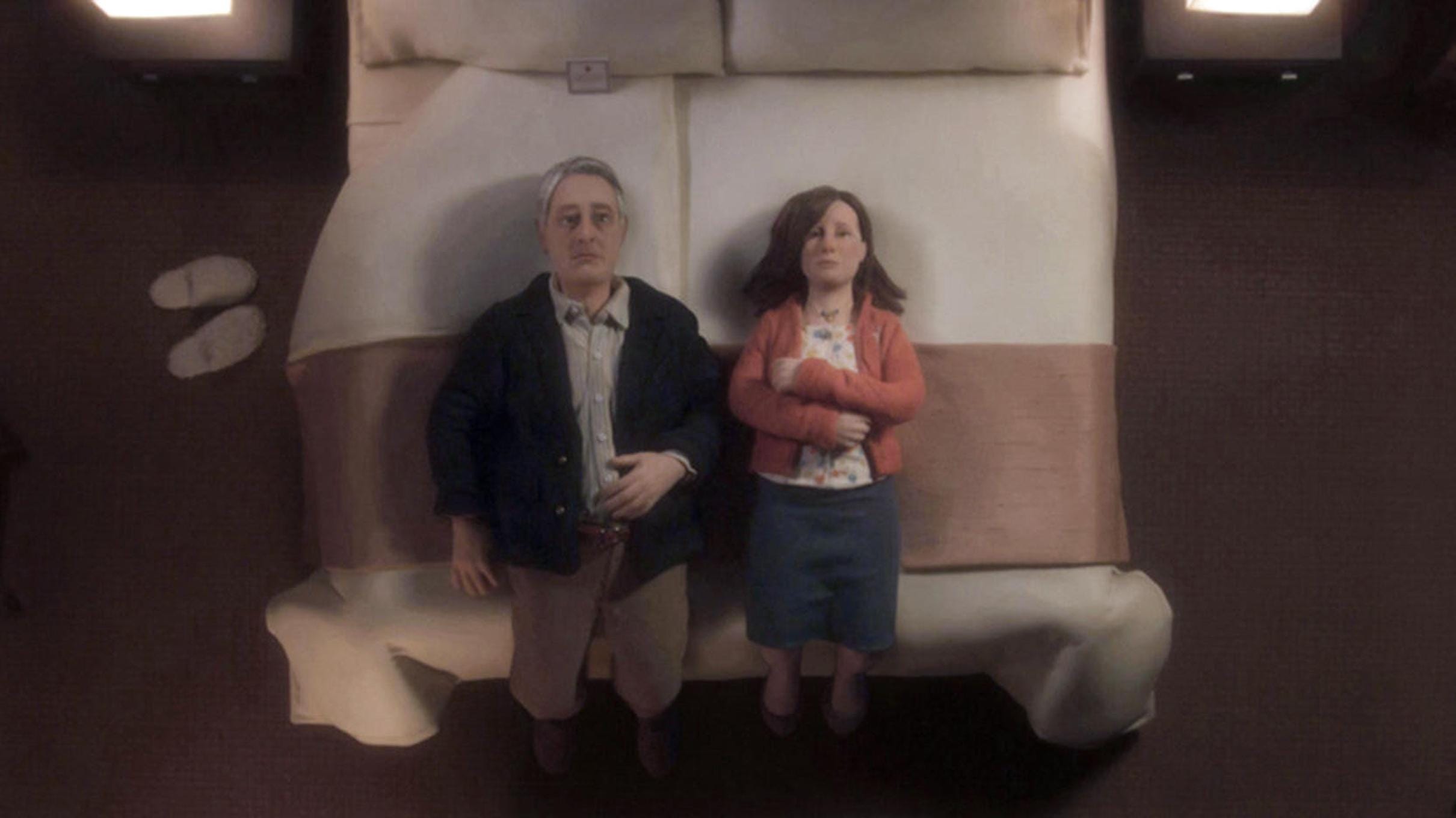
There’s a theory about Charlie Kaufman’s Anomalisa, a tender and surreal stop-motion film co-directed with Duke Johnson, that ends up creating a Sliding Doors impression of the events.
The theory is that Lisa Hesselman (Jennifer Jason Leigh), the woman who Michael Stone (David Thewlis) begins an affair with, does not exist. Instead, she is a part of Michael’s psyche as he tries to break away from the monotony of his life. There’s a lot of evidence for this theory, the most notable being the Japanese animatronic doll that Michael sees in a sex shop before meeting Jennifer. The doll is cracked just above its right eye; Jennifer has a scar just above hers.
Kaufman also makes a rather crass reference to this at the end of the film, when Michael returns home and gives the doll to his young son. His wife, clearly quite taken aback by the gift, exclaims that something is leaking out of the doll. Something that looks like semen.
But the whole film is built around Michael’s fantasies, which stacks the evidence against Lisa’s existence. He is so disillusioned by his position in life that the people around him have blended into one. Cleverly, the film represents this by using a single actor, Tom Noonan, to voice every other character, male and female, and uses the same face mould for them. His attraction to Lisa begins because her voice stands out amongst the crowd, and he positions her on a pedestal from that point onwards.
Despite his dissatisfaction, he’s also narcissistic. At one point he dreams that everyone in the hotel, from the manager down to the administrative staff, is in love with him and trying to keep him apart from Lisa. If Lisa does not exist, then the reaction of her and her friend Emily to Michael’s presence in the hotel – they’ve driven for hours to attend one of his seminars and faun over him like he’s a pop star – hints at his self-importance.
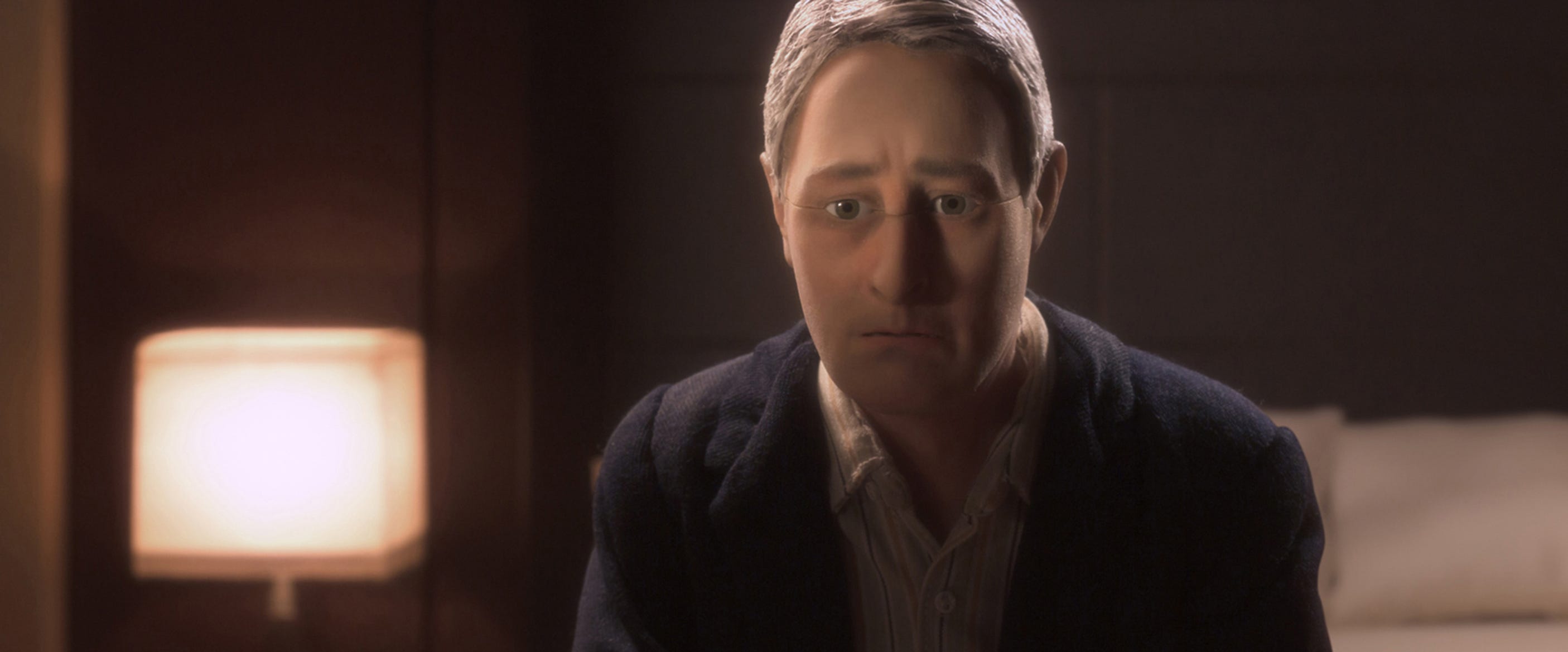
Perhaps going against this theory, are the references to the Fregoli delusion. Those suffering from the condition believe that multiple people are a single person, who can change appearance. The hotel that Michael is staying in is called the Fregoli, and Kaufman wrote the original play the film is based on under the pseudonym Francis Fregoli. Is Lisa simply the person that has somehow cut through the delusion?
The final scene would seem to suggest this. In the only scene that Michael is not present for, we see Emily’s face briefly, and subtly, change into something individual.
There’s also Michael’s narcissism to consider. Rather than a fantasy or delusion, could it simply be that he sees himself as different from everyone else? The irony of teaching people about customer service is that Michael preaches about the individuality of each customer while providing a one-size-fits-all approach to dealing with them. The nature of his work creates this idea that everyone is the same while encouraging people to strive for something unique.
I’ve gone into detail about this theory because depending on which side you fall on; it changes how certain scenes are interpreted. Perhaps the most tragic is the breakfast scene between Michael and Lisa after their first night together. Michael, spooked by his nightmare about the hotel manager, tells Lisa that he loves her and that he is going to leave his family for her. Lisa is hesitant but agrees to move to Los Angeles to be with him.
It’s a rapid turn of events sure, but not completely unexpected. However, the more the two talk, the more Lisa’s voice begins to morph into that of Tom Noonan’s. Michael picks up on this, and at the same time starts to pick faults with Lisa. She scrapes her fork against her teeth. She talks with her mouth full. She has scrambled eggs hanging off her bottom lip.
As he criticises this already shy and introverted woman, he derails their relationship before it has even started.
The scene is depressing, regardless of the theory. But Lisa’s existence does change the reading of it. If she exists, then Michael has alienated the one person he seems to have a genuine connection with and condemned himself to the same mundanity he tried to rally against. It’s something cautionary, willing the audience to never stop looking for the beautiful and unique in the world, and to not pick faults with things that make you happy.
However, if Lisa is a figment of Michael’s imagination, it shows more self-awareness on his part. Before he meets (or invents) Lisa he tries to reconnect with an old flame but when they meet, he becomes flustered and tells her that he isn’t well. If we accept that he has created Lisa to break the monotony of his life, then the fact that he sabotages this imaginary relationship continues the idea that Michael knows he is the problem.

This awareness could be why he has a breakdown during his keynote speech at the convention the next day – a cry for help or a way to damage his reputation and break the cycle of conventions, hotels, and mundanity.
By hinting at both possibilities, Kaufman reiterates the themes of the film. It’s easy to get bogged down, caught up in our problems, and to start seeing other people as a faceless mass. But on the other side of this, we shouldn’t place unrealistic expectations on others. We are all the same because we are unique, and that comes with a host of flaws and annoying habits. If we focus too much on these and not on the positives, it’s easy to self-sabotage.
Directors: Charlie Kaufman, Duke Johnson
Writer: Charlie Kaufman
Starring: David Thewlis, Jennifer Jason Leigh, Tom Noonan
 | A guest post by
|